China's art market is experiencing a tentative but encouraging recovery, driven by increased participation from next-generation wealthy families despite ongoing economic headwinds, according to leading financial institutions and cultural observers.
Amy Lo Choi-wan, chairman of UBS Global Wealth Management Asia and CEO of UBS Hong Kong, expressed optimism about the sector's prospects in a recent interview with the South China Morning Post. "We have been seeing a rebound, with more trips for auctions and purchases [in China]," Lo said. "So I am optimistic."
This positive assessment comes as China continues to grapple with a prolonged property downturn and weak consumer spending, factors that traditionally dampen demand for luxury goods including fine art and collectibles.
Generational Shift Driving Recovery
The recovery appears to be largely driven by younger members of wealthy families who are taking a more active role in art collecting and cultural investment. This demographic shift represents a significant evolution in China's art market dynamics, as traditionally older family patriarchs controlled major purchasing decisions.
The younger generation of collectors brings different perspectives and preferences to the market, often favoring contemporary works alongside traditional pieces and showing greater interest in both domestic and international artists. This diversification has contributed to increased activity across multiple market segments.
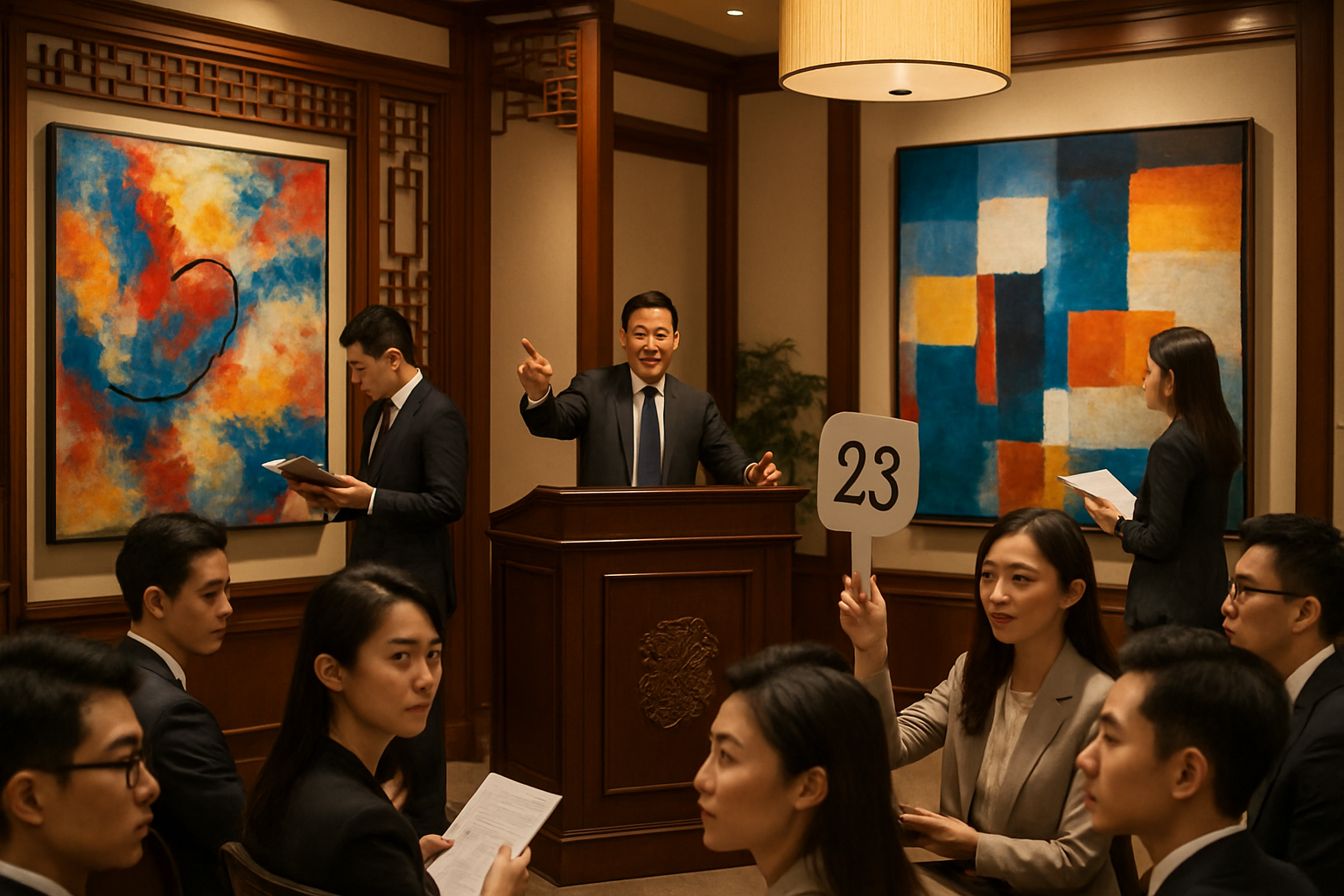
Art March Events Highlight Cultural Accessibility
The recovery has been particularly evident during recent Art March events, which have demonstrated the importance of cultural authenticity and accessibility in sustaining market interest. These events have provided platforms for both established and emerging artists while creating opportunities for new collectors to engage with the art world.
Observations from Hong Kong's art scene illustrate this trend toward greater accessibility and everyday cultural engagement. Casual encounters with art exhibitions in business districts have become more common, with auction houses strategically placing displays in high-traffic areas where professionals pass daily.
One Hong Kong resident noted discovering artwork installations that had replaced commercial displays: "I pass by the space twice every day," highlighting how art has begun to integrate more seamlessly into urban environments. This shift toward making art more visible and accessible represents a fundamental change in how cultural institutions engage with the public.
Balancing Economic Pressures with Cultural Investment
The art market's resilience amid broader economic challenges reflects the strategic importance wealthy families place on cultural assets. While property investments face uncertainty and traditional consumption patterns remain weak, art collecting offers both cultural value and potential long-term appreciation.
"The art market often serves as a bellwether for broader economic confidence among high-net-worth individuals."
— Market Analyst
The increased activity in art purchases and auction attendance suggests that affluent Chinese families view the current environment as potentially favorable for acquiring pieces at more reasonable valuations than during peak market periods.
Hong Kong's Role as Cultural Bridge
Hong Kong continues to play a crucial role as a bridge between Chinese collectors and international art markets. The city's Art March events have successfully maintained their authentic character while attracting both local and international participants.
Cultural observers emphasize the importance of preserving authenticity in art programming, noting that successful events require genuine cultural engagement rather than purely commercial approaches. This principle appears to resonate particularly well with younger collectors who value meaningful cultural experiences.
The integration of art into everyday spaces has become a hallmark of Hong Kong's cultural scene, with auction houses and galleries strategically placing exhibitions in locations where they can catch the attention of busy professionals and families. This approach has proven effective in drawing casual observers into deeper engagement with the art world.
Implications for the Broader Asian Art Market
China's art market recovery has significant implications for the broader Asian cultural economy. As the region's largest art market, Chinese collector behavior influences pricing, artist recognition, and institutional programming across Asia.
The generational shift in collecting patterns may also influence what types of art receive greater attention and investment. Younger collectors often demonstrate greater openness to contemporary works, digital art, and pieces by emerging artists, potentially creating new opportunities for artists who might have previously struggled to access traditional collector networks.
Challenges and Opportunities Ahead
Despite the encouraging signs, several challenges remain for China's art market recovery. The broader economic environment continues to create uncertainty for discretionary spending, and international art trade faces ongoing complications from geopolitical tensions.
However, the market's ability to adapt through increased accessibility, generational change, and innovative presentation methods suggests resilience that extends beyond traditional economic cycles. The success of Art March events and similar cultural initiatives indicates that authentic programming can maintain audience engagement even during challenging economic periods.
The emphasis on cultural authenticity appears particularly important for sustaining long-term market health. Rather than purely commercial approaches, successful art initiatives are those that create genuine cultural value and community engagement.
Looking Forward
The recovery in China's art market, while still tentative, represents broader trends in cultural consumption and intergenerational wealth transfer. As next-generation collectors become more active, their preferences and approaches are likely to shape market dynamics for years to come.
The integration of art into everyday urban environments, as evidenced by Hong Kong's approach, may become a model for other cities seeking to maintain cultural vibrancy during economic uncertainty. This accessibility-focused strategy appears to be paying dividends in terms of engagement and market participation.
As Amy Lo Choi-wan's optimism suggests, the combination of generational change, innovative programming, and cultural authenticity may provide a foundation for sustained recovery in China's art market, even as broader economic challenges persist. The sector's evolution reflects not just market dynamics but changing relationships between wealth, culture, and community engagement in contemporary China.