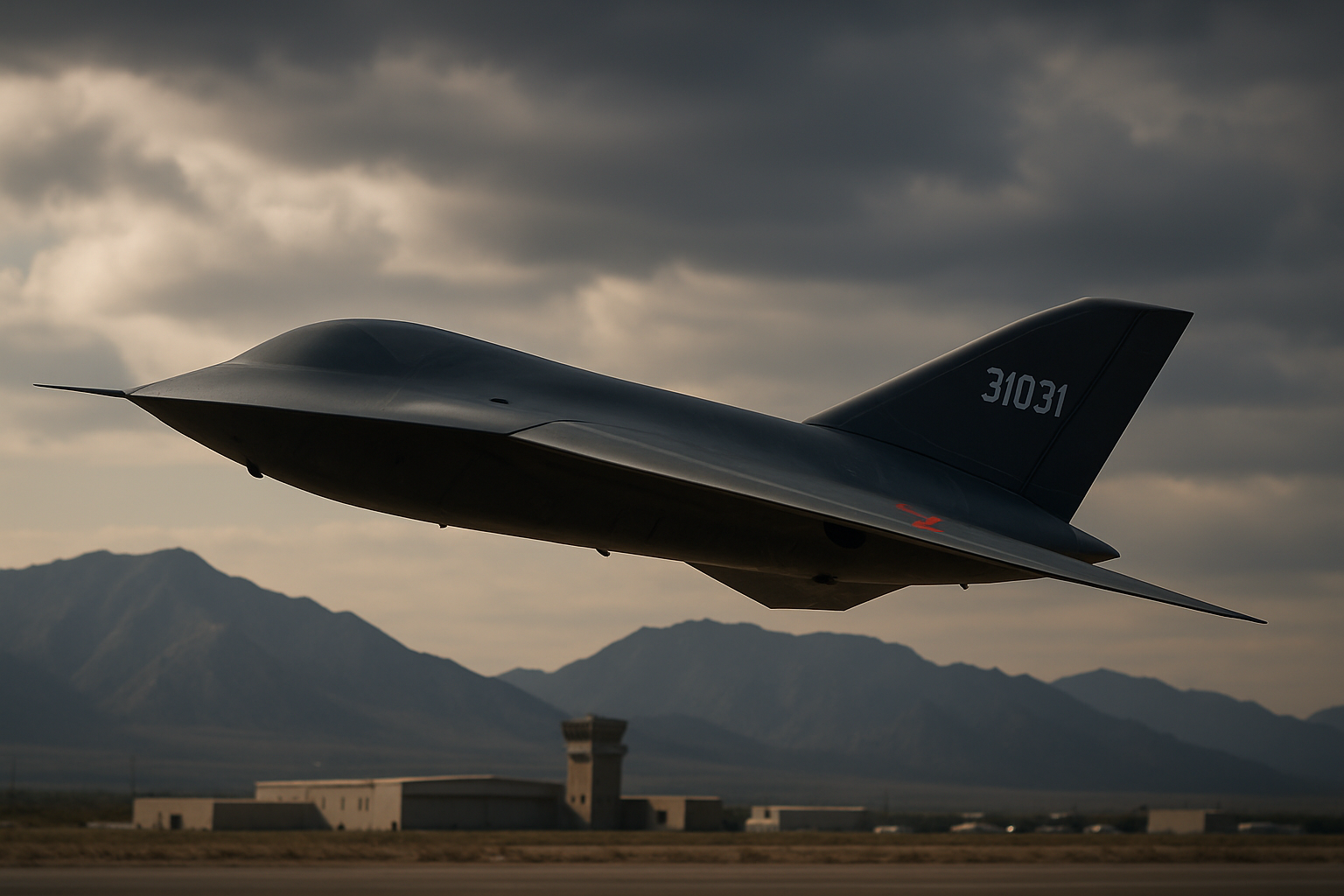
While Iranian Shahed-136 suicide drones have dominated headlines for their devastating strikes from Cyprus to Kuwait during the current Middle East crisis, intelligence analysis reveals that China's ASN-301 drone represents an even more sophisticated and potentially lethal evolution of the same underlying technology.
The ASN-301 shares the Iranian drone's distinctive aerodynamic delta-wing design, both systems tracing their origins to common technological foundations. However, according to defense analysts, the Chinese variant has evolved into what military experts describe as either a highly sophisticated SEAD (suppression of enemy air defenses) platform or an advanced suicide drone capable of precision strikes that far exceed Iranian capabilities.
Technological Evolution and Sophistication
The key differentiator lies not in the basic airframe design, which both systems share, but in the advanced electronics, guidance systems, and operational flexibility that China has integrated into the ASN-301 platform. While the Shahed-136 has proven effective in recent conflicts, striking targets as distant as Cyprus and destroying critical US radar installations, it represents a relatively straightforward kamikaze drone design focused on delivering explosive payloads.
"The ASN-301 has evolved beyond simple suicide missions into a multi-role platform capable of both intelligence gathering and precision strike operations,"
— Defense Intelligence Analyst, speaking on condition of anonymity
China's systematic approach to military technology development has transformed the basic delta-wing design into a platform capable of both surveillance and strike missions, with advanced sensors and communication systems that allow for real-time target assessment and mission adaptation mid-flight.
SEAD Capabilities and Air Defense Suppression
Perhaps most concerning to Western military planners is the ASN-301's development as a SEAD platform. Unlike the Iranian drones, which primarily function as one-way attack vehicles, the Chinese system can be configured to systematically identify, target, and eliminate enemy air defense installations with unprecedented precision.
This capability represents a fundamental shift in drone warfare doctrine. While Iran's Shahed-136 has proven effective in overwhelming air defenses through swarm attacks, the ASN-301 can potentially neutralize sophisticated air defense systems through targeted strikes on radar installations, command centers, and missile launch platforms.
Context of Current Global Conflicts
The contrast between these systems has become particularly relevant given ongoing global military developments. Iranian Shahed drones have been deployed extensively in the current Middle East crisis, with over 18,000 flights cancelled worldwide and oil prices surging past $80 per barrel as Iran's "Operation True Promise 4" has systematically targeted Western assets across the region.
Recent attacks have demonstrated both the capabilities and limitations of Iranian drone technology. While successful in striking RAF Akrotiri in Cyprus—marking the first attack on European territory since World War II—and causing significant damage to infrastructure across Gulf states, these operations have largely relied on overwhelming numbers rather than precision targeting.
Advanced Guidance and Communication Systems
Intelligence sources indicate that China's ASN-301 incorporates significantly more advanced guidance systems, including satellite navigation, inertial guidance, and potentially AI-assisted target recognition capabilities. This represents a substantial advancement over the Iranian systems, which rely primarily on GPS guidance and basic programmed flight paths.
The communication capabilities of the ASN-301 also appear more sophisticated, with potential for real-time command and control adjustments during flight operations. This allows for dynamic retargeting and mission modification based on real-time intelligence, a capability that Iranian drones currently lack.
Strategic Implications for Regional Security
The emergence of more sophisticated Chinese drone technology occurs against the backdrop of intensifying regional tensions. China's defense budget increased 7% to 1.91 trillion yuan ($277 billion) in 2026, with military activity around Taiwan increasing 23% in 2025. The ASN-301 represents part of China's broader military modernization program targeting 2035 completion.
Unlike Iran's more opportunistic deployment of drone technology in current conflicts, China's approach appears more systematic and long-term focused. The ASN-301 development suggests planning for potential future conflicts where sophisticated air defenses would need to be systematically degraded rather than simply overwhelmed.
Manufacturing and Scale Considerations
Another critical advantage of the Chinese system lies in manufacturing capacity and quality control. While Iran has demonstrated the ability to produce Shahed drones in significant quantities, China's industrial base allows for much more sophisticated manufacturing processes, higher quality components, and potentially much larger-scale production if required.
China's dominance in critical minerals (60% of global production, 90% of refining) and advanced electronics manufacturing provides a significant advantage in producing sophisticated drone systems at scale, a capability that could prove decisive in any extended conflict.
Countermeasures and Defense Implications
The evolution of the ASN-301 into a more sophisticated platform has significant implications for air defense planning. Traditional countermeasures effective against Iranian drones may prove inadequate against Chinese systems capable of adaptive targeting and real-time mission modification.
Current events in the Middle East have demonstrated both the effectiveness of modern air defense systems—such as Qatar's successful interception of 65 missiles and 12 drones—and their limitations when facing sustained, multi-vector attacks. The ASN-301's potential SEAD capabilities could systematically degrade these defensive systems rather than simply attempting to overwhelm them.
Future Warfare Implications
The divergent evolution of Iranian and Chinese drone technology reflects broader trends in military doctrine and capability development. While Iran has focused on using existing technology for immediate tactical advantage in current conflicts, China appears to be developing next-generation capabilities for potential future conflicts that may require more sophisticated approaches to air defense suppression and precision targeting.
This technological divergence occurs within a broader context of global military AI integration, with Pentagon systems already incorporating ChatGPT technology and Ukrainian forces deploying AI-enhanced drone systems. The ASN-301 represents China's contribution to this emerging landscape of AI-assisted military platforms.
Conclusion
While Iranian Shahed-136 drones have proven their effectiveness in current conflicts, China's ASN-301 represents a more sophisticated evolution of drone warfare technology. The combination of advanced guidance systems, SEAD capabilities, potential AI integration, and China's superior manufacturing base creates a weapons system that poses significantly greater long-term strategic threats than its Iranian counterpart.
As global tensions continue to escalate—with the current Middle East crisis representing the most dangerous international situation since the Cold War—the technological sophistication gap between Chinese and Iranian drone capabilities may prove increasingly relevant to regional security calculations and defense planning considerations worldwide.