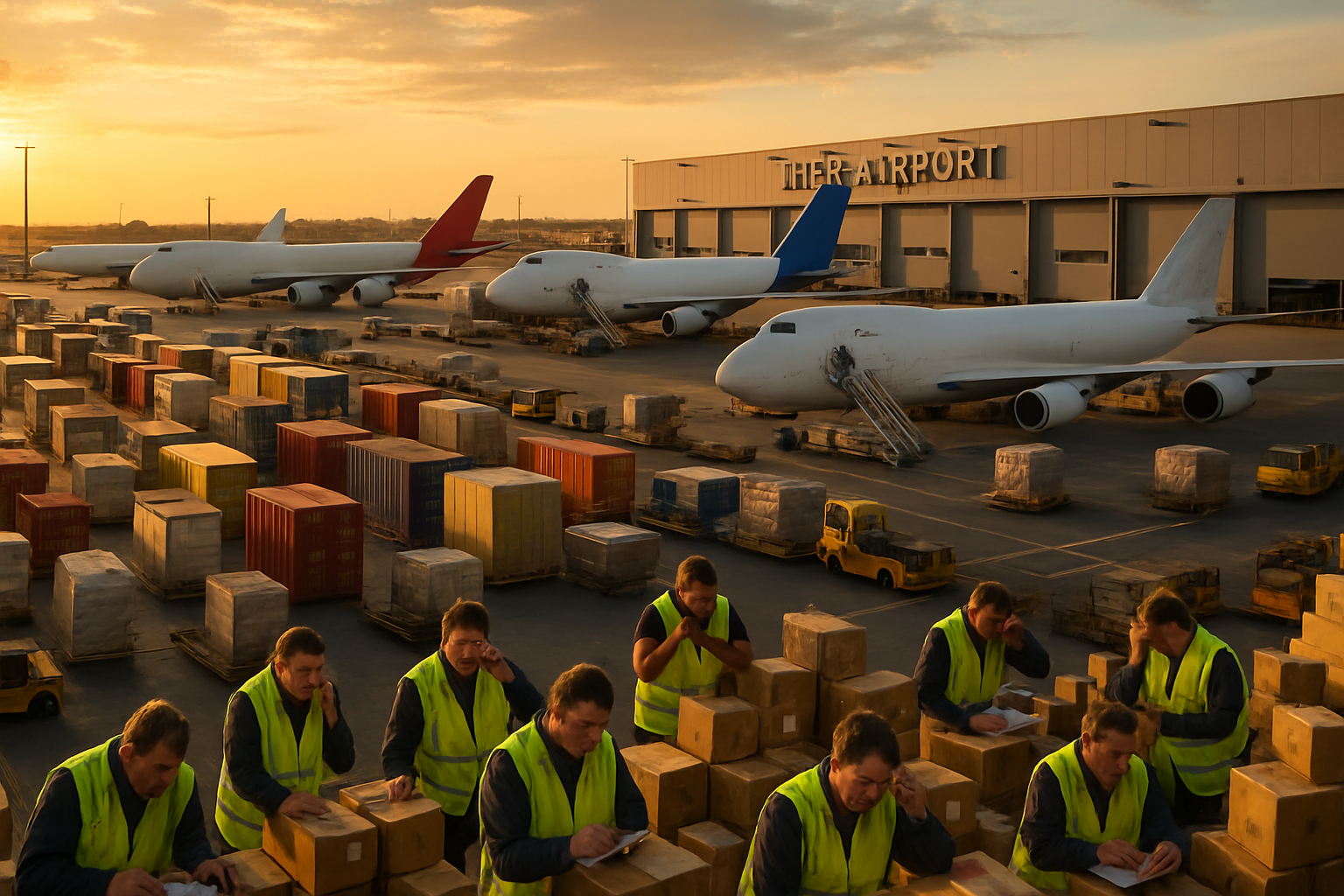
Liege Airport in Belgium is processing more than 4 million small parcels from China every single day since the beginning of 2026, creating an unprecedented strain on European customs infrastructure as trade tensions between China and Europe reach new heights.
The freight airport, strategically positioned near the borders of the Netherlands, Germany, and France, has become the epicenter of China's e-commerce expansion into Europe. However, with only 80 customs inspectors available to handle this massive influx, Belgian authorities are struggling to manage what customs official Kristian Vanderwaeren describes as an "explosion" in Chinese package volume.
Infrastructure Under Pressure
The airport was originally designed to accommodate major e-commerce platforms including Amazon, Shein, Temu, and Alibaba. However, the scale of current operations far exceeds initial projections. The daily volume of 4 million packages represents a 300% increase from pre-2026 levels, according to industry sources.
"The infrastructure was built with e-commerce in mind, but no one anticipated this level of concentration from a single country," Vanderwaeren explained during a recent briefing with European Commission officials.
The situation has been compounded by broader supply chain disruptions affecting global trade. Memory chip shortages have driven semiconductor prices six times higher than normal levels, affecting digital tracking and processing systems until new fabrication facilities come online in 2027.
Regulatory and Security Concerns
The massive influx of Chinese packages has raised significant concerns about customs compliance and security screening. With 50,000 packages per customs inspector per day, thorough inspection becomes practically impossible, creating potential vulnerabilities in European supply chains.
European Commission investigations into Chinese e-commerce practices have intensified following February 2026 Digital Services Act violations by Shein, including sales of illegal products and manipulative design features targeting younger users. The investigation could result in penalties reaching 6% of global annual revenue, potentially amounting to billions of euros.
These regulatory actions reflect broader European concerns about Chinese platform practices and their impact on European businesses and consumers. Spain has implemented world-first criminal executive liability for tech platforms, while France has escalated enforcement through raids on social media offices.
Geopolitical Context
The cargo crisis unfolds against a backdrop of evolving China-Europe trade relations. While China announced zero-tariff access for 53 African countries effective May 1, 2026—the most comprehensive China-Africa trade expansion in modern history—relations with Europe have become increasingly complex.
China maintains dominance in critical materials, controlling 60% of global production and 90% of refining capacity for lithium, cobalt, and rare earth elements. This creates what European officials describe as "kill switch vulnerabilities" in European infrastructure and supply chains.
Meanwhile, the Trump administration's bilateral trade approach has bypassed EU frameworks, with deals including Argentina (1,600+ tariff eliminations) and India (50% to 18% duty reductions) demonstrating American preference for country-by-country negotiations over multilateral EU engagement.
Economic Impact
The strain on Belgian infrastructure represents broader challenges facing European competitiveness. The February 2026 EU summit at Alden Biesen castle addressed these concerns, with leaders achieving unanimous agreement on comprehensive single market reforms designed to counter external pressure.
European Parliament President Roberta Metsola warned that "margins are narrowing" and called for "bold moves for strengthening competitiveness." The summit focused on eliminating internal barriers, reducing administrative burdens, and protecting "Made in Europe" products amid unprecedented external pressure.
The Belgian cargo situation exemplifies these challenges. Traditional European customs systems, designed for moderate package volumes from diverse sources, prove inadequate when facing concentrated flows from single countries enabled by digital platforms.
Industry Response
Major logistics companies are adapting to the new reality through expanded infrastructure and automated systems. However, the pace of change in Chinese e-commerce continues to outstrip European adaptation capabilities.
Amazon has responded with increased investment in European fulfillment centers, while traditional European retailers struggle to compete with direct-from-China pricing enabled by preferential shipping rates and reduced regulatory oversight.
The situation has created market distortions affecting European manufacturers and traditional retail channels. Small European businesses report difficulty competing with Chinese sellers who benefit from different regulatory frameworks and shipping arrangements.
Digital Sovereignty Implications
The cargo crisis highlights broader European concerns about digital sovereignty and economic independence. Slovakia's €1.3 billion digital euro pilot and efforts to reduce dependency on US payment systems demonstrate European attempts to maintain monetary independence.
However, the overwhelming dominance of Chinese e-commerce platforms in physical goods trade creates different sovereignty challenges. European consumers increasingly depend on Chinese supply chains for everyday products, from electronics to household goods.
Future Outlook
Belgian authorities are working with European Commission officials to develop sustainable solutions for managing Chinese cargo flows. Options under consideration include expanded customs facilities, automated inspection systems, and revised regulatory frameworks for high-volume trade routes.
The success or failure of these efforts will likely influence broader European approaches to managing trade with China. As digital commerce continues expanding, traditional customs and border management systems require fundamental adaptation to handle 21st-century trade patterns.
The situation at Liege Airport serves as a test case for European capacity to balance openness to international trade with regulatory oversight and security concerns. The outcome will likely influence European trade policy and infrastructure development for years to come, as the continent grapples with maintaining competitiveness while preserving regulatory standards and economic sovereignty.
With China's economy achieving 6.3% industrial output growth in early 2026 and continued expansion of digital commerce platforms, European authorities expect Chinese package volumes to continue growing. The challenge for Belgium and Europe more broadly will be developing infrastructure and regulatory frameworks capable of managing this growth while protecting European economic interests and security concerns.