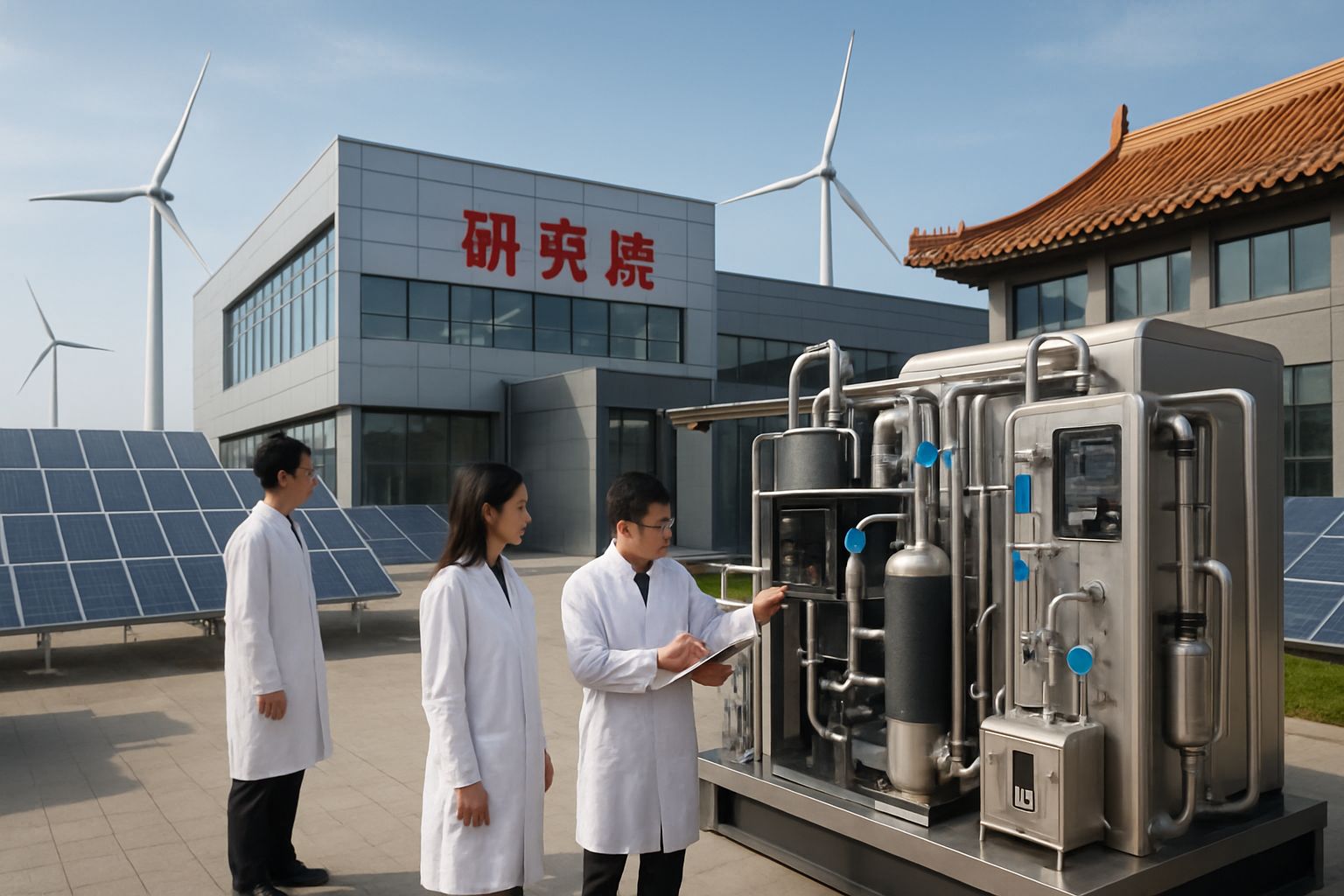
China has unveiled groundbreaking clean energy innovations, including the world's first zero-emission coal fuel cell technology and expanded solar energy partnerships with Cuba, positioning the nation at the forefront of global renewable energy transformation during a critical period for climate action.
Chinese scientists have developed a revolutionary method to generate electricity from coal without producing any carbon dioxide emissions, fundamentally challenging traditional perceptions of coal-fired power. The breakthrough technology places coal inside a specialized "battery" system, eliminating combustion entirely while achieving higher energy efficiency than conventional burning methods.
Revolutionary Coal Fuel Cell Technology
The novel direct coal power technology represents a paradigm shift in how coal can be utilized for energy production. Unlike traditional coal-fired power plants that conjure images of heavy pollution and steep carbon footprints, this innovative approach sidesteps carbon dioxide emissions that have long defined coal energy production.
"Coal-fired power" traditionally meant pollution, but this technology challenges that stereotype by eliminating combustion entirely," explains the research team. The system achieves superior energy efficiency compared to conventional burning methods while producing zero carbon dioxide emissions.
"This breakthrough demonstrates that even traditional energy sources can be transformed through innovative technology to meet modern environmental standards."
— Lead Research Scientist, Chinese Academy of Sciences
Solar Diplomacy Expansion to Cuba
Simultaneously, China has significantly expanded its renewable energy diplomacy through enhanced solar partnerships with Cuba. Chinese solar panels have transformed Cuba's energy landscape during a prolonged US energy blockade, with solar power's share of national generation increasing dramatically from 6% to over 20% within just 12 months through February 2026.
China's solar expansion to Cuba addresses what Ambassador Hua Xin described as the island's "complex power situation" amid the US oil embargo. This initiative represents part of China's broader renewable energy diplomacy across Latin America, Africa, and Central Asia, providing developing nations with alternatives to fossil fuel dependencies.
Global Context and Strategic Positioning
These developments occur during an unprecedented period of global energy transformation. January 2026 marked the 18th consecutive month with temperatures exceeding 1.5°C above pre-industrial levels, the longest sustained warming streak in recorded history, lending urgency to clean energy deployment worldwide.
China's strategic positioning in clean energy has become increasingly significant as the nation controls approximately 60% of global critical mineral production and 90% of refining capacity for lithium, cobalt, and rare earth elements essential for renewable infrastructure. This dominance has prompted the US-EU-Japan Critical Minerals Partnership involving 55 countries and seven African suppliers to coordinate supply chain diversification efforts.
Technology Integration and Innovation
Modern renewable energy projects increasingly incorporate sophisticated technology from the design phase, including real-time monitoring, predictive maintenance, AI-powered optimization, and automated operations. These advances enable unprecedented efficiency and reliability in renewable energy systems.
The coal fuel cell breakthrough exemplifies China's approach to combining traditional energy expertise with cutting-edge environmental technology. This synthesis creates comprehensive frameworks that respect industrial heritage while leveraging global technological capabilities for environmental protection.
Economic and Diplomatic Implications
China's clean energy innovations serve multiple strategic purposes beyond environmental protection. The technology creates economic development opportunities through job creation in high-tech manufacturing, research and development, and international cooperation programs. Countries implementing comprehensive clean energy strategies demonstrate greater economic resilience and attract sustainable investment across multiple sectors.
The expansion of solar partnerships to Cuba also represents a shift from traditional North-South aid models toward peer-to-peer cooperation, where developing nations become environmental solution providers rather than merely aid recipients. This approach leverages indigenous knowledge, renewable resources, and innovative governance structures.
International Response and Competition
China's advances are occurring within a broader context of accelerating global renewable energy deployment. Estonia maintains European leadership with 88% renewable electricity and continental Europe's largest battery storage facility serving 90,000 households. The European Parliament has approved historic 90% emissions reduction targets by 2040.
The US-EU-Japan Critical Minerals Partnership represents a coordinated response to Chinese supply chain dominance, involving massive infrastructure investment and years of development time to establish alternative suppliers. Memory chip shortages have driven semiconductor prices up sixfold, affecting smart grid systems until 2027, potentially benefiting integrated Chinese manufacturers.
Climate Action and Future Outlook
These technological breakthroughs come at a critical juncture when the environmental action window is rapidly narrowing as ecological systems approach potentially irreversible thresholds. The International Energy Agency requires tripling renewable capacity by 2030 to meet climate targets, creating enormous infrastructure pressure amid constrained supply chains.
China's zero-emission coal technology and expanded solar diplomacy provide practical templates for scaling clean energy globally. Success depends on sustained international cooperation, enhanced multi-sector coordination, and financial commitments that recognize environmental protection as essential infrastructure for human prosperity and planetary sustainability.
Strategic Significance
April 2026 represents a potential turning point in global clean energy development, where technological innovation converges with environmental urgency and geopolitical repositioning. China's breakthrough technologies demonstrate that environmental protection can function as an economic development strategy rather than a regulatory burden.
The combination of revolutionary coal fuel cell technology and strategic solar partnerships positions China as a comprehensive clean energy partner capable of sophisticated investment management while maintaining technological sovereignty. These developments could influence international energy cooperation frameworks for generations, establishing precedents for technology transfer, diplomatic engagement, and environmental leadership during what experts call the "decisive climate action decade."