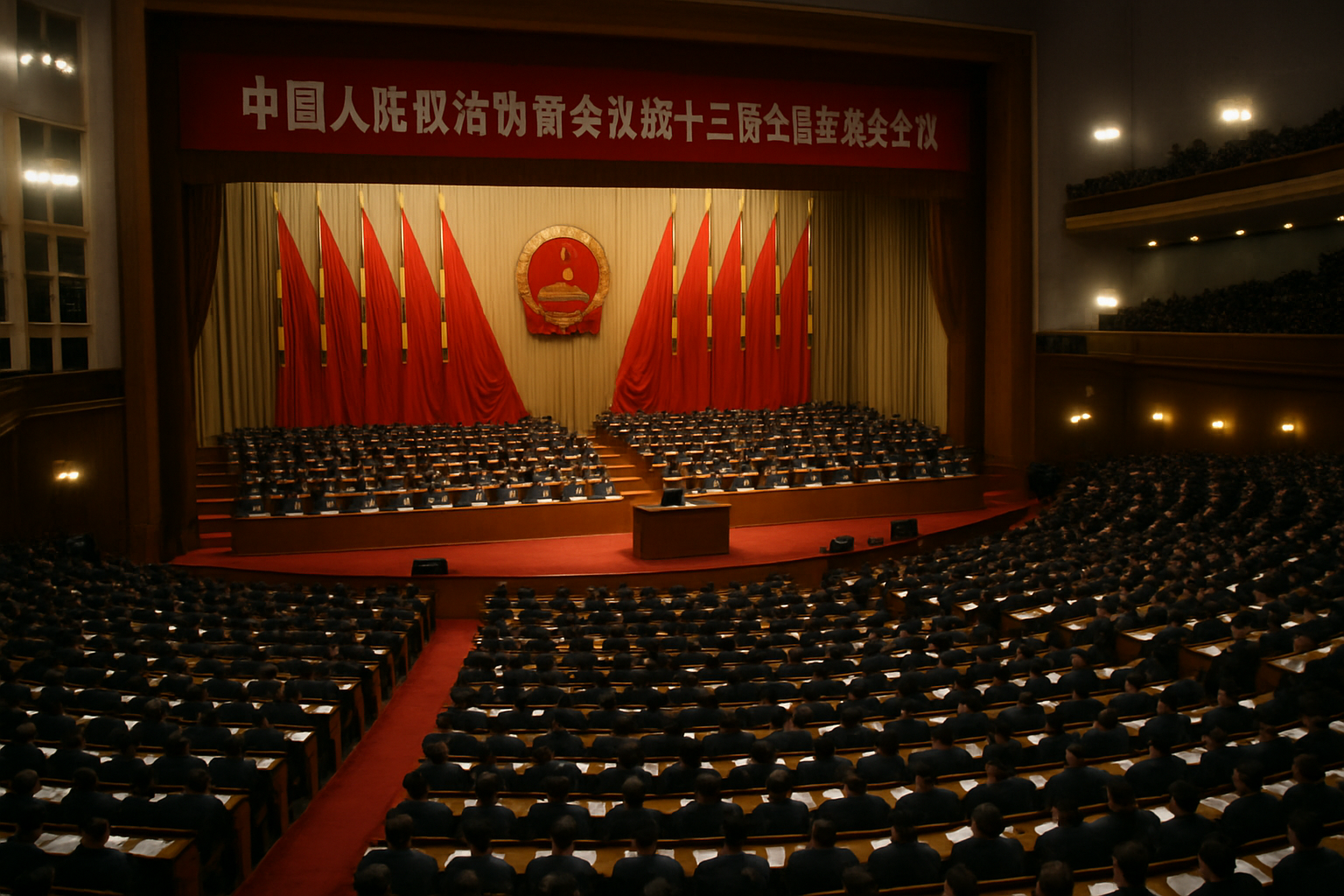
China announced a 7% increase in defense spending for 2026, bringing its military budget to 1.909 trillion yuan (approximately $277 billion), while simultaneously setting its economic growth targets at the lowest level in three decades as the world's second-largest economy grapples with mounting domestic and international pressures.
The announcements, made during the opening of China's annual National People's Congress on March 5, 2026, reflect Beijing's strategic priorities as it navigates complex challenges including regional security tensions, economic headwinds, and evolving relationships with major powers. Premier Li Qiang outlined the dual approach of maintaining military modernization while acknowledging economic realities that have constrained growth prospects.
Defense Budget Reaches Historic Levels Despite Economic Constraints
The 7% defense spending increase represents the lowest growth rate in five years but still significantly outpaces the country's economic growth targets. This marks a continuation of China's sustained military modernization drive, which has seen consistent increases in defense expenditure over the past decade as Beijing seeks to project power across the Asia-Pacific region.
According to official statements, the defense budget will focus on improving combat readiness and accelerating the development of "advanced combat capabilities." Premier Li emphasized that these investments will "boost our strategic capacity to safeguard China's sovereignty, security and development interests," with President Xi Jinping maintaining ultimate command authority over the People's Liberation Army.
"All these steps will boost our strategic capacity to safeguard China's sovereignty, security and development interests. We will improve combat readiness and accelerate the development of advanced combat capabilities."
— Premier Li Qiang, National People's Congress
The military spending increase comes amid heightened tensions in the Taiwan Strait, where Chinese aircraft activity increased 23% in 2025 according to Taiwan's Defense Ministry. The sustained military pressure campaign has included daily warplane and naval vessel deployments designed to "exhaust" Taiwan's population, representing the most intensive pressure campaign to date.
Economic Growth Targets Hit 30-Year Low
In a stark acknowledgment of economic challenges, China set its GDP growth target at 4.5% to 5% for 2026 - the first time the target has fallen below 5% since the policy was introduced. This represents a significant departure from the ambitious growth rates that characterized China's economic expansion over previous decades.
The reduced growth targets reflect what Beijing described as "economic downward pressure," attributed partly to ongoing trade tensions with the United States and structural economic challenges. The government acknowledged facing headwinds including a property sector slump, demographic challenges with an aging population, and the need to transition toward a more consumption-driven economic model.
Despite the lower growth targets, Chinese officials outlined an ambitious five-year plan emphasizing technological innovation, economic security, public welfare, and carbon reduction. The government committed to laying a foundation for its 2035 target of doubling per capita gross domestic product from 2020 levels, requiring sustained economic progress over the next decade.
Strategic Priorities and Regional Security Concerns
The budget announcements reflect China's strategic calculation that military strength remains essential for achieving its long-term objectives, even as economic growth moderates. Security analysts and regional military attachés are closely monitoring China's defense investments as the country scrambles to modernize its military by 2035 while stepping up deployments across East Asia.
The timing of these announcements coincides with significant regional developments, including Japan's recent election of Prime Minister Sanae Takaichi, who secured an unprecedented two-thirds parliamentary majority providing authority for constitutional reforms and enhanced defense capabilities. China's attempts to rally Southeast Asian nations against Japan following controversial Taiwan-related statements gained minimal regional traction, with ASEAN countries preferring multilateral approaches.
Regional tensions have been further complicated by ongoing military activities around Taiwan and the broader strategic competition with the United States. The defense budget increase signals Beijing's determination to maintain military capabilities despite economic constraints, reflecting the priority placed on territorial sovereignty and regional influence.
Economic Policy Balancing Act
Chinese leaders face the challenging task of balancing military modernization with economic development needs. The government plans to release 20 specific targets covering economy, technology, healthcare, and economic security, representing both binding and non-binding commitments across various sectors.
The five-year plan emphasizes priorities including technological innovation, energy security, and carbon reduction efforts, indicating China's intention to compete in high-technology sectors while addressing environmental concerns. However, the lower growth targets suggest recognition that the rapid expansion of previous decades may not be sustainable given current economic conditions.
International Context and Implications
China's budget decisions occur within a complex international environment marked by great power competition and evolving alliance structures. The sustained defense spending growth contrasts sharply with the moderated economic expectations, suggesting Beijing's assessment that military capabilities remain crucial for protecting national interests in an increasingly contested global environment.
The announcement follows recent diplomatic engagements, including planned summits with international partners and ongoing efforts to manage relationships with both allies and competitors. China's approach of maintaining military investment while acknowledging economic realities reflects a mature assessment of the challenges facing the country in the coming years.
As China implements these budget priorities throughout 2026, international observers will monitor how Beijing balances its economic development needs with security requirements. The success of this balancing act will significantly influence regional stability and China's role in the evolving global order.
The dual announcements underscore China's transition from rapid growth toward a more sustainable but militarily capable development model, with implications extending far beyond its borders to affect regional security dynamics and international economic relationships in the years ahead.