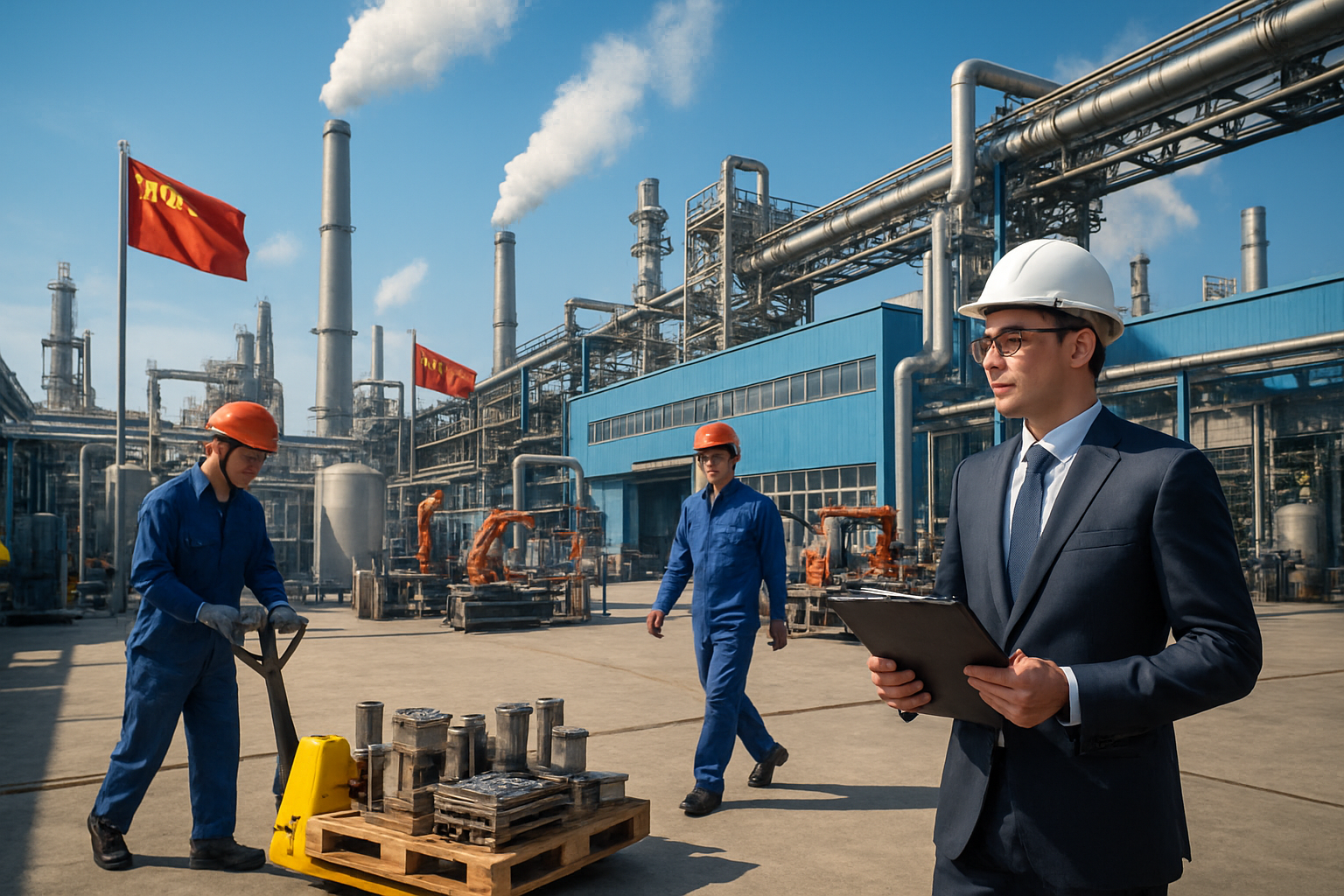
China's economy demonstrated remarkable resilience in early 2026, with industrial output rising 6.3% year-on-year in January and February while retail sales maintained strong growth, offering significant momentum as Beijing pursues its annual GDP target of 4.5-5%.
The latest economic indicators signal China's continued ability to navigate complex global headwinds while pursuing strategic technological independence. Industrial production figures released by China's National Bureau of Statistics showed sustained manufacturing strength across key sectors, with fixed-asset investment registering modest but positive expansion during the first two months of the year.
Retail Sales Drive Consumer Confidence
Chinese consumers demonstrated renewed spending confidence, with retail sales figures showing resilience despite ongoing global economic uncertainties. The strong consumer performance builds on February's Lunar New Year celebration success, when the Ministry of Commerce reported 8.6% year-on-year growth in average daily sales at major retail and catering firms during the Fire Horse festivities.
This consumer momentum reflects the government's strategic emphasis on domestic demand stimulation, implemented through extended holiday periods and targeted stimulus measures. The retail sector's performance suggests that China's transition toward a consumption-driven economic model continues to gain traction.
Semiconductor Self-Sufficiency Campaign Intensifies
Parallel to its economic growth achievements, China is dramatically intensifying efforts to break Western dominance in critical semiconductor materials, particularly targeting photoresist chemicals essential for chip manufacturing. This strategic pivot represents a "precision strike" approach to technological independence, moving beyond broad aspirations to focused development of chokepoint materials.
Fu Zhiwei, chairman of Xuzhou-based semiconductor firm, indicated that the photoresist sector is entering a "critical stage of accelerated breakthroughs and large-scale application" over the coming years. This development directly challenges the current US-Japan stranglehold on photoresist supply, which remains one of the most technically demanding aspects of semiconductor production.
Strategic Context and Global Implications
China's strong economic start occurs against the backdrop of its historic GDP growth target of 4.5-5% for 2026—the first time below 5% in three decades. This conservative target reflects Beijing's strategic recalibration toward "high-quality development" emphasizing technological innovation over pure quantitative expansion.
The economic performance gains additional significance given China's recent announcement of zero-tariff access for all 53 African countries beginning May 1, 2026—the most comprehensive China-Africa trade expansion in modern history. This diplomatic initiative positions China as a champion of multilateral economic cooperation, contrasting with more bilateral approaches adopted by other major economies.
"China's economic start demonstrates the country's institutional advantages and the benefits of our large economy remain intact despite external challenges."
— Mao Ning, Foreign Ministry Spokesperson
Technology Competition and Supply Chain Control
China's semiconductor ambitions extend far beyond domestic needs, targeting global supply chain influence. The country currently controls 60% of global critical minerals production and 90% of refining capacity, providing substantial leverage in international technology negotiations. The photoresist focus represents recognition that advanced chip manufacturing depends on a complex ecosystem of specialized materials, many controlled by a handful of companies.
This strategic approach comes as global memory chip shortages continue to affect major technology companies. Leading Chinese firm Lenovo reported a 21% profit decline due to persistent memory shortages, with CEO Yang Yuanqing describing the situation as a "structural tech sector issue" affecting the entire industry.
Balancing Growth with Strategic Objectives
The combination of strong early economic performance with intensified technology development efforts illustrates China's sophisticated approach to managing multiple strategic priorities simultaneously. While maintaining near-term economic stability through consumer spending and industrial output, Beijing continues massive investments in future-oriented sectors including artificial intelligence, quantum computing, and advanced materials.
China's unified national power market reforms, supporting energy security and 2030 carbon-peak targets, demonstrate how economic policy serves both immediate growth needs and long-term strategic positioning. This integrated approach enables China to pursue technological self-reliance while maintaining economic momentum.
International Reactions and Competitive Responses
China's economic and technological advances have prompted coordinated responses from other major economies. The US-EU-Japan Critical Minerals Partnership, involving 55 countries, represents an attempt to diversify supply chains away from Chinese dominance in strategic materials. However, China's early mover advantage and integrated supply chain control present significant challenges for alternative suppliers.
European leaders have increasingly recognized China's evolution from a "lucrative market to competitive threat" in high-tech manufacturing. German Chancellor Friedrich Merz's recent Beijing visit emphasized the need for "fair competition" while acknowledging the substantial economic opportunities that continued China engagement provides.
Looking Ahead: Sustainable Growth Trajectory
China's strong 2026 economic start provides a foundation for achieving its annual growth targets while pursuing longer-term strategic objectives. The success of this dual approach—maintaining economic stability while advancing technological independence—will significantly influence global trade patterns, supply chain configurations, and competitive dynamics across multiple industries.
The convergence of robust domestic economic performance with strategic technology advancement suggests that China's economic model is adapting successfully to evolving global conditions. Whether this momentum can be sustained throughout 2026 will depend largely on continued consumer confidence, successful implementation of technology development initiatives, and navigation of complex international relationships.
As China continues its careful balance between immediate economic needs and long-term strategic positioning, the implications extend far beyond its borders, influencing global supply chains, technology standards, and competitive dynamics that will shape the international economic landscape for years to come.