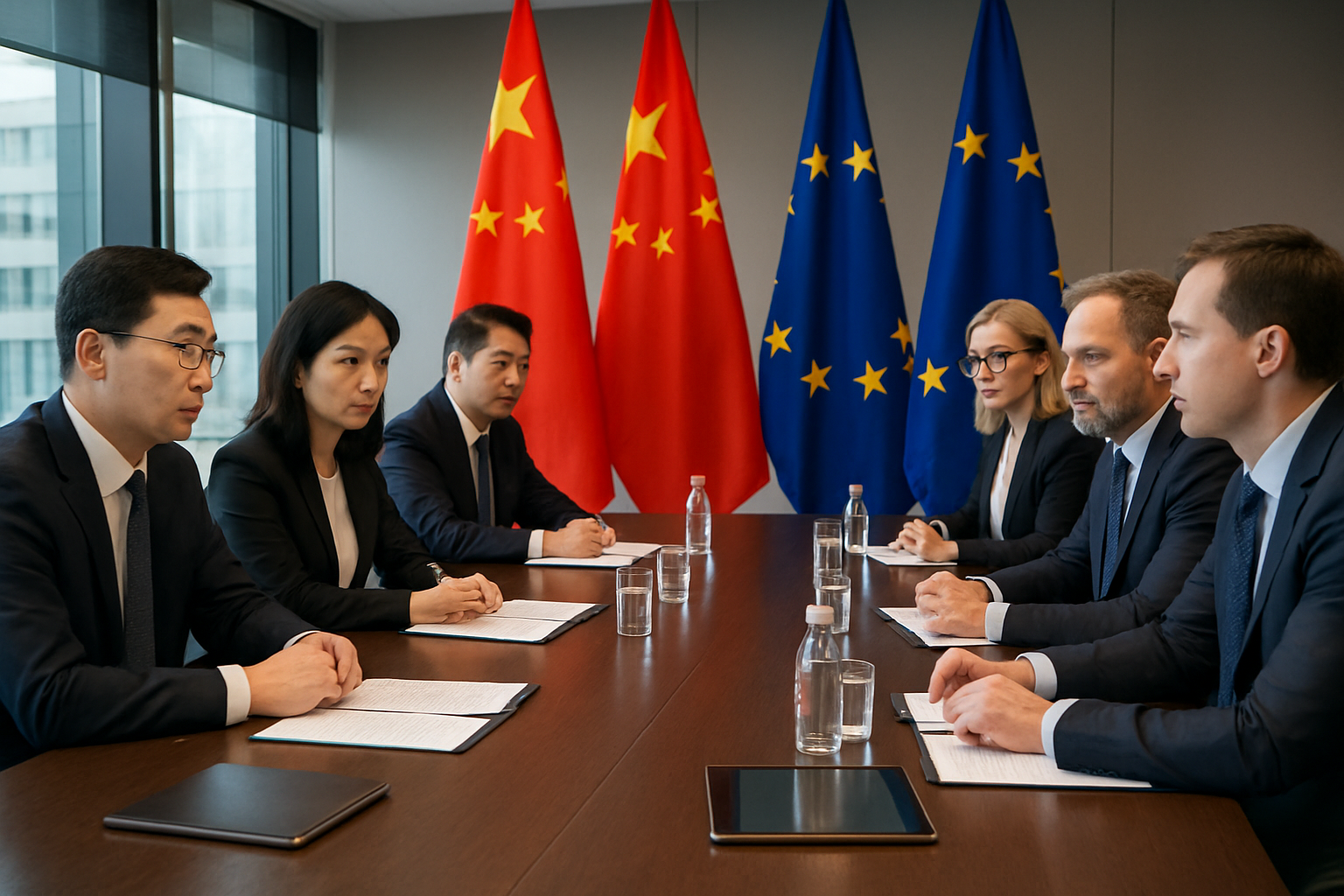
China announced significant reductions in tariffs on European Union dairy products, marking a notable shift in Beijing's trade strategy as it navigates increasingly complex economic relationships with European partners amid mounting global challenges.
The tariff adjustments, confirmed by Chinese authorities on February 12, 2026, represent substantially lower rates than originally planned for certain dairy imports from the European Union. This development comes as China pursues what Slovak sources describe as a "gradual easing of trade tensions between China and the European Union."
The policy adjustment occurs against a backdrop of profound changes in China's domestic energy sector and international trade relationships. Beijing has issued a central directive to dismantle administrative barriers dividing China's electricity sector, signaling a decisive shift toward a unified national power market designed to support energy security and the country's green transition.
Strategic Energy Transformation
China's comprehensive energy reform represents a decade-long power sector overhaul that has gained new urgency during the 15th five-year planning period. These structural changes are widely considered indispensable to achieving the nation's 2030 carbon-peak target, positioning the unified national power market as a cornerstone of China's climate commitments.
The energy sector transformation coincides with challenges facing Chinese technology companies in global markets. Lenovo Group, the world's largest personal computer maker, warned of the "prolonged impact" of a global memory shortage after reporting a 21% profit decline in the December quarter. The company is pinning hopes on artificial intelligence-powered devices to drive growth recovery.
"This structural imbalance between supply and demand [for memory chips] is not simply a short-term fluctuation," said Yang Yuanqing, Lenovo's chairman and CEO. "It is likely to have a prolonged impact on the entire industry."
Germany Faces 'China Shock'
The evolving China-EU relationship reflects broader tensions, particularly with Germany, Europe's economic powerhouse. German sources acknowledge that "China was long a lucrative market for Germany Inc, but the Asian giant's rise in high-tech fields has put the heat on Europe's industrial powerhouse and its companies, big and small."
This "China shock" represents a fundamental shift from China's role as primarily a market opportunity to its emergence as a formidable competitor in advanced manufacturing and technology sectors. German companies across multiple industries are grappling with increased competition from Chinese firms that have rapidly advanced their technological capabilities.
The challenge extends beyond individual companies to encompass entire economic sectors where Germany has traditionally maintained competitive advantages. The transition reflects China's successful industrial upgrading strategy, which has enabled Chinese firms to compete directly with established European manufacturers in increasingly sophisticated product categories.
Diplomatic Balancing Act
China's decision to reduce dairy tariffs represents part of a broader recalibration of its economic relationships with European partners. The move suggests Beijing's recognition that maintaining constructive trade relationships with the EU serves long-term strategic interests, even as geopolitical tensions complicate bilateral relations.
The tariff reduction encompasses specific dairy products, with the new rates remaining in effect for a five-year period. This timeline provides predictability for European dairy exporters while allowing China flexibility to adjust policies based on changing economic conditions and trade dynamics.
Slovakia's assessment of "gradual trade tension easing" reflects cautious optimism among EU member states that constructive economic engagement with China remains possible despite broader strategic competition. The dairy sector agreement demonstrates both sides' willingness to pursue practical cooperation in specific areas while managing disagreements in others.
Broader Economic Context
The trade policy adjustments occur within a complex global economic environment characterized by supply chain disruptions, technological competition, and shifting geopolitical alignments. China's domestic energy reforms aim to create more efficient power markets while supporting the transition to renewable energy sources necessary for meeting climate commitments.
The unified national power market initiative represents a significant departure from China's historically fragmented energy sector, where administrative boundaries often prevented optimal resource allocation. The new framework aims to create nationwide electricity trading mechanisms that can better accommodate renewable energy sources with variable output patterns.
Meanwhile, Chinese technology companies like Lenovo face dual pressures from global supply chain constraints and intensifying international competition. The memory chip shortage affecting the computing industry reflects broader vulnerabilities in technology supply chains that have persisted despite efforts to build more resilient systems.
Economic Implications
For European dairy producers, the tariff reductions provide improved market access to China's substantial consumer base. The five-year commitment offers sufficient timeline for companies to develop long-term market strategies and investment plans, potentially leading to increased trade volumes and economic benefits for EU agricultural sectors.
The policy adjustment also reflects China's broader approach to managing its international economic relationships through targeted concessions and strategic cooperation. Rather than pursuing comprehensive trade agreements that might prove politically difficult, Beijing appears to favor sector-specific arrangements that demonstrate goodwill while preserving flexibility.
German industry's response to increased Chinese competition will likely influence broader EU approaches to economic relations with Beijing. As more European companies encounter direct competition from Chinese firms in their traditional strongholds, pressure may mount for policy responses that balance economic cooperation with protection of European industrial interests.
Future Outlook
The dairy tariff reduction represents one element of China's complex effort to maintain constructive economic relationships while pursuing domestic development priorities. The success of such targeted cooperation measures may influence whether broader trade tensions can be managed through incremental agreements rather than comprehensive frameworks that have proven difficult to achieve.
China's energy sector transformation will likely continue to create both opportunities and challenges for international partners. European companies with expertise in renewable energy technologies and grid management systems may find new opportunities in China's evolving energy markets, while traditional energy sector relationships may require adjustment.
The "China shock" facing German and other European industries appears likely to intensify as Chinese companies continue advancing their technological capabilities. This dynamic will test European policymakers' ability to support domestic industries while maintaining beneficial economic relationships with China in sectors where cooperation remains mutually advantageous.
As global economic pressures mount and supply chain vulnerabilities persist, China's approach to international trade relationships may increasingly emphasize flexibility and strategic selectivity rather than comprehensive agreements. The dairy sector adjustment provides a template for how such targeted cooperation might evolve, offering benefits to both sides while avoiding more contentious trade issues that have complicated broader China-EU relations.