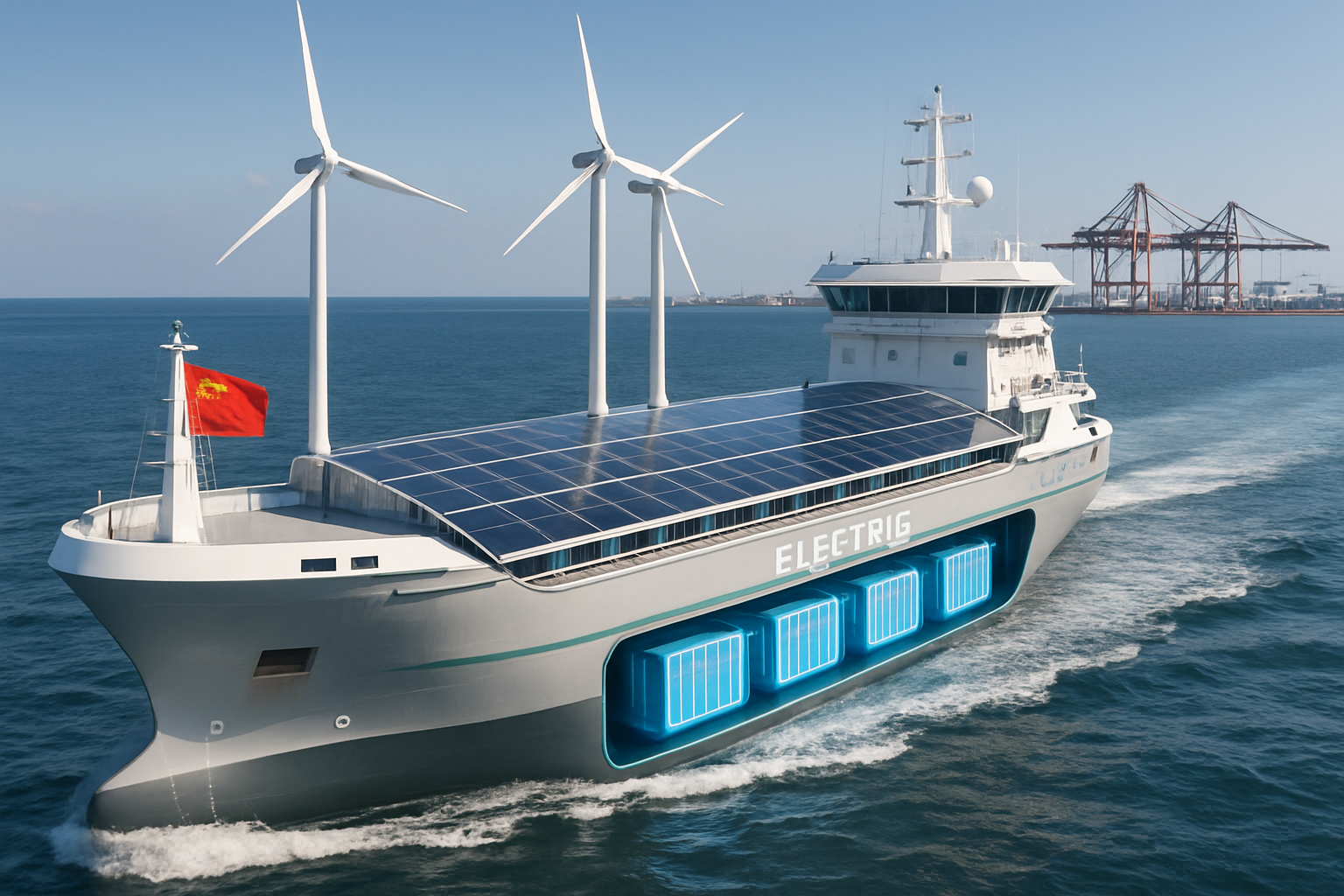
China is spearheading a revolutionary transformation in maritime technology, mobilizing its world-leading shipbuilding industry and battery manufacturing giants to electrify shipping fleets as the nation bets that its electric vehicle revolution can transition from highways to waterways.
Having already electrified its transportation networks on land, China is now leveraging its expertise in battery technology and electric propulsion systems to overhaul maritime transportation. The ambitious initiative represents a cornerstone of Beijing's broader decarbonization commitment, which includes peaking carbon emissions by 2030 and achieving carbon neutrality by 2060.
CATL Spearheads Maritime Battery Innovation
At the forefront of this maritime revolution stands Contemporary Amperex Technology Co. Limited (CATL), the world's largest battery manufacturer, which has already made significant strides in marine applications. The company's breakthrough sodium-ion battery technology, successfully deployed in passenger vehicles through its Naxtra system, is now being adapted for maritime use.
CATL's maritime batteries offer several advantages over traditional marine fuel systems, including reduced fire risks, lower maintenance requirements, and the potential for integration with renewable energy sources. The technology addresses critical challenges in global shipping, where safety concerns and environmental regulations are driving demand for cleaner alternatives to heavy fuel oil.
"The transition from land-based electric vehicles to maritime applications represents a natural evolution of our technology," said a CATL spokesperson. "Our battery systems can provide the reliability and power density required for commercial shipping operations."
— CATL Representative
Strategic Integration with China's Shipbuilding Dominance
China's maritime electrification strategy builds on the nation's commanding position in global shipbuilding, where it controls approximately 50% of the world's shipbuilding capacity. Major Chinese shipyards are now integrating electric propulsion systems with advanced AI-powered navigation and cargo management systems, creating a new generation of intelligent, eco-friendly vessels.
The initiative comes at a critical juncture for the global shipping industry, which faces mounting pressure to reduce emissions under International Maritime Organization regulations. Traditional maritime fuels contribute significantly to global carbon emissions, making the sector a prime target for decarbonization efforts.
Global Maritime Industry Context
China's electric ship push unfolds against a backdrop of significant maritime industry transformation. Recent analysis shows the Pure Car Truck Carrier (PCTC) market has reached a turning point after extraordinary vessel ordering activity between 2021-2024, with over 280 new vessels ordered during that period. However, 2025 saw subdued new ordering as the automotive industry's shift toward electric vehicles and regionalized production reduced long-distance shipping demands.
This shift has created an opportunity for Chinese shipbuilders to differentiate their offerings through advanced electric propulsion and AI-integrated systems. While traditional automotive carriers face uncertain demand, electric-powered vessels with flexible cargo capabilities represent a strategic pivot for the maritime industry.
Technology Integration and AI Capabilities
Chinese electric ships incorporate sophisticated AI systems for route optimization, energy management, and predictive maintenance. These vessels can adjust power consumption based on weather conditions, cargo weight, and destination requirements, maximizing efficiency while ensuring reliable operations.
The AI systems also enable autonomous navigation capabilities in certain conditions, reducing crew requirements and operating costs. Advanced sensors and machine learning algorithms help vessels avoid obstacles, optimize fuel consumption patterns, and maintain communication with port facilities for coordinated arrivals and departures.
Competitive Response from Global Players
China's maritime electrification initiative has prompted responses from other major shipbuilding nations. Greek maritime companies, including Atlas Maritime under Leo Patitsas, have been diversifying their fleets with new vessel orders from South Korean shipyards, while European companies invest in next-generation vessels with advanced propulsion and emission reduction technologies.
The competitive landscape also includes established maritime nations seeking to maintain their positions through operational excellence and strategic flexibility. Companies such as Safety Management Overseas S.A. and Safe Bulkers Management Ltd. have demonstrated zero detentions over 36-month periods, showcasing the importance of operational reliability in the evolving market.
Environmental and Economic Implications
China's electric ship development addresses multiple environmental challenges simultaneously. Beyond reducing direct emissions from shipping operations, the technology supports integration with renewable energy sources and reduces dependence on fossil fuel supply chains that have proven vulnerable to geopolitical disruptions.
The economic implications extend beyond shipbuilding to encompass China's broader manufacturing ecosystem. Electric ship production requires advanced battery systems, power electronics, and sophisticated control software – sectors where China has developed significant competitive advantages through its electric vehicle industry.
International Cooperation and Market Development
Despite geopolitical tensions affecting various maritime operations, including recent sanctions on Russian shipping services, China's electric ship technology has attracted international interest. The technology offers potential solutions for shipping companies seeking to comply with increasingly stringent environmental regulations while maintaining operational efficiency.
Several international partnerships are emerging as foreign shipping companies explore Chinese electric propulsion systems for retrofit projects and new vessel construction. These collaborations represent pragmatic responses to environmental pressures that transcend broader geopolitical considerations.
Challenges and Implementation Timeline
The transition to electric shipping faces significant technical and logistical challenges. Battery weight and charging infrastructure requirements pose particular concerns for long-distance maritime operations. Chinese engineers are addressing these challenges through modular battery systems that can be reconfigured based on voyage requirements and the development of specialized charging facilities at major ports.
Implementation timelines vary by vessel type and operational requirements. Coastal shipping and inland waterway operations present the most immediate opportunities for electric propulsion, while long-distance ocean shipping may require hybrid systems that combine electric power with alternative fuel sources during the transition period.
Future Implications for Global Shipping
China's maritime electrification initiative represents more than technological advancement – it signals a fundamental shift in how global shipping operations will be conducted in the coming decades. Success in electric ship development could position China as the dominant technology provider for the maritime industry's environmental transition, similar to its role in global electric vehicle markets.
The initiative also demonstrates how technological expertise developed in one sector can create competitive advantages in related industries. China's experience with battery manufacturing, electric powertrains, and AI systems from its automotive sector is now providing the foundation for maritime leadership.
As the global shipping industry navigates environmental regulations, supply chain disruptions, and changing trade patterns, China's electric ship technology offers a pathway toward sustainable maritime operations while maintaining the efficiency required for international commerce.