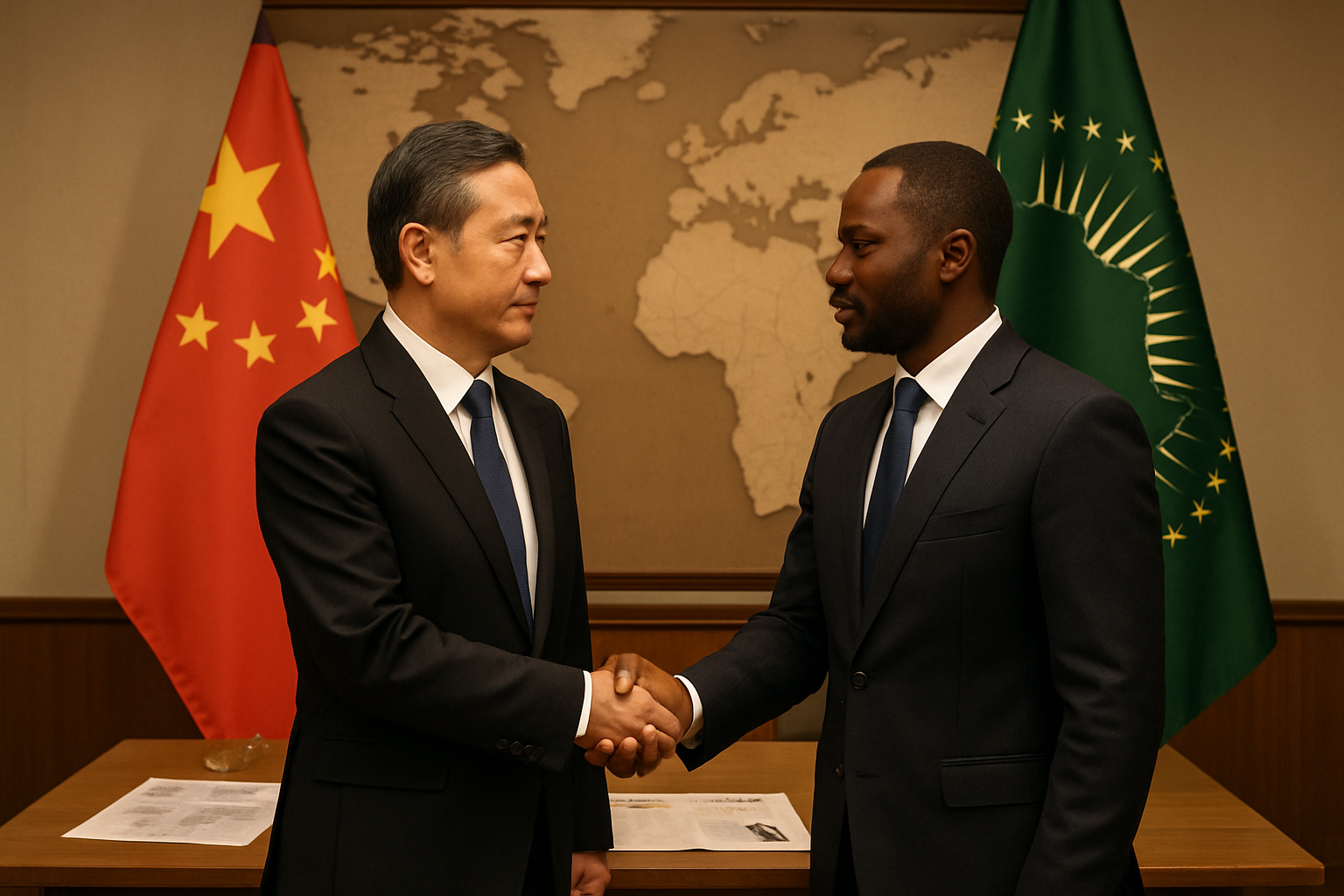
Chinese Foreign Minister Wang Yi announced that China will implement complete tariff exemption for all African products starting May 1, 2026, representing the most comprehensive expansion of China-Africa trade relations in modern history during a landmark year marking 70 years of diplomatic ties between China and African nations.
The announcement, made during a press conference in Beijing on the sidelines of the Fourth Session of the 14th National People's Congress, extends zero-tariff access to all 53 African countries maintaining diplomatic relations with China, dramatically expanding from the previous framework covering only 33 least-developed countries.
Historic Expansion of Economic Partnership
Wang Yi emphasized that 2026 marks the 70th anniversary of the establishment of diplomatic relations between China and Africa, alongside the launch of the Year of Humanitarian and Cultural Exchange between both sides. The tariff elimination policy will create unprecedented market access for African exporters across agricultural products, minerals, manufactured goods, and textiles.
"China-Africa friendship has withstood the test of changing international circumstances, demonstrating strong vitality," Wang Yi declared, referencing China's diplomatic tradition of foreign ministers beginning each year with visits to Africa. "This consistency reflects the spirit and commitment of our enduring partnership."
Strategic Context and Global Implications
The announcement builds upon China's position as Africa's largest trading partner and comes at a pivotal moment in global trade dynamics. With China controlling approximately 60% of global critical minerals production and 90% of refining capacity, the zero-tariff policy positions Beijing as a champion of multilateral economic cooperation.
This move contrasts sharply with the Trump administration's bilateral trade strategy, particularly as the U.S. faces constitutional challenges to its own tariff programs. Recent Supreme Court rulings limiting presidential tariff authority have created uncertainty in American trade policy, providing China an opportunity to strengthen its position as a reliable economic partner.
Belt and Road Initiative Integration
The tariff elimination policy integrates seamlessly with China's Belt and Road Initiative infrastructure investments across Africa. Major projects including Angola's Lobito Corridor railway and Algeria's Gara Djebilet railway accessing the world's third-largest iron ore reserves create a comprehensive framework combining physical connectivity with trade facilitation.
Zimbabwe has been confirmed as a key beneficiary despite facing international sanctions, demonstrating China's commitment to economic partnerships transcending traditional geopolitical alignments. The policy supports African Continental Free Trade Area (AfCFTA) objectives by providing external market opportunities that complement internal African trade expansion.
Implementation and Economic Impact
The May 2026 implementation timeline provides African governments and export agencies with crucial preparation time to develop strategies capitalizing on Chinese market access. Success will depend on African development of export capacity, quality standards compliance, and logistics coordination to maximize these unprecedented trade opportunities.
The African Finance Corporation reports that the continent holds $29.5 trillion in mineral reserves, representing 20% of the global total, with $8.6 trillion remaining untapped. The Chinese market access could unlock significant portions of this potential through enhanced trade relationships and value-chain integration.
Diplomatic and Strategic Significance
The announcement reinforces China's South-South cooperation model, offering an alternative to traditional North-South development frameworks characterized by conditional assistance. By providing permanent preferential treatment rather than aid-based arrangements, China positions itself as supporting African economic sovereignty and self-determination.
This policy emerges as seven African countries—Angola, Democratic Republic of Congo, Guinea, Kenya, Morocco, Sierra Leone, and Zambia—participate in the US-EU-Japan Critical Minerals Partnership, demonstrating Africa's strategic importance in global supply chain diversification efforts.
Challenges and Opportunities
Implementation success requires coordination between Chinese customs authorities and African export agencies, alongside significant investments in African export infrastructure and quality assurance systems. African governments must develop integrated strategies combining regional AfCFTA trade with Chinese market access opportunities.
The policy's timing coincides with increased global focus on supply chain resilience and critical materials security, particularly as international tensions affect traditional trade relationships. African nations can leverage this opportunity to diversify their economic partnerships while maintaining strategic autonomy.
Long-term Impact on Global Trade
This comprehensive tariff elimination establishes new precedents for economic partnerships prioritizing mutual benefit over conditional assistance. The policy could influence international development and trade approaches globally, potentially reshaping trade patterns through strategic economic partnerships that transcend traditional geopolitical alignments.
As China celebrates seven decades of diplomatic relations with Africa, this historic trade expansion demonstrates the evolution from infrastructure-focused cooperation to comprehensive economic partnership. The success or failure of this initiative will likely influence similar partnerships worldwide and could serve as a template for South-South economic cooperation in the 21st century.
The zero-tariff policy represents more than trade liberalization—it symbolizes a fundamental shift toward economic relationships based on partnership rather than dependency, positioning both China and Africa as architects of a more multipolar global economic order.