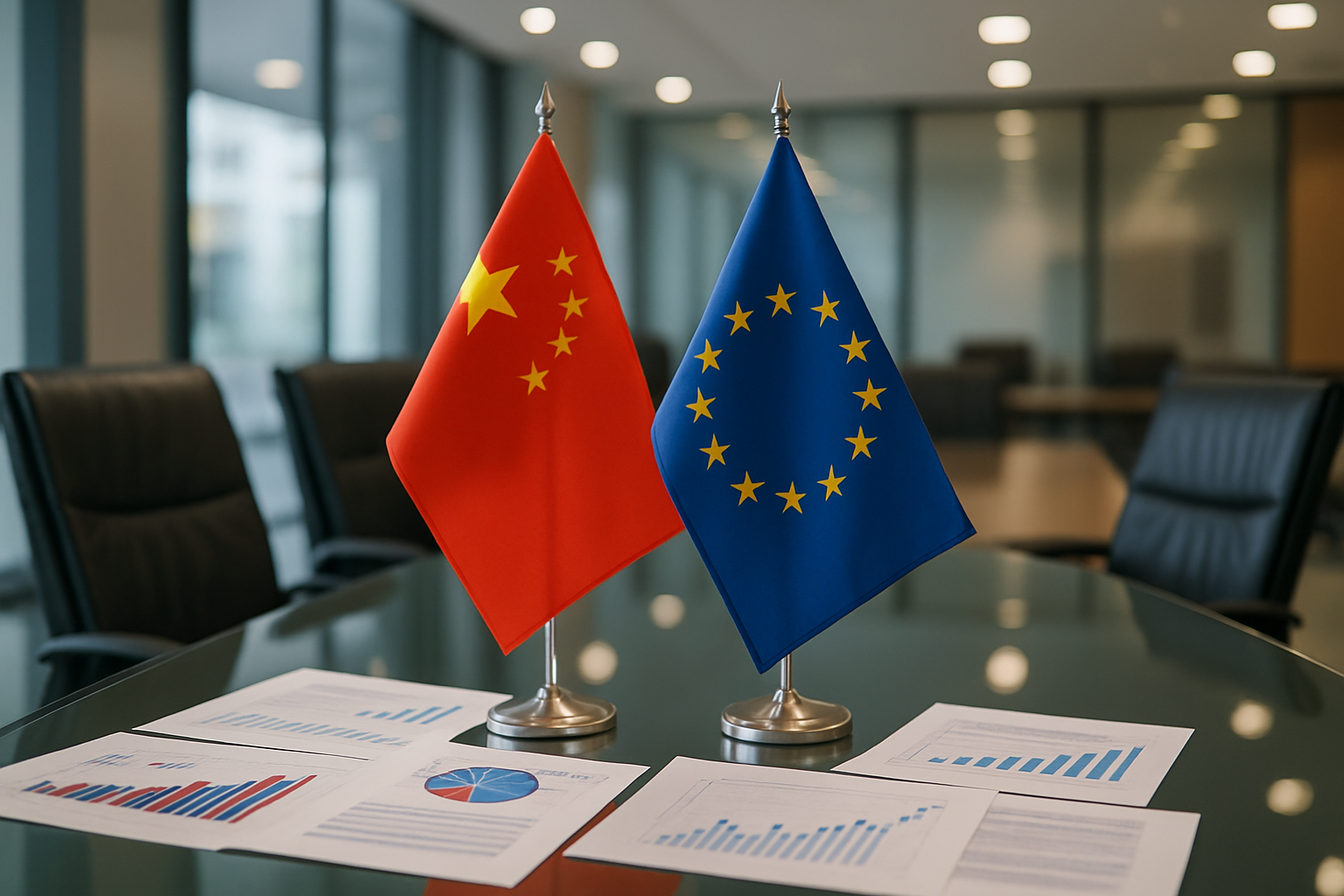
China announced a significant reduction in tariffs on European Union dairy imports worth over US$500 million on Thursday, marking a crucial easing of trade tensions following an 18-month anti-dumping investigation that began in response to EU duties on Chinese electric vehicles.
The final ruling by China's Ministry of Commerce establishes new tariff rates ranging from 7.4 percent to 11.7 percent on dairy imports from the EU, effective for a five-year period beginning February 13. These substantially reduced rates replace the much higher 21.9 percent to 42.7 percent range that had been imposed in a preliminary decision last December.
Strategic Trade Recalibration
The tariff reduction represents a marked shift from the confrontational trade posture that characterized China-EU relations during the electric vehicle dispute. The original anti-dumping investigation was launched as a direct response to the European Union's imposition of duties on Chinese electric vehicles, creating a tit-for-tat dynamic that threatened broader economic cooperation.
According to diplomatic sources familiar with the negotiations, the decision reflects China's broader strategy of pursuing targeted, sector-specific arrangements rather than comprehensive trade agreements. This approach demonstrates Beijing's flexibility in maintaining strategic relationships while managing broader geopolitical tensions with Western partners.
"This represents gradual easing of trade tensions between China and the European Union through pragmatic sector-by-sector cooperation."
— Slovak Trade Analysis, February 2026
Academic and Cultural Expansion
Simultaneously, China is expanding its international presence through academic and cultural initiatives. Beijing has announced the expansion of its Zhiyuan academic program to strengthen artificial intelligence research capabilities by attracting both national and international talent to the capital.
The program represents China's commitment to becoming a global hub for AI innovation, leveraging international expertise while developing domestic capabilities. This initiative aligns with China's broader technological advancement strategy, particularly in areas where Western supply chain restrictions have created challenges for Chinese tech companies.
Space Infrastructure Development
China's technological ambitions extend beyond terrestrial boundaries, with recent achievements in space infrastructure demonstrating the country's expanding capabilities. The successful launch of a Long March-12 carrier rocket from Wenchang marked the deployment of the 19th group of low-orbit internet satellites into preset orbit, representing the 12th launch since China's first commercial spacecraft launch site entered service.
The Wenchang facility has now entered a phase of high-density, routine operations, signaling China's maturation as a major space power. The development has transformed the surrounding area into what officials describe as a "Space Town," driving both industrial growth and tourism in Hainan Province.

Economic Context and Challenges
These developments occur against a backdrop of complex economic challenges facing Chinese companies. Lenovo, the world's largest PC manufacturer, recently reported a 21 percent profit decline in the December quarter, with CEO Yang Yuanqing describing the global memory shortage as a structural issue rather than a temporary fluctuation.
The semiconductor supply imbalance has created what industry experts describe as "prolonged impact" affecting the entire technology sector. This situation has highlighted the importance of China's efforts to develop alternative supply chains and reduce dependence on foreign technology components.
Energy Sector Transformation
Domestically, China continues implementing major structural reforms. Beijing has issued directives to dismantle administrative barriers in the electricity sector, creating a unified national power market designed to support energy security and the green transition during the 15th five-year planning period.
These structural changes are considered essential for achieving China's 2030 carbon-peak target, representing a departure from the previously fragmented energy sector toward optimized resource allocation nationwide. The unified power market aims to better accommodate renewable energy sources while maintaining grid stability.
International Relations Strategy
The dairy tariff reduction provides a template for managing economic cooperation amid broader geopolitical tensions. Rather than pursuing comprehensive trade agreements that might face political obstacles, China appears to be focusing on sector-specific arrangements that can deliver concrete benefits while avoiding more contentious issues.
This approach has proven effective in maintaining economic ties with European partners even as political relationships face strain over issues ranging from human rights to technology transfer. The five-year duration of the new dairy tariffs suggests China's commitment to providing predictability for European exporters.
"China's transformation from lucrative market to competitive threat in high-tech fields puts pressure on European industrial companies, as Chinese firms now compete directly with established European manufacturers."
— German Industry Assessment, February 2026
Global Expansion and Competition
The combination of trade pragmatism, technological advancement, and international expansion reflects China's multi-faceted approach to global competition. While reducing trade barriers in some sectors, China simultaneously pursues technological self-reliance and expands its presence in emerging markets through infrastructure projects and academic partnerships.
The Zhiyuan AI program expansion demonstrates how China leverages its domestic market and resources to attract international talent, potentially accelerating innovation in strategic technologies. This brain gain strategy complements China's substantial investments in research and development across multiple sectors.
Implications for Global Trade
The EU dairy tariff reduction signals potential opportunities for similar arrangements in other sectors where mutual benefits can be identified. European agricultural exporters, particularly dairy producers, stand to benefit significantly from improved access to China's massive consumer market.
However, the selective nature of these arrangements also highlights the continuing fragmentation of global trade relationships. Rather than the broad-based multilateral agreements that characterized previous decades, international commerce increasingly operates through bilateral and sector-specific deals tailored to specific political and economic circumstances.
As China continues to navigate complex relationships with Western partners while pursuing its technological and economic objectives, the February 2026 developments provide insight into Beijing's evolving strategy of selective cooperation combined with strategic competition. The success of this approach will likely influence China's future international economic policies and shape the broader landscape of global trade relations.