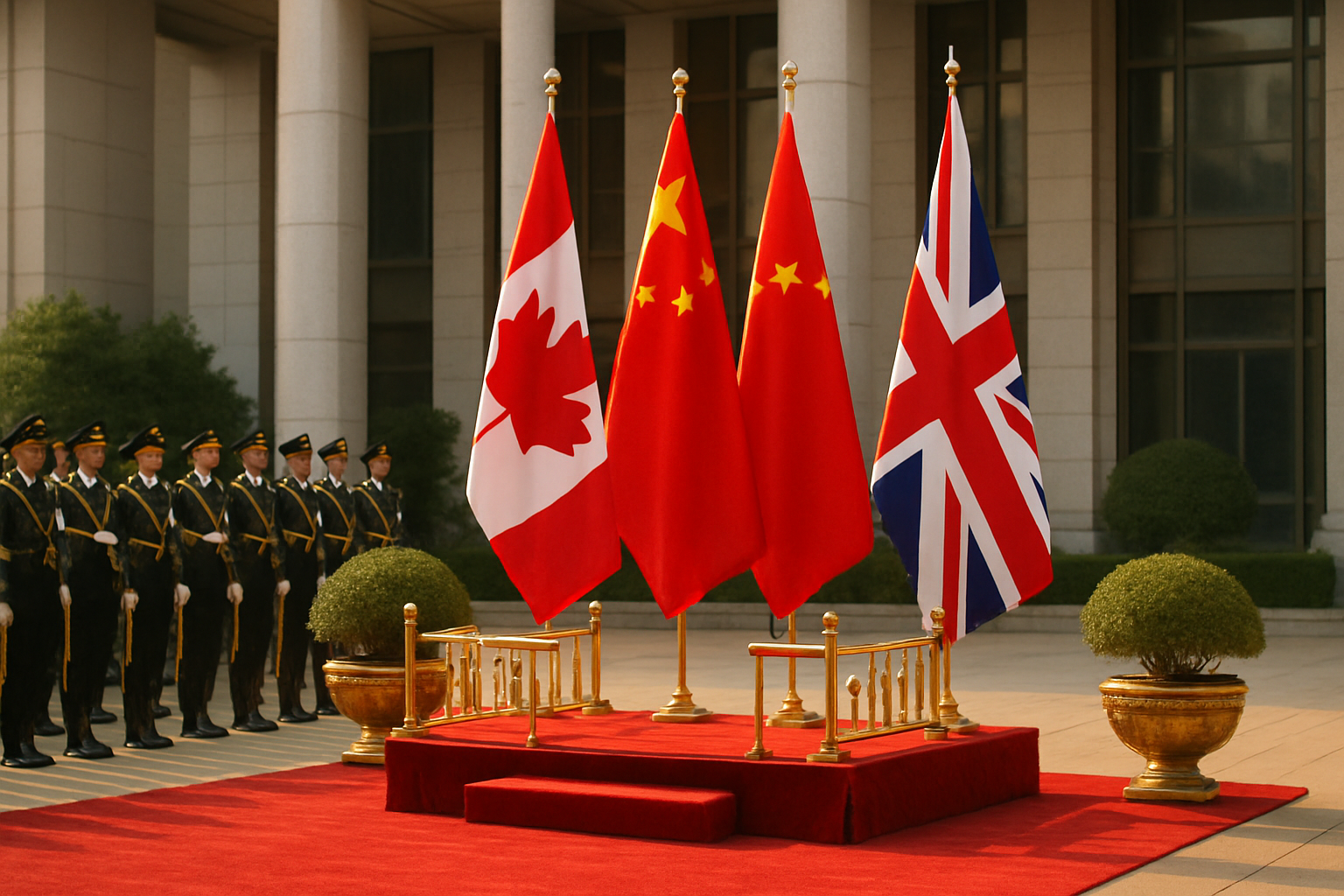
China officially announced visa-free entry for British and Canadian nationals effective February 17, 2026, allowing 30-day stays for tourism, business, visiting relatives, exchanges, or transit purposes, marking the most significant expansion of China's diplomatic outreach to Western nations in recent years.
The policy, confirmed by China's Foreign Ministry, applies to holders of ordinary passports and will remain in effect until at least December 31, 2026. The timing of the announcement, coinciding with Chinese New Year celebrations, underscores Beijing's strategic approach to international engagement during its most important annual festival period.
Diplomatic Context and High-Level Visits
The visa policy breakthrough follows crucial January 2026 visits to Beijing by UK Prime Minister Keir Starmer and Canadian Prime Minister Mark Carney. These diplomatic missions, occurring within weeks of each other, laid the groundwork for what Chinese officials describe as a new chapter in bilateral relations based on "pragmatic engagement" and mutual respect.
Prime Minister Carney's approach, characterized as "pragmatic engagement," represents a careful balance between pursuing economic opportunities with China while maintaining security concerns. This policy framework appears to have resonated with Chinese leadership, contributing to the favorable visa decision.
"This represents a diplomatic breakthrough amid Carney's pragmatic engagement policy seeking to balance economic opportunities with security concerns."
— Diplomatic Analyst, Beijing Institute of International Relations
Strategic Timing During Chinese New Year
The February 17 implementation date aligns strategically with Chinese New Year celebrations, China's most important cultural and economic period. This timing suggests Beijing views the visa policy as more than administrative convenience—it represents a gesture of goodwill during the nation's most significant annual celebration.
The policy announcement during this culturally important period demonstrates China's commitment to fostering deeper people-to-people exchanges and cultural understanding with both nations, moving beyond purely transactional diplomatic relationships.
Implications for Five Eyes Alliance
The selective nature of China's visa-free policy carries significant geopolitical implications, particularly for the Five Eyes intelligence alliance comprising the United States, United Kingdom, Canada, Australia, and New Zealand. With this announcement, the United States remains the only Five Eyes member without visa-free access to China, highlighting Beijing's nuanced approach to international relations.
This development represents what analysts describe as "selective Chinese diplomatic engagement," where Beijing rewards nations pursuing what it considers respectful and practical cooperation while maintaining pressure on Washington. The exclusion of the US from visa-free access sends a clear message about China's preferences for bilateral engagement approaches.
Economic and Tourism Benefits
Industry experts anticipate significant benefits for both tourism and business sectors. The removal of visa requirements eliminates a major administrative barrier for shorter-term visits, expected to boost cultural exchanges and restore pre-pandemic travel levels between China and both nations.
The policy streamlines business operations for companies engaged in trade, investment, and technological cooperation with China. For tourists, the 30-day allowance provides sufficient time for comprehensive exploration of China's cultural sites, business opportunities, and educational exchanges.
Travel industry representatives welcome the policy as addressing long-standing concerns about bureaucratic obstacles to China travel. The timing, beginning in late February, positions the policy to capture spring tourism season and business travel recovery.
Broader Economic Cooperation Framework
The visa policy emerges within broader economic cooperation discussions that include agreements on electric vehicles, agricultural products, and technology transfer. These comprehensive economic partnerships demonstrate China's willingness to engage constructively with nations pursuing collaborative approaches to bilateral relations.
Canadian agricultural exports, British financial services, and technological cooperation in renewable energy represent areas where enhanced people-to-people mobility could facilitate deeper business relationships and cultural understanding.
Regional and Global Implications
China's selective visa liberalization reflects its broader diplomatic strategy of rewarding pragmatic engagement while maintaining leverage over nations it views as less cooperative. This approach provides a template for other countries seeking improved access to Chinese markets and tourism opportunities.
The policy success will likely influence other nations' engagement strategies with China, potentially encouraging more countries to adopt what Beijing considers respectful and mutually beneficial diplomatic approaches. The contrast with continued US restrictions highlights the rewards of pragmatic cooperation over confrontational policies.
Implementation and Future Prospects
The December 31, 2026 end date suggests China views this as a pilot program, with extension possibilities dependent on program success and continued positive bilateral relations. The one-year timeframe allows for comprehensive evaluation of tourism impacts, business facilitation benefits, and overall diplomatic relationship enhancement.
Chinese immigration officials are preparing for increased processing capabilities at major entry points, including Beijing, Shanghai, and Guangzhou airports. The policy requires coordination with airline partners and tourism infrastructure to accommodate anticipated visitor increases.
Success of the visa-free program could establish precedents for similar arrangements with other nations demonstrating China's preferred approach to international cooperation—respectful engagement coupled with practical economic benefits for all parties involved.
Testing Coexistence of Competition and Cooperation
The visa policy represents a crucial test case for whether practical cooperation can coexist with strategic competition in the contemporary international system. By facilitating easier travel for UK and Canadian citizens while maintaining restrictions on others, China demonstrates its belief that selective engagement can advance its interests while encouraging more constructive international relationships.
The policy's success or failure will provide valuable insights into the viability of compartmentalized cooperation—separating economic and cultural exchanges from security competition—as a model for managing complex great power relationships in the 21st century.