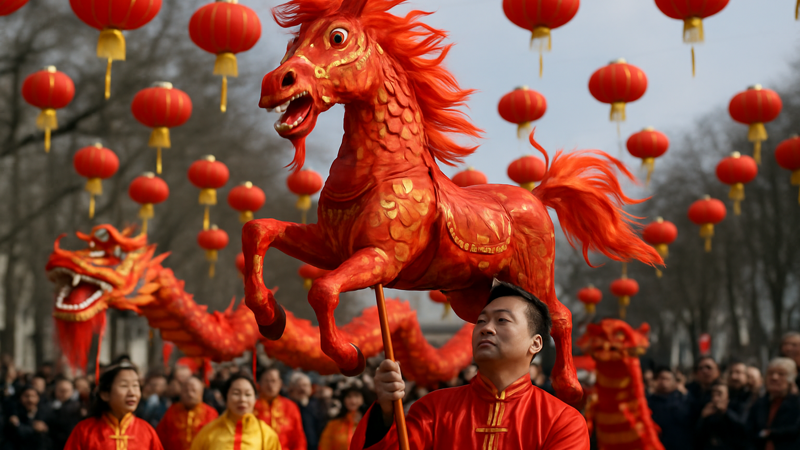
Chinese New Year celebrations commenced globally on February 17, 2026, marking the beginning of the Year of the Fire Horse with unprecedented international participation spanning five continents and showcasing remarkable cultural fusion between traditional customs and contemporary multicultural realities.
The Fire Horse, occurring once every 60 years in the Chinese zodiac cycle, symbolizes energy, determination, and transformation—themes that have resonated deeply with communities worldwide as they embrace renewal and progress following years of global challenges.
Traditional Rituals Meet Modern Celebrations
In China, the festival has preserved ancient customs while embracing technological innovation. Traditional spring rituals including "Biting the Spring" (Yao Chun), "Whipping the Spring," and "Speaking the Spring" continue to mark the transition from winter stillness to spring vitality, reflecting people's hopes for renewal, good fortune, and a prosperous farming year.
These seasonal practices involve eating spring foods, ceremonial agricultural preparations, and community gatherings that have been observed for millennia. The customs demonstrate the deep connection between Chinese culture and natural cycles, emphasizing harmony between human activities and environmental rhythms.
International Embrace Across Continents
El Salvador has officially recognized the cultural significance of Chinese New Year, with the Chinese Embassy highlighting the Fire Horse as a symbol of strength and advancement. The Fire element, associated with passion and leadership, has particular resonance in Latin American communities where Chinese cultural influence has grown substantially.
In Malaysia, the celebrations have taken on extraordinary significance as Chinese New Year coincides with Ramadan preparations, creating a unique multicultural convergence. Political leaders including Parti Bersatu Sabah officials have conducted festive walkabouts in Kota Kinabalu, visiting markets and engaging directly with diverse communities celebrating the occasion.
Malaysian celebrations particularly emphasize the reunion dinner tradition, which has evolved to incorporate not just traditional Chinese dishes but also Malay and Indian culinary elements. This cultural blending represents the successful integration of Chinese traditions within Malaysia's multicultural fabric, creating inclusive celebrations that strengthen racial unity while preserving ancestral heritage.
"The reunion dinner no longer features just traditional Chinese dishes, but incorporates elements of Malay and Indian cuisine, creating something uniquely Malaysian while honoring our Chinese heritage."
— Nur Liyana Abdullah, Kuala Lumpur resident
Cultural Diplomacy and Global Partnerships
The timing of celebrations has coincided with significant diplomatic developments, including China's announcement of visa-free travel for British and Canadian nationals effective February 17, 2026. This strategic timing demonstrates how cultural celebrations serve as vehicles for international cooperation and goodwill gestures.
European participation has been particularly notable, with Finland acknowledging the Fire Horse year despite minimal source details, indicating the global reach of Chinese cultural influence even in Nordic countries where Chinese communities are relatively small.
The celebrations have also provided platforms for enhanced China-ASEAN cooperation, marking the 35th anniversary of dialogue relations and the 5th anniversary of their Comprehensive Strategic Partnership. These diplomatic milestones underscore how cultural festivals serve broader geopolitical and economic cooperation objectives.
Technology Integration and Cultural Preservation
This year's celebrations have demonstrated sophisticated integration of technology with traditional practices. Digital platforms have enabled global sharing of festivities, virtual participation for diaspora communities, and augmented reality educational resources that teach younger generations about cultural significance.
Social media engagement has reached unprecedented levels, with communities worldwide sharing their celebrations and creating virtual bridges between Chinese and non-Chinese participants. This technological dimension has preserved cultural authenticity while making traditions accessible to international audiences.
Economic Impact and Community Building
The global scale of Fire Horse celebrations has generated substantial economic benefits through increased tourism, hotel occupancy, restaurant revenue, and retail sales during the festival period. Singapore, Hong Kong, and Malaysia have all reported significant increases in visitor numbers and hospitality sector activity.
Beyond immediate economic impact, the celebrations have created lasting cultural infrastructure including performance groups, cultural organizations, and community networks that remain active throughout the year, serving as bridges between Chinese and non-Chinese communities.
Symbolic Significance for Global Recovery
The Fire Horse symbolism of energy, perseverance, and progress has particular resonance in 2026 as communities worldwide focus on transformation and positive change. The rare 60-year occurrence has inspired celebrations emphasizing forward movement and renewal, appealing to international audiences through universal themes of hope and determination.
Chinese youth have been particularly active in reinventing traditional practices through new artistic expression, digital storytelling, and community engagement while preserving essential cultural meanings. This generational bridge demonstrates how Spring Festival traditions continue to evolve while maintaining their spiritual and cultural core.
Inclusive Character of Modern Celebrations
The 2026 celebrations have been notably inclusive, featuring authentic Chinese elements while welcoming participants from all backgrounds. Educational programming, traditional crafts workshops, and multicultural performance opportunities have created templates for cultural festivals that build understanding and cooperation across cultural boundaries.
This inclusive approach has been particularly successful in Malaysia, where Chinese New Year celebrations actively incorporate local customs and invite participation from Malay and Indian communities, creating shared cultural experiences that strengthen national unity while respecting diversity.
Looking Forward: Cultural Legacy and Continued Growth
The success of global Fire Horse celebrations establishes new models for international cultural engagement that balance authenticity with accessibility. The events demonstrate how traditional festivals can adapt to contemporary multicultural contexts while maintaining their essential cultural significance.
As communities worldwide continue their celebrations throughout the lunar month, the 2026 Year of the Fire Horse has already established itself as a landmark moment in the global expansion of Chinese cultural influence, creating lasting frameworks for cross-cultural understanding and international cooperation.
The unprecedented international participation, sophisticated technology integration, and successful multicultural adaptation of Chinese New Year celebrations represent a new chapter in cultural globalization—one that preserves traditional authenticity while embracing contemporary diversity and international friendship.