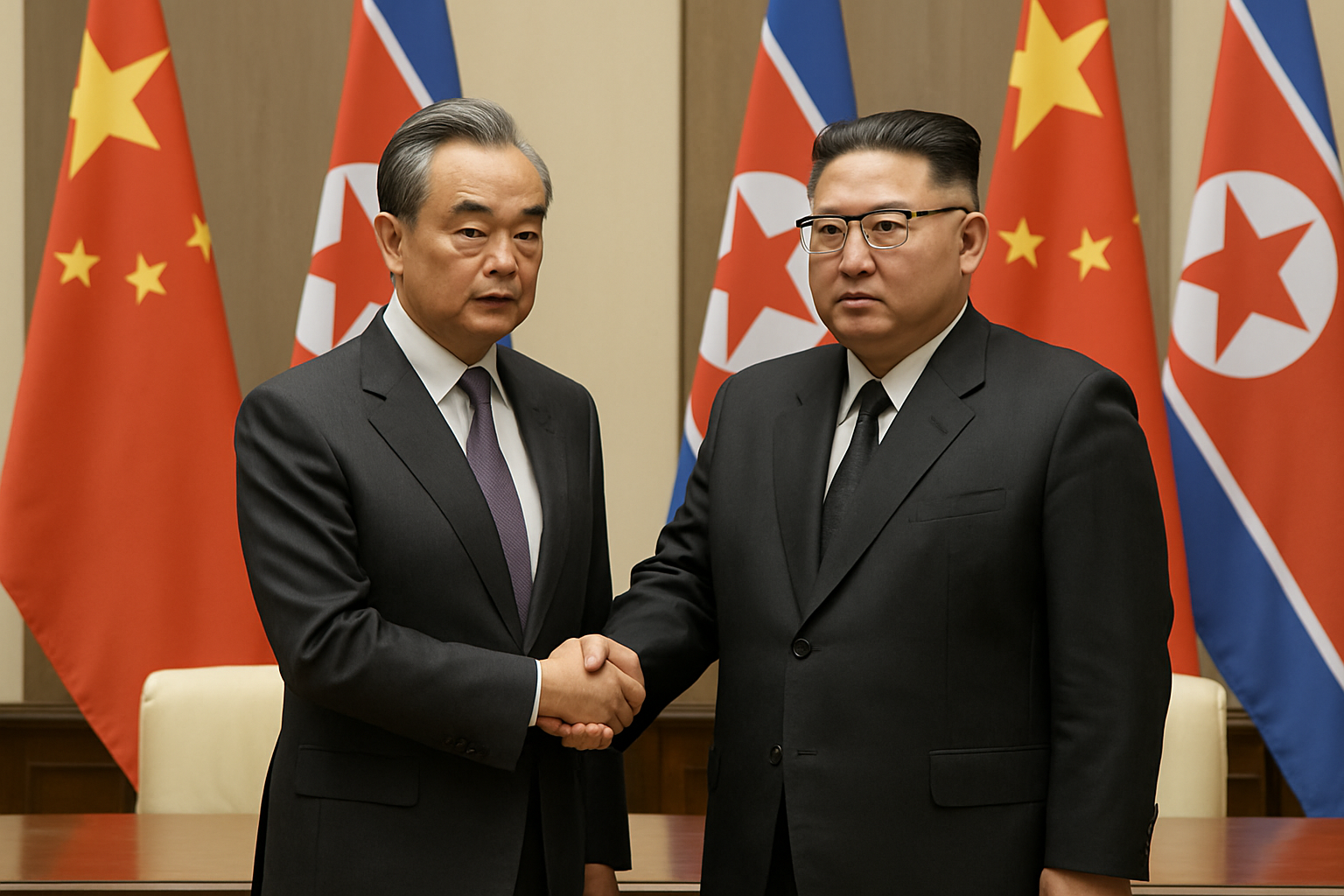
Chinese Foreign Minister Wang Yi concluded a significant diplomatic visit to North Korea on Friday, meeting with leader Kim Jong Un and pledging deeper bilateral cooperation between the two nations amid escalating regional tensions and unprecedented succession planning in Pyongyang.
Wang Yi, a member of the Political Bureau of the Communist Party of China Central Committee, affirmed Beijing's commitment to "jointly implement the important consensus reached by the top leaders of the two parties and two countries" and promised to "promote practical cooperation" during his first visit to North Korea in six years.
Strategic Partnership in "New Phase"
During the two-day visit, Wang declared that China-North Korea relations were entering a "new phase" following last year's summit between Kim Jong Un and Chinese President Xi Jinping. The timing of this diplomatic engagement appears carefully calculated as North Korea advances sophisticated weapons testing programs and manages an unprecedented political transition.
According to sources familiar with the discussions, the countries are enhancing "communication in international and regional affairs," signaling Beijing's intention to strengthen its influence over North Korean policy during a critical period of regional instability.
"China is willing to work with the Democratic People's Republic of Korea to jointly implement the important consensus reached by the top leaders of the two parties and two countries."
— Wang Yi, Chinese Foreign Minister
Context of Advanced Weapons Development
The diplomatic visit occurred against the backdrop of North Korea's accelerating weapons program. Just days before Wang's arrival, North Korea conducted comprehensive three-day weapons testing including Hwasong-11A ballistic missiles equipped with cluster warheads, electromagnetic warfare systems, and graphite bombs designed to disable electrical grids.
These tests, supervised by Army General Kim Jong-sik, represent North Korea's entry into advanced electronic warfare domains, complicating defensive planning for South Korea, Japan, and the United States. The timing demonstrates Pyongyang's strategy of combining military demonstrations with diplomatic engagement.
North Korea's military activity has increased 23% since 2025, with intelligence assessments confirming sufficient enriched uranium for multiple nuclear weapons despite comprehensive international sanctions. The February 2026 unveiling of 600mm nuclear-capable rocket systems described as "unique in the world" for "special attack missions" marked a significant advancement in tactical nuclear capabilities.
Unprecedented Succession Planning
Wang's visit coincides with historic developments in North Korean succession planning. South Korean intelligence confirmed in February 2026 that Kim Jong Un has formally designated his daughter Kim Ju Ae as his successor, representing the first potential female leadership in the 78-year history of the Kim dynasty.
The 13-year-old Kim Ju Ae has undergone systematic elevation since her November 2022 public debut, including policy input beyond ceremonial appearances, weapons demonstrations attendance, and a September 2025 Beijing visit marking her first international travel. Her preparation requires careful legitimacy building within North Korea's traditionally masculine political and military hierarchy.
China's sustained engagement during this unprecedented transition provides crucial international legitimacy for the succession process. The restoration of passenger rail service between Beijing and Pyongyang in March 2026, after a six-year suspension, created enhanced Chinese leverage over North Korean policy during this critical period.
Regional Security Implications
The strengthening China-North Korea partnership creates complex triangular dynamics affecting Northeast Asian security. While Kim Jong Un issued a conditional diplomatic opening to the United States in February 2026, stating North Korea was prepared for "peaceful coexistence or eternal confrontation" with the choice lying with Washington, he simultaneously designated South Korea as a "hostile state" in the constitution.
This dual-track approach reflects North Korea's assessment that direct engagement with major powers offers better prospects than regional diplomatic frameworks. China's enhanced relationship with Pyongyang comes as Beijing faces its own regional challenges, including increased military tensions around Taiwan and broader competition with the United States in the Indo-Pacific.
Regional allies South Korea, Japan, and the United States face renewed challenges in addressing North Korea's weapons advancement through diplomatic channels. The sophisticated partnership between Beijing and Pyongyang requires innovative approaches that balance security concerns with conflict prevention frameworks.
Nuclear Governance Crisis Context
The diplomatic developments occur during a broader nuclear governance crisis following the February 2026 expiration of the New START treaty between the United States and Russia – marking the first time in over 50 years without superpower nuclear constraints. UN Secretary-General António Guterres has warned that nuclear risks are at their "highest in decades."
This permissive environment has enabled regional nuclear advancement without traditional arms control frameworks. North Korea's continued weapons development demonstrates the limitations of sanctions-based approaches and highlights the importance of diplomatic engagement, particularly through China as North Korea's primary economic partner and security guarantor.
Economic and Humanitarian Dimensions
Beyond security cooperation, the Wang Yi visit addressed economic partnerships crucial for North Korea's survival under international sanctions. China remains North Korea's largest trading partner and primary source of economic assistance, providing essential leverage over Pyongyang's behavior.
The relationship also extends to humanitarian concerns, with China serving as a crucial intermediary for international engagement with North Korea. Recent developments, including the restoration of transportation links and enhanced diplomatic communication, create opportunities for addressing humanitarian needs while managing security concerns.
Future Implications
The success of China's diplomatic engagement with North Korea during this transition period could establish templates for authoritarian regime adaptation in the 21st century. The combination of military modernization with unprecedented political transformation demonstrates sophisticated long-term planning under external pressure.
For the international community, the strengthening China-North Korea partnership requires developing comprehensive engagement strategies that recognize both countries' strategic priorities while managing regional stability concerns. The precedent set by this relationship may influence similar partnerships among nations excluded from traditional multilateral frameworks.
As Kim Jong Un continues to position North Korea as a relevant factor in great power competition rather than merely a regional security concern, China's role as both partner and restraining influence becomes increasingly critical for Northeast Asian stability.
Looking Ahead
The Wang Yi visit represents more than tactical diplomacy – it signals ongoing reorganization of international relations toward a multipolar order. The success of managing North Korea's female succession while advancing nuclear capabilities provides a potential model for other authoritarian regimes facing similar challenges.
The implications extend beyond the Korean Peninsula, influencing broader approaches to conflict prevention, diplomatic engagement, and regional security cooperation in an era of intensifying great power competition. As traditional multilateral institutions face challenges, bilateral partnerships like the one between China and North Korea may become increasingly significant in shaping global governance patterns for decades to come.