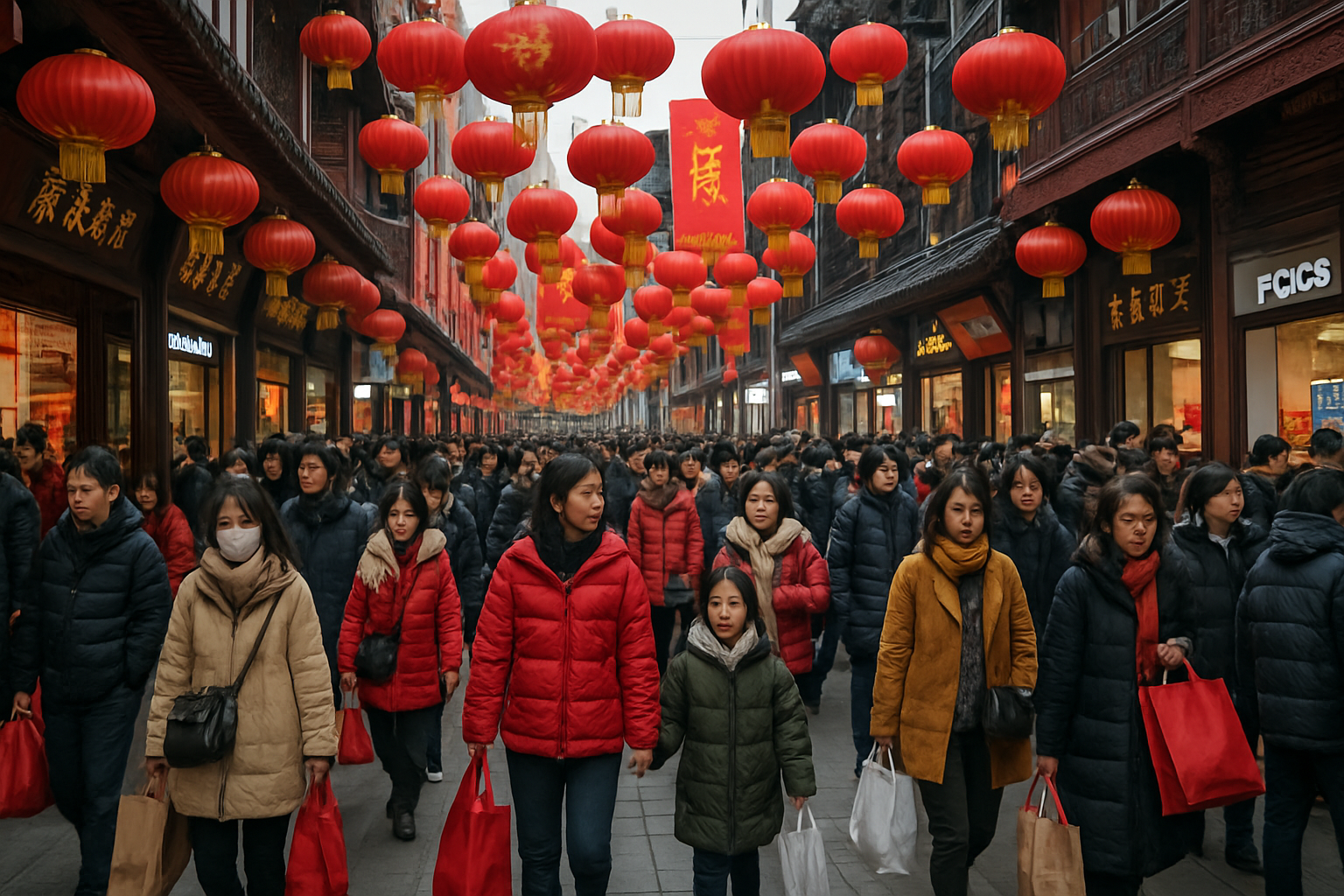
China reported modest but encouraging growth in consumer spending during the Lunar New Year celebrations of 2026, with early official data showing average daily sales at major retail and catering firms rising 8.6 percent year-on-year over the first four days of the holiday break, according to Ministry of Commerce figures released Monday.
The consumer spending data represents a crucial barometer of China's economic recovery trajectory, as authorities extended the traditional holiday period and stepped up stimulus measures designed to reinvigorate domestic demand following years of economic uncertainty.
Across 78 pedestrian shopping streets and commercial districts monitored by the ministry, foot traffic and sales revenue grew 4.5 percent compared to the same period in 2025, demonstrating renewed consumer confidence amid the Year of the Fire Horse celebrations that began February 17.
Cinema Industry Leads Entertainment Spending Surge
The entertainment sector emerged as a standout performer during the holiday period, with Chinese cinema revenues achieving remarkable milestones. According to online platform data, total cinema ticket sales, including pre-sales, surpassed 8 billion yuan (approximately $1.16 billion), temporarily ranking first in global box office performance.
Films released specifically for the Spring Festival period generated over 5.4 billion yuan ($782 million) in total ticket sales including advance bookings, underscoring the continued importance of seasonal entertainment consumption in Chinese cultural celebrations.
This cinema performance reflects broader patterns documented in recent years, where Chinese travelers and consumers have emerged as among Asia's highest-spending demographics. Recent analysis by Airports Council International revealed that Chinese passengers consistently outspend regional averages by 100 percent on luxury goods, gifts, and food during travel, establishing new benchmarks for premium consumption.
Historical Context of Lunar New Year Economic Impact
The 2026 Lunar New Year celebrations occurred against the backdrop of unprecedented global participation in Chinese cultural festivities, with the rare Fire Horse year (occurring once every 60 years) creating enhanced symbolic significance around themes of energy, transformation, and progress.
Previous reporting documented record-breaking tourism volumes, with China experiencing 9.5 billion domestic trips and a 30 percent increase in international tourism during the extended holiday period. Hong Kong projected 11.38 million border crossings, representing a 16 percent increase from 2025 levels, while Singapore and Malaysia reported hotel occupancy rates exceeding 60 percent.
The diplomatic significance of the celebrations was underscored by China's strategic announcement of visa-free travel for British and Canadian nationals, effective February 17, allowing 30-day stays for tourism, business, and cultural exchanges. This policy positioned cultural celebrations as vehicles for international cooperation while demonstrating sophisticated cultural diplomacy.
Government Stimulus Measures and Holiday Extensions
Chinese authorities implemented several measures to support consumer spending during the holiday period, including extended holiday schedules that provided additional time for shopping and leisure activities. These policy interventions reflect broader governmental efforts to transition from export-dependent growth toward domestic consumption-driven economic development.
The modest 8.6 percent growth in retail sales, while positive, suggests consumers remain cautious about major purchases amid ongoing economic uncertainties. The 4.5 percent increase in foot traffic and sales across monitored commercial districts indicates gradual rather than dramatic recovery patterns.
Regional variations in spending patterns emerged, with major urban centers like Beijing and Shanghai showing stronger performance than smaller cities, reflecting underlying economic disparities and varying levels of consumer confidence across different geographic markets.
Technology Integration and Cultural Preservation
The 2026 celebrations demonstrated successful integration of technology with traditional cultural practices, as digital platforms enabled unprecedented global sharing and virtual diaspora participation while maintaining authentic cultural significance. Social media engagement reached record levels, creating virtual bridges between Chinese and international communities celebrating the Fire Horse year.
This technological enhancement rather than replacement of traditional practices provided a template for cultural festivals thriving in contemporary digital environments while preserving essential spiritual and community-building functions.
Economic Implications and Future Outlook
The consumer spending data carries significant implications for China's broader economic trajectory in 2026. The modest growth suggests ongoing consumer caution despite governmental stimulus efforts, indicating that sustained recovery will require continued policy support and improved economic confidence.
Industry analysts note that the emphasis on quality-focused tourism and premium spending patterns, evidenced by strong cinema performance and luxury goods purchases, reflects evolving consumer preferences toward experiential rather than material consumption.
The success of cultural celebrations in driving economic activity demonstrates the continued importance of traditional festivals as economic catalysts, creating lasting infrastructure through performance groups, cultural organizations, and community networks that serve as economic multipliers throughout the year.
"The Fire Horse symbolism of energy, perseverance, and progress resonated with communities seeking renewal and transformation, creating a meaningful context for increased consumer engagement."
— Economic Analysis Summary
International Economic Context
The Chinese consumer spending data emerges within a complex international economic environment, where supply chain constraints and inflationary pressures continue affecting global markets. Recent developments include persistent semiconductor shortages driving sixfold price increases and affecting consumer electronics costs by 20-30 percent.
Despite these challenges, the tourism and hospitality sectors showed remarkable resilience, with Thailand reporting 30,000+ daily Chinese arrivals since early January, and Australia positioning itself as a top destination for Chinese tourists during the extended holiday period.
The consumer spending patterns observed during Lunar New Year 2026 provide important insights into China's economic transition toward domestic demand-driven growth, with cultural celebrations serving as both economic catalysts and diplomatic tools for international cooperation.
As China continues navigating post-pandemic recovery and economic restructuring, the modest but consistent growth in consumer spending during this culturally significant period offers cautious optimism for sustained domestic market development throughout 2026.