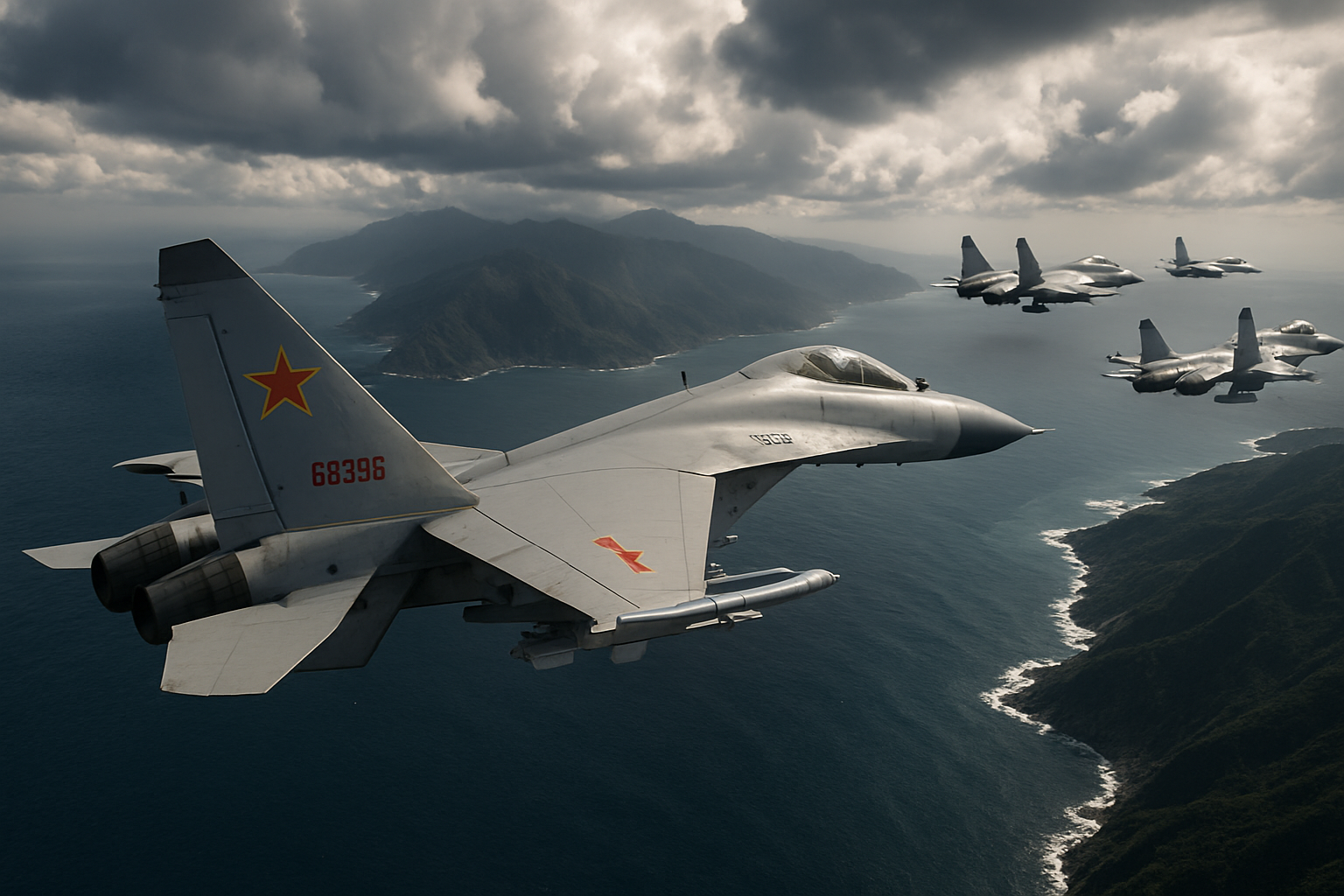
Chinese military flights near Taiwan have resumed after a mysterious seven-day absence, marking the end of an unusual lull in activities that had puzzled regional security analysts, while US intelligence sources indicate Beijing may be preparing to support Iran with financial aid and military components.
The resumption of Chinese military activities comes as part of what observers describe as a broader trend showing significantly fewer flights compared to the same period in 2025, when Chinese aircraft activity around Taiwan increased by 23%, representing the most sustained pressure campaign to date.
Taiwan Strait Tensions Persist Despite Recent Lull
The seven-day pause in Chinese military flights near Taiwan represented an anomaly in Beijing's systematic military pressure campaign designed to "exhaust" and "fatigue" Taiwan's population, according to Defense Minister Wellington Koo's earlier assessments. China has maintained daily warplane and naval vessel deployments around Taiwan as part of what analysts characterize as the most intensive Taiwan Strait tensions in recent history.
Beijing's dual-track approach combines regular military exercises with engagement of Taiwan's opposition parties to circumvent the current Democratic Progressive Party (DPP) government. This strategy represents China's pursuit of "great rejuvenation of the Chinese nation" through alternative political channels while maintaining military pressure.
Regional security experts noted the unusual nature of the recent flight suspension, particularly given China's consistent pattern of military activities throughout 2025 and early 2026. The resumption suggests Beijing's strategic objectives in the Taiwan Strait remain unchanged despite temporary operational adjustments.
US Intelligence Warns of China-Iran Military Cooperation
Simultaneous with the Taiwan developments, US intelligence sources familiar with the situation have indicated that China may be preparing to provide Iran with financial assistance, spare parts, and missile components. This assessment comes amid ongoing tensions between Iran and the United States, with China's heavy reliance on Iranian oil creating complex geopolitical dynamics.
According to intelligence assessments reported by CNN, "China is more cautious in its support. It wants the war to end because it threatens its energy supply," indicating Beijing's careful balancing of strategic interests. The potential support would represent a significant escalation in China-Iran cooperation, following Russia's established pattern of assistance to Tehran.
China's position reflects the delicate balance between its economic interests, particularly energy security through Iranian oil imports, and its desire to avoid direct confrontation with US-led sanctions regimes. Beijing has consistently opposed unilateral sanctions while maintaining that countries should resolve disputes through dialogue and negotiation.
Regional Power Dynamics Shift
The developments occur against a backdrop of evolving regional power structures, with Japan's Prime Minister Sanae Takaichi having secured a historic electoral mandate and strengthened ties with the Trump administration. China's attempt to rally Southeast Asian nations against Japan following Takaichi's Taiwan-supportive remarks gained minimal traction, demonstrating the limits of Beijing's diplomatic influence despite being the region's largest trading partner.
ASEAN nations have shown reluctance to align with Beijing's anti-Japan campaigns, preferring multilateral approaches that balance economic ties with China against security partnerships with Japan and the US. This regional dynamic reflects broader great power competition pressures in the Indo-Pacific, where countries increasingly seek to avoid choosing sides in Sino-Japanese disputes.
Taiwan officials have maintained confidence in their "rock solid" relationship with the United States while welcoming Trump-Xi communications as potentially stabilizing. The island continues to navigate between security needs and diplomatic constraints while upgrading defensive capabilities and maintaining high military readiness against potential invasion scenarios.
Strategic Implications for Global Security
The convergence of resumed Chinese military pressure on Taiwan and potential Iran support represents a concerning development for US strategic interests in both the Pacific and Middle East theaters. Intelligence assessments suggest these parallel tracks reflect Beijing's broader challenge to US global influence through support of regional adversaries.
China's military leadership changes, including the corruption investigation of General Zhang Youxia, PLA vice-chairman, may have contributed to the temporary pause in Taiwan activities. These personnel shifts have been described by PLA media as eliminating obstacles to military modernization, potentially clearing the path for more assertive Taiwan policies under consolidated command structures.
The potential China-Iran military cooperation would complicate US efforts to contain Iranian capabilities while simultaneously managing Chinese military pressure in the Taiwan Strait. This two-front challenge requires sophisticated diplomatic and military responses to prevent escalation while maintaining deterrent credibility.
Economic and Energy Considerations
China's careful approach to Iran support reflects its significant economic stake in Middle Eastern stability. Beijing's energy imports from Iran constitute a crucial component of its energy security strategy, creating incentives for regional de-escalation rather than confrontation. However, strategic competition with the United States may override pure economic calculations in Beijing's decision-making process.
The resumption of Taiwan military activities coincides with China's National People's Congress sessions, where defense spending increases and regional security priorities receive official attention. Beijing's military budget growth, while slower than previous years, continues to outpace economic growth targets, indicating sustained prioritization of military capabilities development.
Taiwan Strait shipping lanes remain crucial for global supply chains, with any significant escalation potentially disrupting semiconductor production and international trade flows. The economic interdependence between mainland China and Taiwan creates complex calculations for both sides regarding military confrontation costs versus political objectives.
International Response and Monitoring
Regional allies, including Japan, South Korea, and ASEAN members, continue monitoring developments for potential trade and security impacts. The Taiwan Strait's strategic importance extends beyond bilateral China-Taiwan relations to affect broader Asia-Pacific security architecture and global economic stability.
US intelligence regarding potential China-Iran cooperation will likely prompt enhanced coordination between Washington and its Middle Eastern allies, particularly as Iran continues uranium enrichment activities approaching weapons-grade levels. The interconnection between Pacific and Middle Eastern security challenges reflects the globalized nature of 21st-century strategic competition.
Success in managing these parallel challenges requires pragmatic solutions that address legitimate security concerns while respecting democratic principles and regional stability. The international community's response will significantly influence whether these developments lead to sustained tensions or provide opportunities for diplomatic engagement and conflict prevention.
Looking Ahead: Strategic Uncertainties
The resumption of Chinese military flights near Taiwan, combined with potential Iran support, signals Beijing's continued commitment to challenging US regional influence through multiple channels. These developments test international frameworks for managing great power competition while maintaining regional stability.
As the situation evolves, key indicators will include the frequency and scale of Chinese military activities, any concrete evidence of China-Iran military cooperation, and regional allies' responses to these interconnected challenges. The coming weeks and months will prove crucial in determining whether current tensions escalate or provide opportunities for diplomatic solutions.
The complex interplay of Taiwan Strait dynamics, Middle Eastern conflicts, and great power competition requires nuanced analysis and careful policy responses to prevent miscalculation and maintain regional peace and stability. International cooperation and diplomatic engagement remain essential tools for managing these evolving security challenges in an increasingly multipolar world.