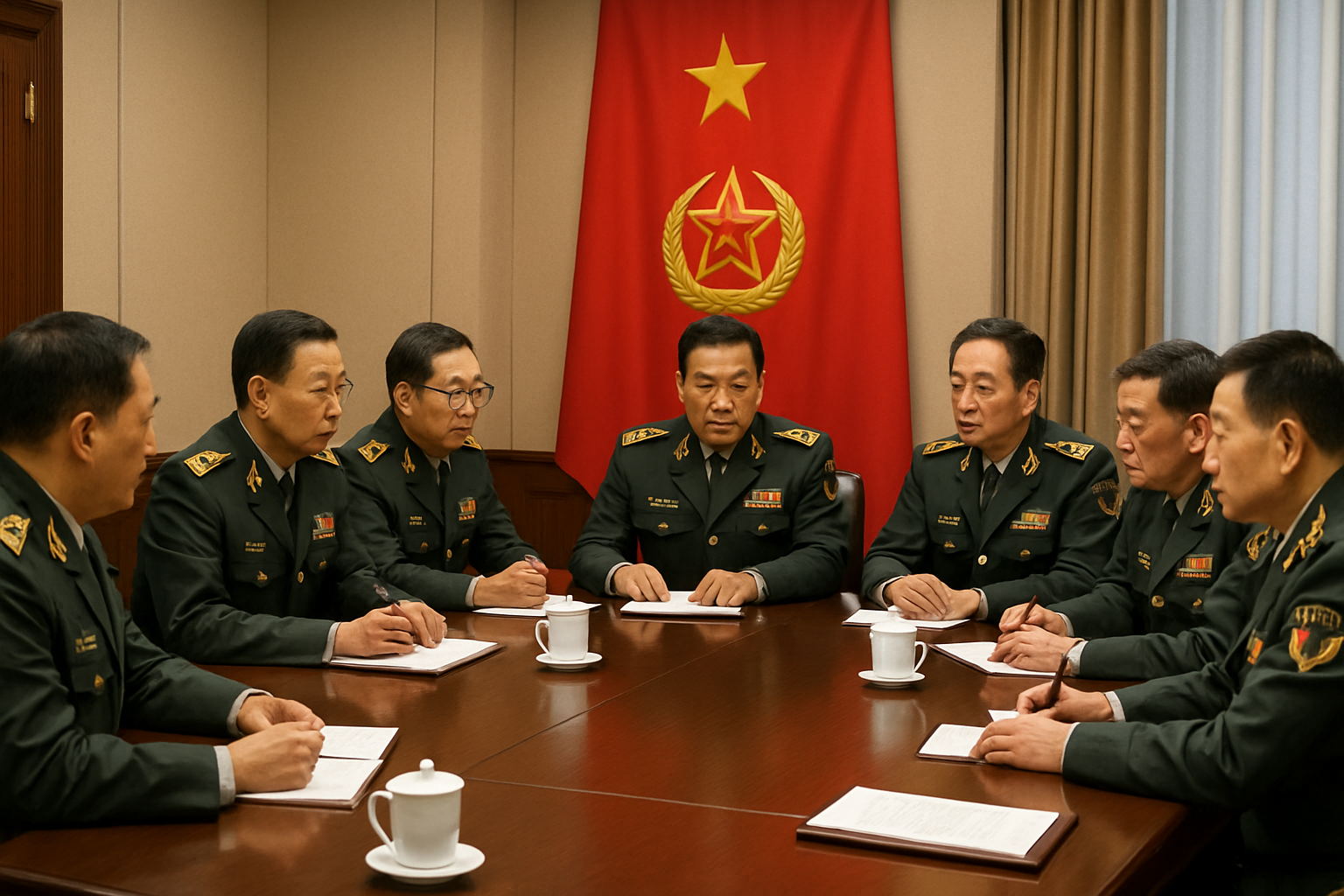
China's most influential military general, Zhang Youxia, is under investigation for corruption as part of ongoing military reforms that analysts say solidify President Xi Jinping's control over the People's Liberation Army and potentially remove the last obstacles to military action against Taiwan.
The 75-year-old Zhang, who has been a regular presence on Chinese television for nearly a decade, serves as vice-chairman of the Central Military Commission, the body that governs China's armed forces and is chaired by President Xi Jinping himself. According to China's official military newspaper, cited by France Presse, the corruption investigation against Zhang will help "remove obstacles to strengthening the country's military power and combat capabilities."
Strategic Implications of Military Purge
The latest "purges" in China's military leadership demonstrate that Xi Jinping has finally consolidated control over the armed forces, according to analysis from The Wall Street Journal cited in Lithuanian media reports. This development suggests that no one in China can now prevent Xi from implementing plans for a potential military invasion of Taiwan.
Zhang Youxia's position as vice-chairman of the Central Military Commission makes him one of the most powerful military figures in China's command structure. His removal under corruption charges follows a pattern of Xi Jinping systematically eliminating potential rivals or obstacles within the military hierarchy since coming to power.
Context of Ongoing Military Reforms
The investigation into Zhang represents the continuation of extensive military reforms that Xi Jinping has pursued throughout his tenure as China's leader. These reforms have consistently targeted corruption within the People's Liberation Army while simultaneously strengthening Xi's personal control over military decision-making processes.
Chinese state media has framed the anti-corruption campaign as essential for modernizing the military and improving its combat readiness. The official narrative suggests that removing corrupt officials will enhance the PLA's ability to fulfill its missions and defend China's national interests.
"The investigation will contribute to removing obstacles to strengthening the country's military power and combat capabilities."
— China's Official Military Newspaper
Taiwan Implications
International observers view these military leadership changes through the lens of China's longstanding territorial claims over Taiwan. The removal of potential dissenting voices within the military command structure could facilitate more aggressive military planning regarding the self-governed island.
Zhang Youxia's investigation comes at a time when cross-strait tensions remain elevated, with China continuing to assert its intention to reunify Taiwan with the mainland, by force if necessary. The consolidation of military leadership under Xi's direct control eliminates potential bureaucratic or strategic disagreements that might constrain such ambitions.
Broader Anti-Corruption Campaign
The charges against Zhang are part of Xi Jinping's broader anti-corruption campaign that has targeted officials across all levels of government and military since 2012. This campaign has served multiple purposes: genuinely addressing corruption issues, eliminating political rivals, and centralizing power under Xi's leadership.
Within the military specifically, the anti-corruption drive has resulted in the removal of numerous high-ranking officers over the past decade. Each removal has been accompanied by rhetoric about strengthening military discipline and improving combat readiness.
Impact on Military Modernization
China's military modernization efforts have accelerated under Xi Jinping's leadership, with significant investments in advanced weapons systems, cyber capabilities, and power projection assets. The removal of officials like Zhang Youxia is presented as clearing the way for more effective implementation of these modernization programs.
The People's Liberation Army has undergone extensive structural reforms in recent years, including the creation of new service branches and reorganization of command structures. These changes have been designed to create a more efficient and capable military force aligned with Xi's strategic vision.
Regional Security Implications
The consolidation of military control under Xi Jinping has significant implications for regional security dynamics in East Asia. Neighboring countries and international partners closely monitor these developments for insights into China's future strategic behavior.
The removal of potential moderating influences within China's military leadership could signal a more assertive approach to territorial disputes in the South China Sea, tensions with India along the border, and the Taiwan situation. Regional militaries and security establishments are likely reassessing their strategic planning in light of these changes.
International Response
While international governments have not issued formal responses to Zhang Youxia's investigation specifically, the broader pattern of military centralization under Xi Jinping continues to influence diplomatic and security relationships throughout the region.
The United States and its allies in the region maintain close surveillance of China's military leadership changes as indicators of potential shifts in strategic behavior. These developments factor into ongoing discussions about defense cooperation, military positioning, and diplomatic engagement strategies.
Looking Ahead
The investigation into Zhang Youxia represents another significant step in Xi Jinping's consolidation of power over China's military apparatus. As the anti-corruption campaign continues to reshape the PLA's leadership structure, the international community will be watching closely for signs of how these changes might influence China's approach to its various territorial claims and regional security challenges.
The removal of high-ranking military officials under corruption charges has become a consistent pattern in Xi's governance, suggesting that further leadership changes within the People's Liberation Army may continue as part of ongoing efforts to ensure absolute loyalty and operational effectiveness under centralized command.