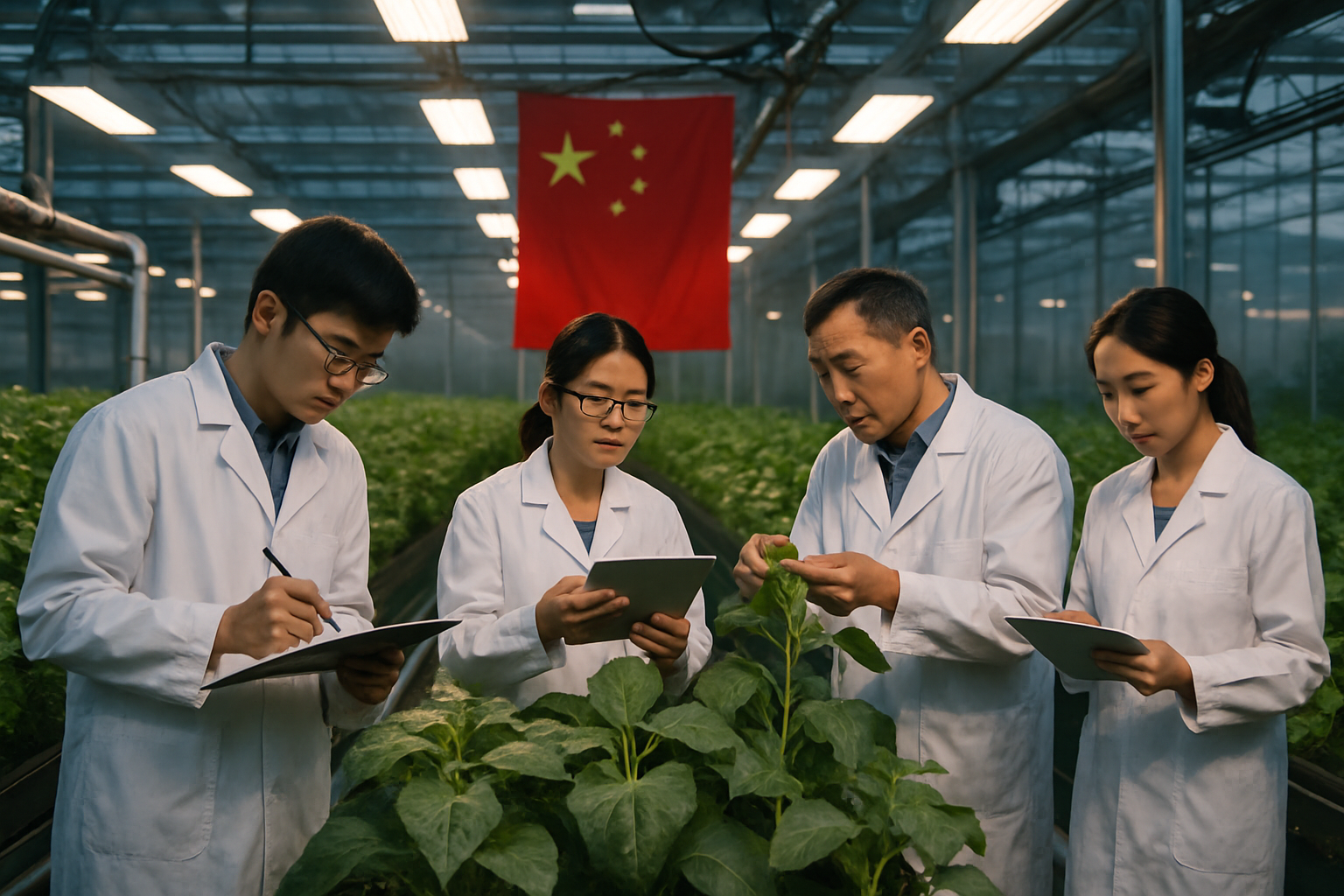
China has unveiled its most ambitious agricultural transformation strategy in decades, releasing the "No. 1 Document" for 2026—a comprehensive blueprint designed to create food supply systems immune to geopolitical disruptions that could fundamentally redraw global agricultural markets and supply chains.
Released in early February by the Communist Party of China's Central Committee and State Council, this annual policy statement represents far more than routine agricultural planning. As one of the world's largest agricultural producers, importers, and exporters, Beijing's strategic pivot toward food security self-sufficiency carries profound implications for global markets stretching from the Americas to Southeast Asia.
Strategic Context: Climate Crisis Meets Geopolitical Tensions
The document emerges during a period of unprecedented global agricultural stress. January 2026 marked the hottest month in recorded history, representing the 18th consecutive month of temperatures exceeding 1.5°C above pre-industrial levels. This sustained warming has fundamentally altered traditional agricultural cycles worldwide, making food security a matter of national survival rather than mere economic policy.
Against this backdrop of climate uncertainty, geopolitical tensions have exposed critical vulnerabilities in global food supply chains. The ongoing conflicts in Ukraine and the Middle East, combined with trade disputes and sanctions regimes, have demonstrated how rapidly food systems can become weaponized in international relations.
"A single policy could redraw global food supply lines and scramble markets from the Americas to Southeast Asia," noted agricultural policy analysts following the document's release.
— South China Morning Post Analysis
Core Pillars of China's Food Security Revolution
The "No. 1 Document" outlines a multi-pronged approach to achieving agricultural resilience through technological innovation, supply chain diversification, and strategic stockpiling. The policy framework encompasses five critical areas:
Advanced Agricultural Technology Integration
China is dramatically scaling investment in precision agriculture, genetically modified crops, and climate-adaptive farming techniques. The document emphasizes developing crop varieties resistant to extreme weather events, implementing AI-driven irrigation systems, and establishing vertical farming facilities in urban areas to reduce transportation vulnerabilities.
Strategic Import Diversification
Moving beyond traditional agricultural partnerships, China plans to establish new supply relationships across Africa, Latin America, and Central Asia. This diversification strategy aims to reduce dependence on any single region or trading partner, creating multiple supply route options for critical commodities like soybeans, corn, and wheat.
Domestic Production Capacity Enhancement
The policy mandates significant increases in domestic agricultural output through improved farmland management, enhanced irrigation infrastructure, and modernized storage facilities. Particular emphasis is placed on achieving greater self-sufficiency in staple grains while maintaining competitive advantage in specialty agricultural products.
Emergency Food Reserve Expansion
China plans to substantially expand strategic food reserves, creating distributed storage networks that can withstand both natural disasters and potential supply disruptions from international tensions. These reserves will be complemented by early warning systems that can predict and respond to emerging food security threats.
Agricultural Trade Relationship Restructuring
The document signals a shift toward long-term bilateral agreements with key agricultural exporters, potentially offering infrastructure investment, technology transfer, and preferential financing in exchange for guaranteed food supply commitments.
Global Market Implications and Regional Responses
The implementation of China's new agricultural strategy is already generating responses across major food-producing regions. In the Americas, agricultural exporters are reassessing their China exposure and exploring market diversification opportunities. South American countries like Argentina and Brazil—historically major suppliers of soybeans and beef to China—are navigating the balance between maintaining these crucial trade relationships while developing alternative markets.
Meanwhile, Southeast Asian nations are positioning themselves as potential beneficiaries of China's supply diversification strategy. Countries like Thailand, Vietnam, and Indonesia are enhancing their agricultural export capabilities and negotiating new trade frameworks with Beijing.
Technology and Traditional Knowledge Synthesis
A particularly innovative aspect of the "No. 1 Document" is its emphasis on integrating cutting-edge agricultural technology with traditional Chinese farming wisdom. This approach recognizes that sustainable food security requires both technological advancement and deep understanding of local agricultural conditions and practices.
The policy framework includes provisions for preserving and documenting traditional farming techniques while scaling modern precision agriculture systems. This synthesis approach has emerged as a common theme in successful agricultural development projects worldwide, from Malaysia's Sarawak transformation to Kenya's irrigation rehabilitation programs.
International Cooperation and Competition Dynamics
China's agricultural strategy unfolds against a backdrop of intensifying international cooperation and competition in food security. The document acknowledges the need for selective international partnerships while reducing strategic vulnerabilities to external pressures.
This approach contrasts with the emergence of South-South cooperation models seen across Africa and Latin America, where countries are increasingly sharing agricultural innovations and resources through peer-to-peer partnerships rather than traditional North-South aid relationships.
Climate Adaptation at Scale
The policy framework explicitly addresses climate change as a central challenge to food security. With global temperatures consistently exceeding critical thresholds, China's approach emphasizes adaptive agricultural systems capable of maintaining productivity under increasingly volatile environmental conditions.
Key climate adaptation measures include developing drought-resistant crop varieties, implementing water conservation technologies, and creating redundant agricultural zones that can compensate for regional climate impacts. This comprehensive approach to climate resilience represents one of the most ambitious national-scale agricultural adaptation programs globally.
Economic and Geopolitical Ramifications
The economic implications of China's agricultural transformation extend far beyond domestic food production. Global commodity markets are already responding to signals of changing Chinese demand patterns, with prices for key agricultural products experiencing increased volatility as traders assess the long-term impact of Beijing's policy shift.
For traditional agricultural exporters, the policy creates both opportunities and challenges. Countries that can align with China's diversification strategy may secure long-term trade relationships, while those that fail to adapt may face reduced market access.
The geopolitical dimensions are equally significant. China's pursuit of food security independence represents a broader strategy of reducing vulnerabilities to economic sanctions and supply chain disruptions. This approach reflects lessons learned from recent global supply chain crises and the weaponization of food systems in international conflicts.
Implementation Challenges and Success Factors
Despite its ambitious scope, the "No. 1 Document" faces significant implementation challenges. Transforming agricultural systems at China's scale requires unprecedented coordination across government levels, massive financial investment, and successful technology transfer to millions of farmers.
Success will depend on several critical factors: sustained political commitment across multiple leadership cycles, adequate funding for infrastructure development, effective coordination between central and local authorities, and successful integration of new technologies with existing agricultural practices.
International cooperation will also prove essential, particularly in areas like climate research, agricultural technology development, and sustainable farming practices. China's ability to balance self-sufficiency goals with beneficial international partnerships will significantly influence the policy's ultimate success.
Global Food System Transformation Template
China's comprehensive approach to food security resilience may serve as a template for other nations facing similar challenges. The integration of technological innovation, supply chain diversification, strategic reserves, and climate adaptation represents a holistic model for 21st-century food security planning.
As global temperatures continue rising and geopolitical tensions persist, China's "No. 1 Document" could influence international approaches to agricultural policy and food system resilience. The success or failure of this ambitious transformation will have implications extending far beyond China's borders, potentially reshaping global agricultural markets and international food security strategies for decades to come.
Looking Ahead: Critical Implementation Phase
The coming months will be crucial for evaluating the practical implementation of China's agricultural transformation strategy. Early indicators will include changes in import patterns, domestic investment flows into agricultural infrastructure, and the pace of technology adoption across China's diverse agricultural regions.
International observers will closely monitor how China's policy affects global commodity markets, trade relationships, and the broader evolution of food security strategies worldwide. As climate challenges intensify and geopolitical tensions persist, China's "No. 1 Document" represents a significant experiment in building resilient food systems capable of withstanding 21st-century pressures.
The ultimate test will be whether this comprehensive approach can successfully balance food security independence with the economic benefits of international trade, while contributing to global food system stability rather than undermining it. The stakes could not be higher, as the world watches to see if China's agricultural revolution provides a sustainable model for feeding nations in an increasingly uncertain world.