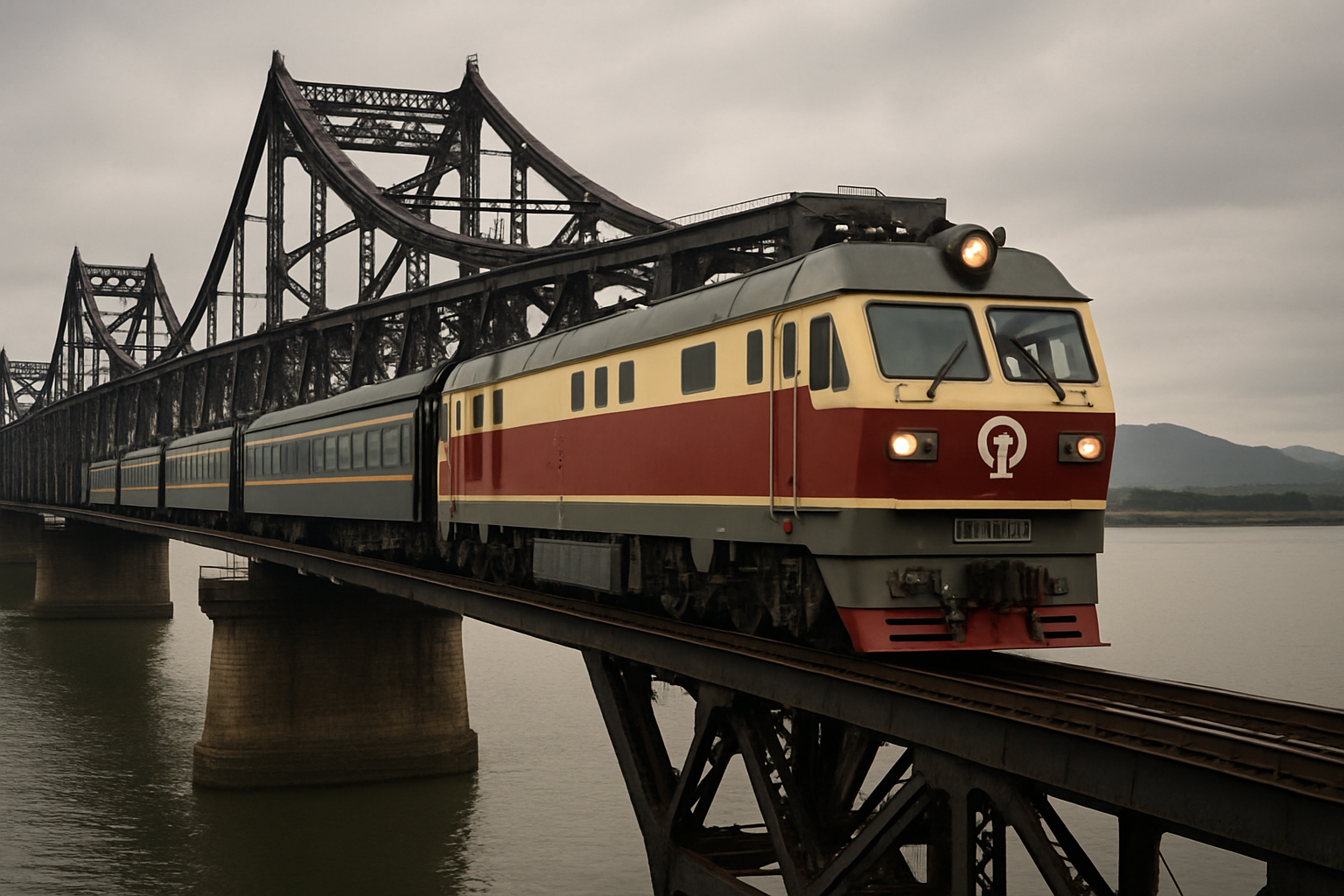
The first Chinese passenger train in six years crossed into North Korea on Thursday, March 12, 2026, arriving in Pyongyang that evening and marking the resumption of rail services suspended since 2020 due to COVID-19 border closures and deteriorating diplomatic relations.
The train departed from Dandong, China, and traveled into Sinuiju, North Korea, with videos circulating on Chinese social media capturing the historic moment. State media confirmed the arrival in North Korea's capital, representing the most significant tangible sign of warming China-North Korea relations in over half a decade.
Strategic Timing Amid Regional Transformation
The rail service restoration comes at a pivotal moment in Northeast Asian geopolitics. China is North Korea's largest trading partner and serves as a vital source of diplomatic, economic and political support for the isolated nuclear state. The timing coincides with unprecedented changes within North Korea's leadership structure and mounting global security challenges.
According to memory records from Planet News coverage, this diplomatic breakthrough occurs during Kim Jong Un's consolidation of power and preparation for an unprecedented female succession. Kim Ju Ae, the leader's daughter, has been formally designated as the first female heir in the Kim dynasty's 78-year history, marking a dramatic shift in North Korean political tradition.
"The rail connection provides international legitimacy for Kim Ju Ae's unprecedented female leadership transition. China's early engagement suggests strategic patience with dynastic change over regime instability risks."
— Regional security expert analysis from previous Planet News coverage
Context of Broader China-North Korea Relations
The resumption follows a complex diplomatic foundation laid through previous high-level engagements. Most significantly, Kim Ju Ae's September 2025 visit to Beijing marked her first international travel and prepared the diplomatic groundwork for this rail restoration. The visit came as China and North Korea rebuilt trust following years of strained relations over sanctions compliance and regional security concerns.
President Xi Jinping personally congratulated Kim Jong Un during North Korea's February 2026 Workers' Party Congress, signaling Beijing's awareness and tacit approval of the succession developments. This restoration of passenger rail service represents the most concrete manifestation of improved bilateral ties since Kim Jong Un's consolidation of power.
Economic Implications for Both Nations
The rail link is critical for North Korea's economic survival under international sanctions, providing essential access to Chinese markets and trade opportunities. For China, the connection serves multiple strategic purposes: maintaining influence over North Korean policy, supporting regional stability, and positioning itself as a key stakeholder in any future diplomatic developments.
This development is part of China's broader partnership expansion strategy. In a related move, Beijing announced zero-tariff treatment for all products from 53 African countries beginning May 1, 2026, demonstrating its commitment to expanding international trade partnerships while the United States faces constitutional constraints on tariff policy following recent Supreme Court rulings.
Regional Security Dynamics
The rail restoration creates new triangular dynamics in Northeast Asian diplomacy. Kim Jong Un has recently issued conditional diplomatic openings to the United States, stating North Korea is prepared for "peaceful coexistence or eternal confrontation" with the choice lying with Washington. This positions China as both a mediator and stakeholder in any potential US-North Korea negotiations.
The timing is particularly significant given the global nuclear governance crisis. The New START treaty between the United States and Russia expired in February 2026, marking the first time in over 50 years without US-Russia nuclear constraints. In this environment, China's enhanced leverage over North Korean policy through restored transportation links becomes strategically valuable.
Military Modernization Continues
Despite the diplomatic warming, North Korea continues its military advancement programs. The February 2026 Workers' Party Congress coincided with the unveiling of 600mm nuclear-capable rocket systems described as "unique in the world." Additionally, Kim Jong Un supervised cruise missile tests from the Choe Hyon destroyer in March 2026, demonstrating ongoing tactical nuclear weapons development.
This dual approach—maintaining defensive capabilities while engaging diplomatically—reflects North Korea's sophisticated survival strategy during the succession transition period. The rail connection provides economic benefits while military modernization ensures regime security.
Implications for Future Diplomacy
The restored rail service establishes infrastructure that could prove crucial for future diplomatic initiatives. With Kim Ju Ae's preparation for leadership requiring international legitimacy, China's early and sustained engagement through practical measures like transportation links provides a foundation for long-term stability.
For regional allies including South Korea, Japan, and the United States, the China-North Korea railway restoration represents both an opportunity and a challenge. While it may facilitate future multilateral diplomacy, it also strengthens the China-North Korea axis at a time when both nations face pressure from Western sanctions and diplomatic isolation.
Looking Ahead
The resumption of passenger rail service between China and North Korea after six years marks more than just a restoration of transportation links. It represents a strategic recalibration in Northeast Asian geopolitics, occurring at the intersection of North Korean succession planning, Chinese regional influence expansion, and evolving global power dynamics.
As the first female heir in North Korean history prepares for potential leadership and China positions itself as a key mediator in regional conflicts, this rail connection serves as both a practical economic lifeline and a symbolic bridge toward an uncertain but potentially transformative future for the Korean Peninsula.
The success of this renewed partnership will likely influence broader regional security arrangements and could serve as a model for how authoritarian regimes navigate succession challenges while maintaining international legitimacy in an increasingly multipolar world.