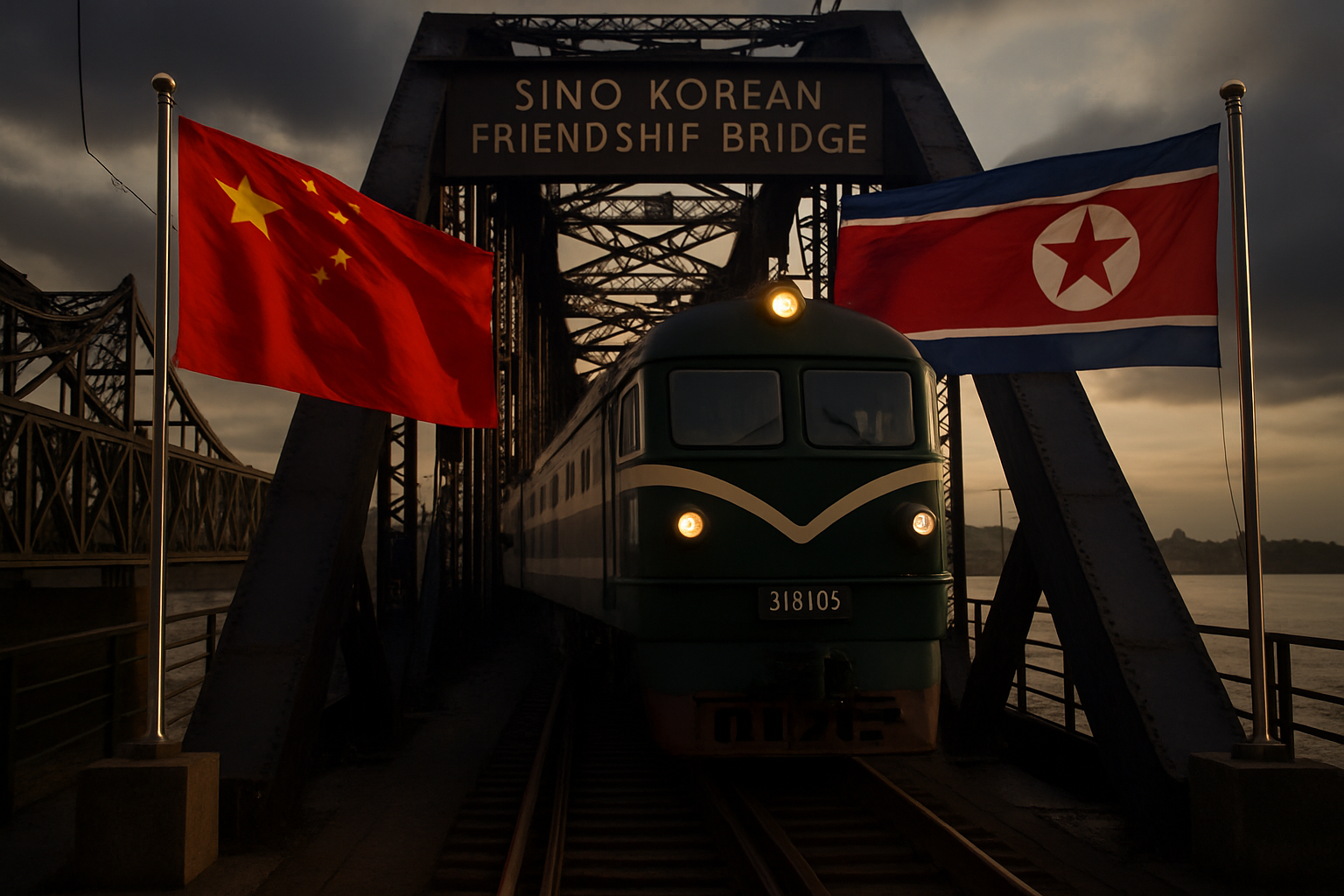
Tickets for the first passenger train from Beijing to North Korea's capital Pyongyang in six years sold out ahead of its March 12, 2026 departure, according to an official ticketing office in Beijing, signaling a dramatic warming of diplomatic relations between China and North Korea at a critical juncture in regional security.
The resumption of passenger rail service, suspended since 2020 due to COVID-19 pandemic restrictions and deteriorating bilateral relations, represents the most tangible sign of improved China-North Korea cooperation since Kim Jong Un consolidated power. The development comes as North Korea undergoes its most significant political transformation in decades, with confirmed succession planning for Kim Ju Ae as the first female leader in the dynasty's 78-year history.
Historic Rail Connection Restored
The Beijing-Pyongyang passenger service, operating via the iconic Sino-Korean Friendship Bridge at Dandong, had been one of the last remaining regular civilian connections between North Korea and the outside world before its suspension. The rail link, originally established during the Korean War era, has served as a crucial diplomatic and economic lifeline for North Korea during periods of international isolation.
Chinese officials in Beijing confirmed that all available tickets for the inaugural March 12 service were reserved within hours of being made available to the public, suggesting significant pent-up demand for travel between the two nations. The service had been North Korea's primary passenger connection to China before the six-year interruption.
Strategic Timing Amid Regional Transformation
The rail service resumption occurs during an extraordinary period of change in Northeast Asian politics. South Korean intelligence services confirmed in February 2026 that Kim Jong Un has formally designated his teenage daughter Kim Ju Ae as his successor, representing an unprecedented female leadership transition within the traditionally masculine Juche ideology system.
This succession planning coincides with North Korea's systematic military modernization, including the February 2026 unveiling of 600mm nuclear-capable multiple rocket launcher systems described as "unique in the world" and recent naval destroyer cruise missile tests conducted by Kim Jong Un personally in early March.
China's decision to restore passenger rail access suggests Beijing's confidence in North Korea's political stability during this transition period. The timing also reflects China's broader diplomatic strategy of strengthening regional partnerships while managing strategic competition with the United States.
Diplomatic Breakthrough Context
The rail resumption follows a series of high-level diplomatic engagements that have gradually rebuilt China-North Korea relations. Kim Ju Ae's September 2025 diplomatic visit to Beijing, her first international travel, was viewed by analysts as crucial preparation for her eventual leadership role and demonstrated China's early recognition of the succession planning.
Chinese President Xi Jinping congratulated Kim Jong Un during North Korea's Ninth Workers' Party Congress in February 2026, highlighting achievements in "uniting Korean people" and expressing support for "new accomplishments." This official recognition came as North Korea set five-year policy directions addressing economic development amid international sanctions and nuclear program advancement.
The diplomatic warming contrasts sharply with the broader regional security environment, where Chinese military activity around Taiwan increased 23% in 2025, and new nuclear governance challenges emerged following the February 2026 expiration of the US-Russia New START treaty.
Economic and Strategic Implications
Beyond its symbolic importance, the rail service restoration has significant economic implications for both nations. North Korea's economy has struggled under international sanctions and pandemic-related border closures, making Chinese economic partnership crucial for regime stability during the succession transition.
China's recent announcement of zero-tariff access for 53 African countries beginning May 2026 demonstrates Beijing's broader strategy of expanding economic partnerships while the US pursues bilateral trade arrangements under President Trump's second term. The North Korea rail connection fits within this pattern of strengthening ties with strategic partners.
For North Korea, the restored rail link provides essential access to Chinese markets and goods while the regime showcases domestic achievements like the completed 50,000-unit Hwasong Area housing project in Pyongyang. This dual approach of military advancement and domestic development demonstrates the regime's sophisticated survival strategy during the historic leadership transition.
Regional Security Calculus
The rail service resumption occurs against the backdrop of complex regional security dynamics. North Korea's conditional diplomatic opening to the United States, expressed by Kim Jong Un as willingness for "peaceful coexistence or eternal confrontation" depending on Washington's approach, creates a triangular diplomatic dynamic with China holding significant influence.
China's support for the rail resumption suggests Beijing's assessment that a stable, predictable North Korea serves Chinese strategic interests better than continued isolation, particularly as the Korean Peninsula faces unprecedented political change with Kim Ju Ae's succession preparation.
Regional allies including South Korea, Japan, and the United States must now recalibrate their approaches to account for strengthened China-North Korea cooperation during this critical transition period. The rail connection provides China with enhanced leverage over North Korean policy decisions while offering Pyongyang alternatives to complete diplomatic isolation.
Future Implications
The successful resumption of passenger rail service between Beijing and Pyongyang establishes an important precedent for managing diplomatic relations with North Korea during its historic succession transition. The immediate sellout of tickets demonstrates that both Chinese and international travelers view the service as significant for business, cultural, and political exchanges.
For Kim Ju Ae's preparation as North Korea's potential first female leader, the restored Chinese connection provides crucial international legitimacy and economic support. China's early engagement with succession planning suggests Beijing's strategic patience with the unprecedented dynastic transition rather than the uncertainty that might accompany regime instability.
The rail resumption also represents a test case for whether practical diplomatic engagement can coexist with regional strategic competition. As China and the United States navigate complex great power rivalry, the North Korea relationship demonstrates China's commitment to maintaining regional partnerships regardless of broader tensions.
As the March 12 inaugural service approaches, international observers will closely monitor passenger manifest details, diplomatic protocols, and any high-level exchanges that might signal further diplomatic breakthrough or continued gradual normalization between Beijing and Pyongyang after six years of separation.