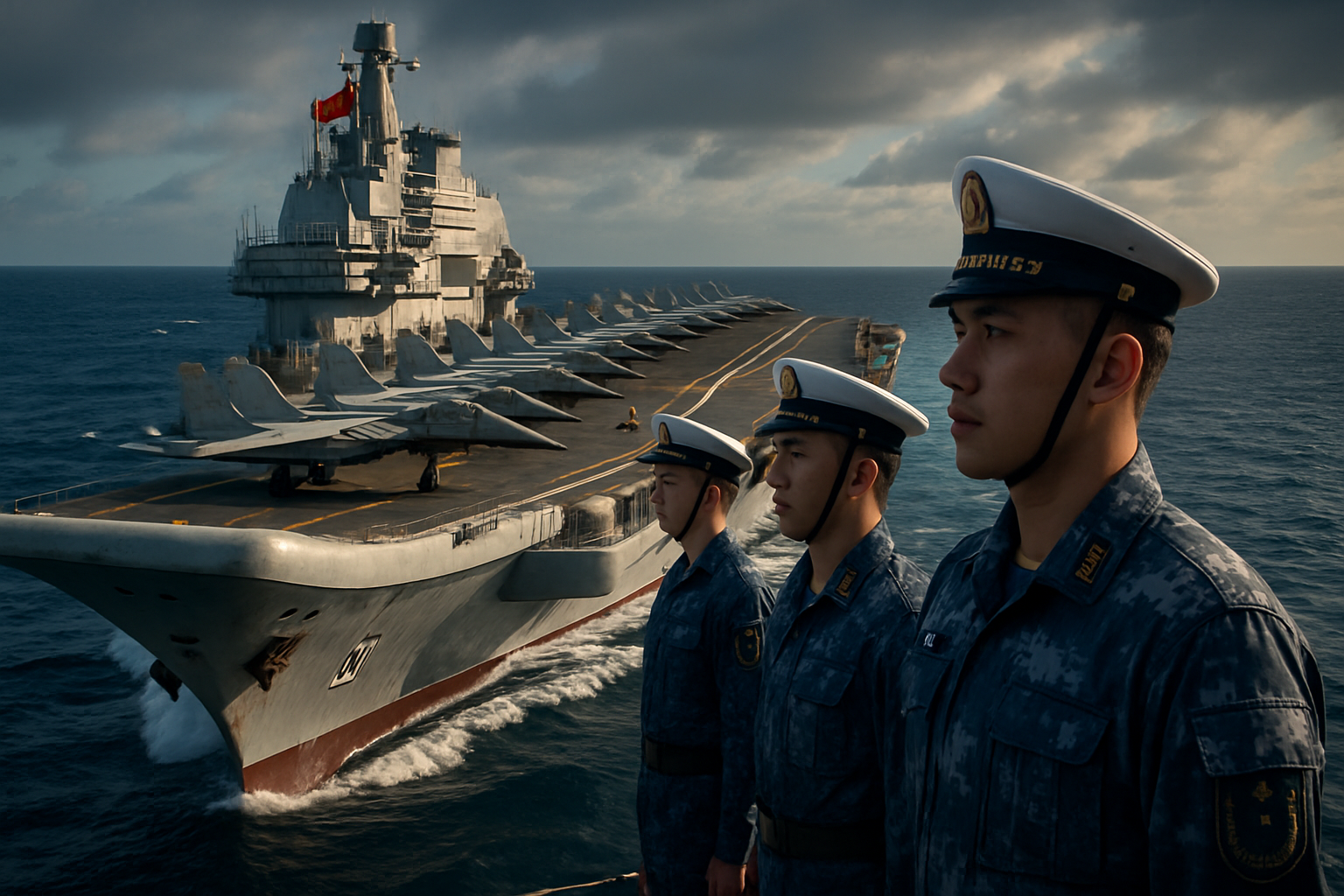
A Chinese naval video commemorating the 77th anniversary of the People's Liberation Army Navy has fueled widespread speculation that China's next aircraft carrier will be nuclear-powered, representing a significant advancement in the nation's military technology and blue-water naval ambitions.
The film "Into The Deep," released Wednesday to mark the founding anniversary of the PLA Navy, highlighted China's maritime evolution from coastal defense to a "blue-water" navy capable of deep-sea operations. The video included footage from real-life drills in the western Pacific and showcased advanced naval equipment, leading defense analysts to speculate about China's nuclear propulsion capabilities for future aircraft carriers.
Strategic Implications of Nuclear Propulsion
Nuclear-powered aircraft carriers represent a quantum leap in naval capabilities compared to conventional vessels. Unlike conventionally powered ships that require regular refueling and have limited operational range, nuclear carriers can operate for decades without refueling, providing unprecedented strategic flexibility and power projection capabilities.
China currently operates three aircraft carriers: the Liaoning (a refitted Soviet-era vessel), the Shandong (China's first domestically built carrier), and the Fujian (currently undergoing sea trials). All three are conventionally powered, using either steam turbines or conventional propulsion systems that limit their operational endurance and global reach.
Military Technology Advancement
The speculation about nuclear-powered carriers comes amid China's broader military modernization program, which has seen significant investments in naval technology, including advanced radar systems, electromagnetic catapults, and sophisticated aircraft. The PLA Navy has been rapidly expanding its capabilities as part of China's strategic shift toward becoming a global maritime power.
"The continuity of China's maritime ambitions reflects a fundamental transformation from a coastal defense force to a navy capable of sustained global operations."
— Defense Industry Analyst
Nuclear propulsion would allow Chinese carriers to maintain sustained operations far from home ports, potentially challenging existing naval balances in the Indo-Pacific region and beyond. Such capabilities would significantly enhance China's ability to project power across vast ocean distances and maintain a persistent naval presence in strategic waterways.
Regional Security Considerations
The development of nuclear-powered aircraft carriers would have significant implications for regional security dynamics, particularly in the South China Sea, Taiwan Strait, and broader Indo-Pacific region. Nuclear carriers would provide China with enhanced capabilities for sustained operations in contested waters and could fundamentally alter naval strategic calculations.
Current naval analysts note that while China has demonstrated impressive progress in conventional carrier technology, nuclear propulsion represents a considerably more complex technological challenge requiring advanced reactor design, specialized engineering capabilities, and extensive safety protocols.
Global Naval Competition
Only a handful of nations currently operate nuclear-powered aircraft carriers, with the United States maintaining the largest fleet of such vessels. France operates one nuclear carrier (Charles de Gaulle), while the United Kingdom is developing new nuclear carriers. China's entry into this exclusive club would represent a significant milestone in global naval competition.
The timing of these hints comes amid intensifying great power competition in maritime domains, with nations increasingly focusing on naval capabilities as key indicators of global influence and strategic reach. Nuclear carriers represent the pinnacle of naval technology and power projection capability.
Technical Challenges and Timeline
Developing nuclear-powered aircraft carriers requires overcoming numerous technical challenges, including reactor miniaturization, radiation shielding, crew safety systems, and integration with carrier operations. The complexity of these systems typically requires years or even decades of development and testing.
While the video has sparked speculation, defense experts caution that translating nuclear propulsion hints into operational capabilities represents a substantial undertaking requiring sustained technological development, testing, and validation processes.
Strategic Communications Significance
The release of such hints through official military media represents a form of strategic communication, potentially signaling China's naval ambitions to both domestic and international audiences. Military videos and demonstrations often serve multiple purposes, including capability signaling, deterrence messaging, and public morale building.
The 77th anniversary timing adds symbolic weight to these developments, as China increasingly emphasizes its naval heritage and future maritime ambitions. The emphasis on "blue-water" capabilities in the video underscores China's strategic objective of becoming a truly global naval power.
International Response and Analysis
Regional neighbors and global naval powers are likely monitoring these developments closely, as nuclear-powered carriers would significantly enhance China's ability to sustain naval operations far from its home waters. Such capabilities could influence alliance structures, defense planning, and naval cooperation agreements across the Indo-Pacific region.
Defense analysts emphasize that while hints and speculation are significant, confirmed nuclear carrier capabilities would represent a major shift in naval power dynamics requiring careful assessment and potential strategic responses from other maritime nations.
The development reflects broader trends in military modernization and great power competition, where naval capabilities increasingly serve as indicators of global influence and strategic reach. Whether these hints materialize into operational nuclear carriers will depend on China's continued technological development and strategic prioritization of such advanced naval capabilities.