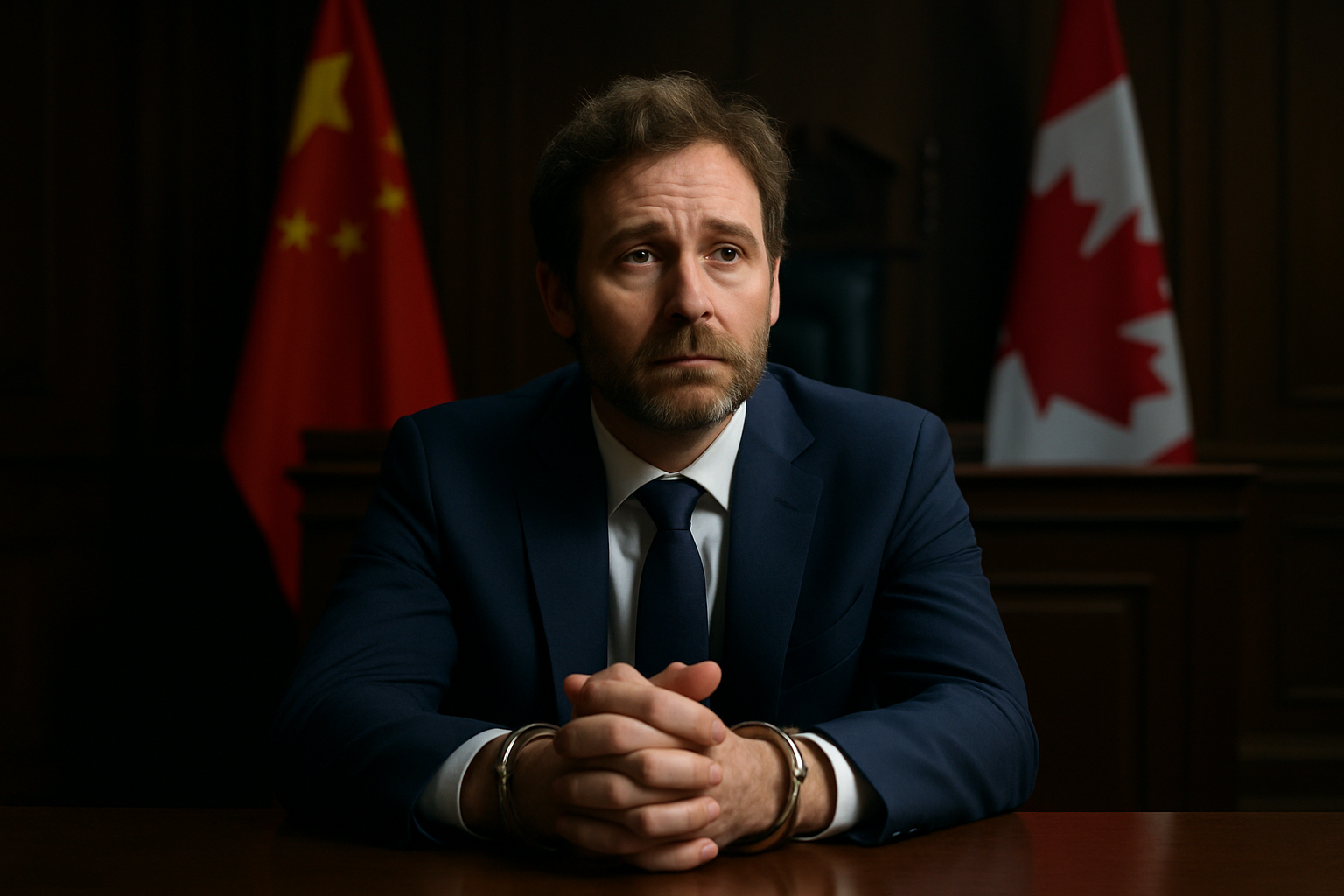
China has overturned the death sentence imposed on Canadian Robert Schellenberg for drug trafficking and ordered a new trial, Canadian officials confirmed Friday, marking a significant development in a case that has strained China-Canada diplomatic relations for years.
The decision represents a potential thaw in bilateral tensions as Prime Minister Mark Carney works to strengthen trade ties with Beijing. Schellenberg, who had been on death row since 2019, will now face a retrial in what observers see as a sign of China's willingness to reconsider cases that became entangled in broader diplomatic disputes.
From 15 Years to Death Row
Schellenberg's case became a symbol of what critics called "hostage diplomacy" during one of the most turbulent periods in Canada-China relations. Originally arrested in 2014 and sentenced to 15 years in prison in 2018 for his alleged involvement in an international drug-trafficking ring, Schellenberg saw his fate dramatically altered in January 2019.
During the height of tensions following the arrest of Huawei executive Meng Wanzhou in Vancouver on U.S. extradition charges, a Chinese court retried Schellenberg and imposed the death penalty, ruling that his original sentence was "too lenient." The timing of the retrial and harsher sentence was widely viewed as retaliation for Canada's detention of Meng at Washington's request.
"This decision comes at a time when we're seeing unprecedented cooperation between Canada and China on various fronts."
— Canadian government official, speaking on condition of anonymity
Diplomatic Context and Timing
The overturning of Schellenberg's death sentence occurs amid a broader diplomatic reset between Canada and China. Prime Minister Mark Carney has made rebuilding the relationship a priority, seeking to expand trade cooperation and reduce tensions that peaked during the "Two Michaels" crisis, when Canadians Michael Kovrig and Michael Spavor were detained in China for over 1,000 days.
The case had remained a significant irritant in bilateral relations even after the release of the Two Michaels in September 2021, following Meng Wanzhou's return to China. Schellenberg's continued detention on death row served as a reminder of the human cost of the diplomatic crisis.
Legal Proceedings and International Pressure
Schellenberg, a British Columbia resident, was accused of being involved in a scheme to smuggle more than 200 kilograms of methamphetamine from China to Australia. Chinese authorities alleged he was a key organizer in the drug trafficking operation, though his family and Canadian officials consistently maintained his innocence.
The death sentence drew widespread international condemnation, with Canada and its allies arguing that the punishment was disproportionate and politically motivated. Human rights organizations repeatedly called for clemency, highlighting concerns about the Chinese judicial system's independence in politically sensitive cases.
Regional Implications
The decision to overturn Schellenberg's death sentence and order a new trial comes at a time of significant diplomatic activity in the region. China has been working to stabilize relationships with Western nations amid ongoing tensions over trade, human rights, and security issues.
Legal experts suggest that the retrial could result in a reduced sentence, potentially allowing for Schellenberg's eventual release and return to Canada. However, the timing and nature of the new proceedings remain uncertain, with Chinese authorities providing few details about the process.
Broader Context of Canada-China Relations
Under Prime Minister Carney's leadership, Canada has sought to compartmentalize its relationship with China, pursuing economic cooperation while maintaining criticism of Beijing's human rights record. The approach represents a shift from the more confrontational stance of previous years, acknowledging the economic importance of the China relationship while preserving Canada's values-based foreign policy.
The Schellenberg case had become one of the most visible symbols of the deteriorated relationship between the two countries. His potential release could remove a significant obstacle to further diplomatic progress, though significant challenges remain in the bilateral relationship.
Looking Ahead
While the overturning of the death sentence represents progress, Canadian officials remain cautious about the ultimate outcome. The new trial will be closely watched as a test of China's willingness to separate legal proceedings from diplomatic considerations.
For Schellenberg's family and supporters, the decision offers hope after years of uncertainty. However, they continue to call for his complete exoneration and immediate return to Canada, arguing that he was wrongfully convicted in proceedings that were tainted by political considerations.
The case will likely continue to influence Canada-China relations as both countries work to rebuild trust and cooperation while navigating complex political and legal challenges. The outcome of Schellenberg's retrial may serve as an indicator of how far both nations are willing to go in their efforts to normalize relations.