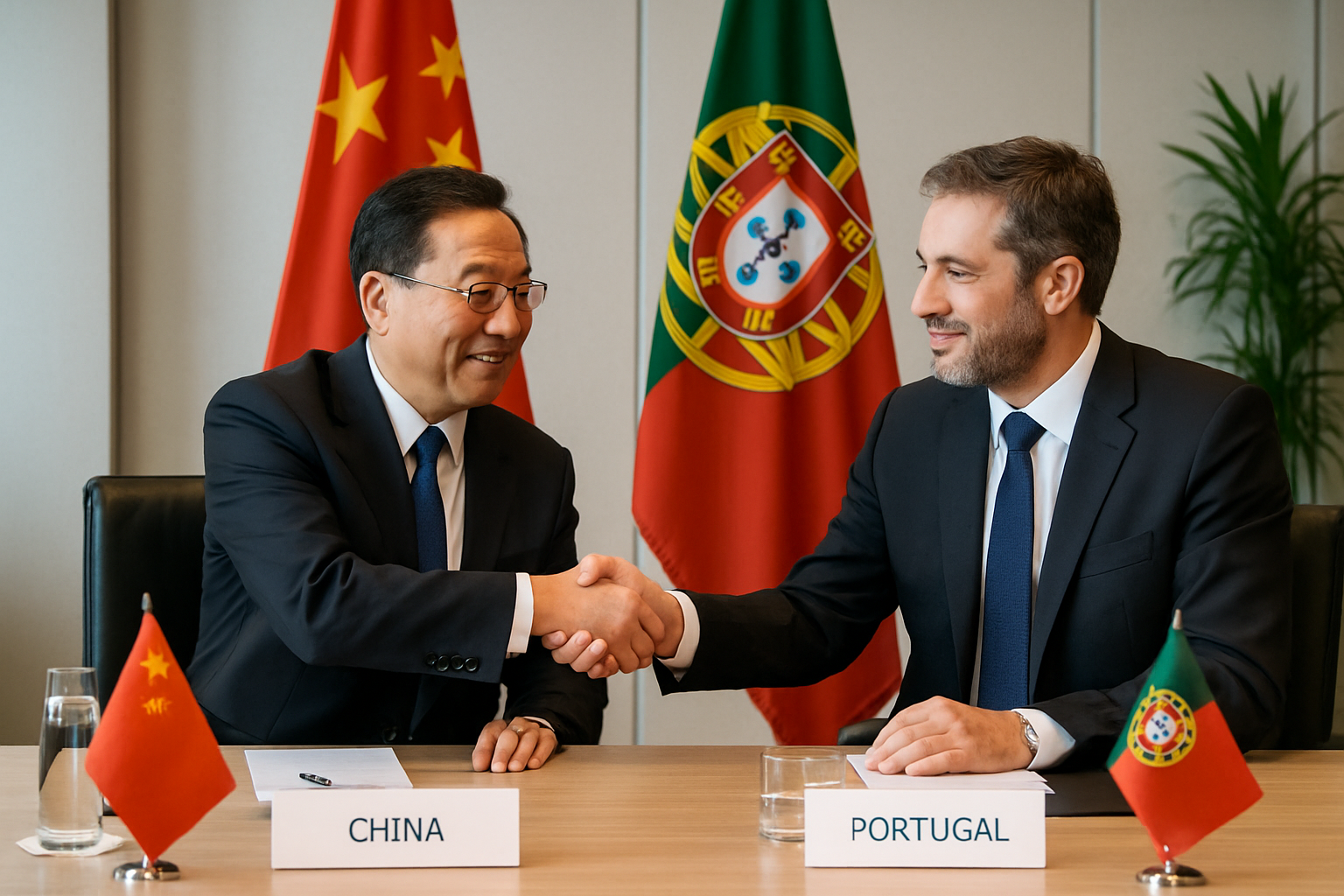
Major diplomatic initiatives across the globe this week underscore a significant transformation in international relations, with China hosting Portuguese parliament officials and Ukraine expanding security cooperation with Syria as nations pursue innovative bilateral partnerships beyond traditional alliance structures.
China-Portugal Parliamentary Diplomacy
Portuguese Parliament Speaker Jose Pedro Aguiar-Branco will lead a high-level delegation to China from April 7-11, 2026, at the invitation of Zhao Leji, chairman of China's National People's Congress Standing Committee. This visit represents the latest development in strengthening Sino-Portuguese relations, building on decades of cooperation that trace back to Portugal's historic role in Macao and expanding contemporary economic partnerships.
The parliamentary exchange comes at a crucial time for European-Chinese relations, as both sides seek to maintain dialogue channels despite broader geopolitical tensions. Portugal's position within the European Union while maintaining strong ties to China reflects the complex balancing acts smaller European nations must navigate in an increasingly multipolar world.
"Parliamentary diplomacy provides essential channels for dialogue that complement formal government relations, enabling deeper understanding of legislative priorities and democratic processes."
— European diplomatic source
Ukraine's Strategic Middle East Pivot
Meanwhile, Ukrainian President Volodymyr Zelensky's expanding diplomatic engagement with Syria marks a remarkable transformation in international relations. Ukraine has successfully positioned itself as a security provider rather than merely an aid recipient, leveraging its battlefield experience against Iranian drone technology to forge new partnerships across the Middle East.
Reports indicate Ukraine has deployed over 200 military specialists to Gulf states including the UAE, Qatar, Jordan, Bahrain, and Kuwait, sharing expertise in combating Iranian Shahed drones—the same weapons that have devastated Ukrainian infrastructure. This represents an evolution from Ukraine's traditional European focus to a global security role that transcends regional boundaries.
Syria-Ukraine Security Framework
The Ukraine-Syria cooperation represents one of the most significant diplomatic breakthroughs in recent months. Following the restoration of diplomatic relations in September 2025 after an eleven-year hiatus, both nations have identified shared security challenges that create natural cooperation opportunities.
Syria's new leadership under President Ahmed al-Sharaa has welcomed Ukrainian expertise in defensive technologies, particularly relevant given Iran's continued use of similar drone systems across multiple regional conflicts. This cooperation demonstrates how shared threats can create unexpected diplomatic partnerships that transcend traditional geopolitical alignments.

Multilateral Diplomacy in Crisis Context
These diplomatic developments occur against the backdrop of significant global tensions, including the ongoing Iran crisis that has disrupted traditional diplomatic frameworks. The suspension of trilateral Ukraine-Russia-US peace talks due to Middle East conflicts demonstrates how interconnected modern security challenges have become.
Historical context from our archives reveals that this diplomatic renaissance follows months of innovative international cooperation, including Greece-Turkey comprehensive agreements, US-Venezuela diplomatic restoration, and Pakistan's emergence as a regional mediator. These precedents suggest a broader evolution toward more flexible, pragmatic diplomatic approaches.
Regional Security Architecture
The expansion of Ukrainian security partnerships to include Middle Eastern nations reflects broader changes in regional security architecture. Traditional alliance structures are being supplemented by issue-specific partnerships that address practical security challenges regardless of historical diplomatic alignments.
Turkey's continued role as a mediator between Ukraine and Syria demonstrates how middle powers are increasingly important in facilitating diplomatic engagement. Turkey's unique position spanning NATO membership while maintaining diverse Middle Eastern partnerships enables it to bridge different security frameworks.
Diplomatic Innovation and Bilateral Approaches
The current diplomatic landscape reveals a preference for bilateral partnerships over complex multilateral frameworks. Nations are developing relationships based on concrete mutual interests rather than ideological alignment, creating more resilient diplomatic networks.
China's engagement with Portugal represents this trend, as both nations pursue economic and cultural cooperation while navigating their respective positions within broader alliance structures. Similarly, Ukraine's partnerships across the Middle East demonstrate how nations can diversify diplomatic portfolios while maintaining core strategic relationships.
"Contemporary diplomacy requires multiple engagement channels—from parliamentary exchange to security cooperation—to build sustainable partnerships that can withstand political fluctuations."
— International relations analyst
Economic Diplomacy Integration
Both the China-Portugal and Ukraine-Syria engagements incorporate significant economic components. Portugal's participation in China's Belt and Road Initiative provides concrete frameworks for cooperation, while Ukraine's reconstruction expertise offers valuable partnerships for post-conflict Syrian development.
These economic dimensions help insulate diplomatic relationships from short-term political volatility, creating institutional foundations that support long-term cooperation regardless of changing political leadership.
Global Governance Evolution
The diplomatic developments this week reflect broader questions about global governance evolution. As traditional multilateral institutions face challenges addressing contemporary security threats, nations are experimenting with alternative frameworks that offer greater flexibility and responsiveness.
The success of these bilateral approaches may influence broader international cooperation patterns, potentially providing models for addressing other global challenges from climate change to nuclear proliferation. The emphasis on practical results over ideological consistency represents a pragmatic evolution in diplomatic practice.
Future Implications
The strengthening of China-Portugal ties and Ukraine's Middle East partnerships demonstrate how nations are adapting to multipolar realities while preserving democratic values and sovereignty principles. These relationships provide templates for sustainable international cooperation that balances strategic autonomy with collaborative problem-solving.
As global challenges become increasingly interconnected, the ability to maintain diverse diplomatic partnerships while upholding core principles will be crucial for international stability. The current diplomatic renaissance suggests that innovative approaches to bilateral cooperation may be more effective than traditional multilateral frameworks in addressing complex 21st-century challenges.
Conclusion
The China-Portugal parliamentary exchange and Ukraine's expanding Middle East partnerships represent significant developments in contemporary diplomacy. These initiatives demonstrate how nations are pursuing innovative bilateral relationships that transcend traditional alliance structures while addressing practical security and economic challenges.
The success of these diplomatic innovations may provide valuable precedents for international cooperation in an increasingly complex global environment. As nations navigate between great power competition and shared global challenges, the ability to maintain diverse, flexible partnerships while preserving democratic values will be essential for long-term international stability and prosperity.