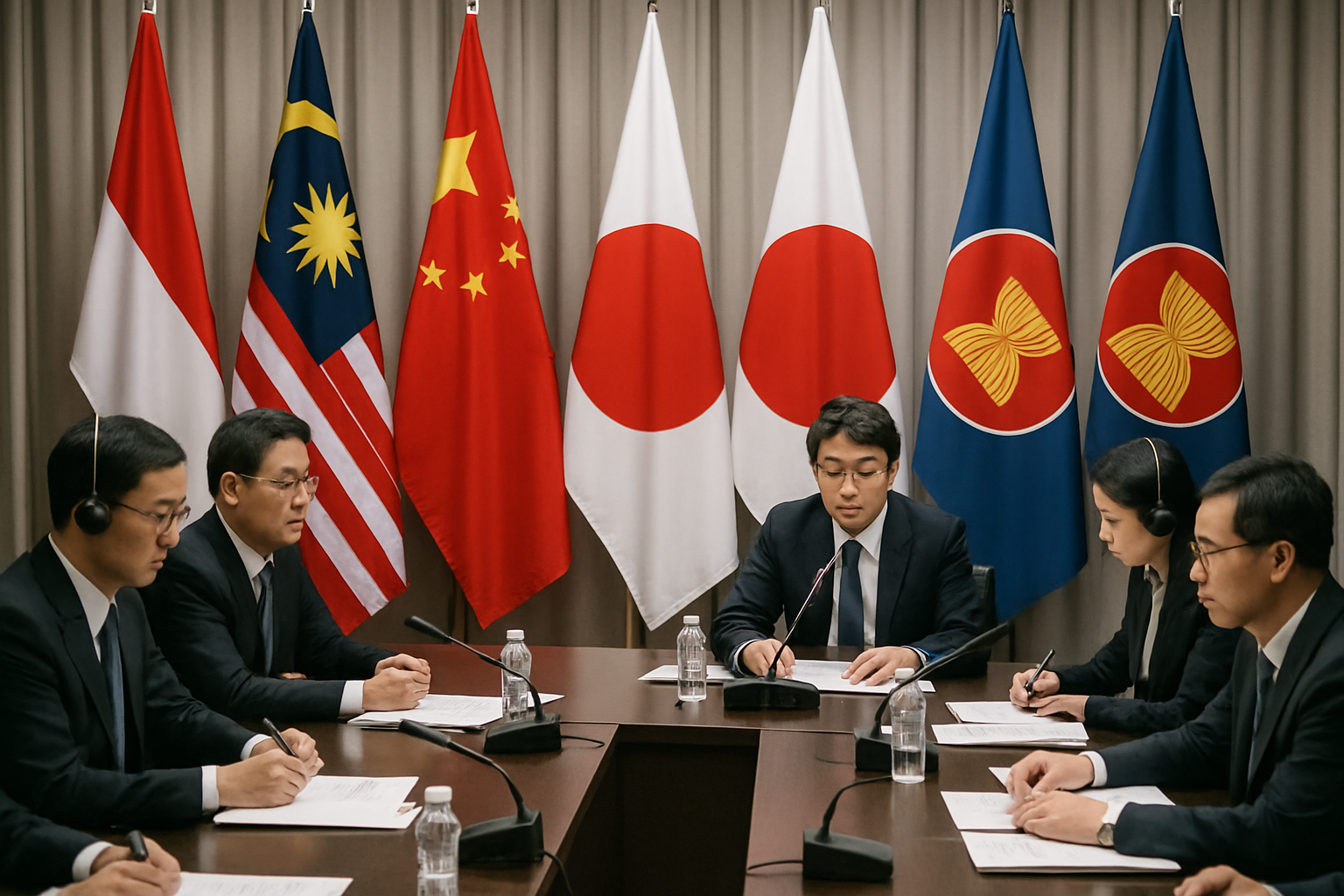
In a rare diplomatic maneuver, China summoned most Southeast Asian ambassadors or their deputies to Beijing in late 2025, seeking to rally regional support for its campaign against Japan following controversial remarks by Japanese Prime Minister Sanae Takaichi over Taiwan. However, sources familiar with the matter report the effort has gained little traction in the region.
The meeting, convened in the days following Takaichi's November 2025 statements on Taiwan, was framed by Chinese officials as a channel to hear regional perspectives on Japan's increasingly assertive stance. Multiple diplomatic sources told the South China Morning Post that China's approach reflected growing concerns about Japan's role in regional security dynamics and cross-strait tensions.
U.S. Support Complicates Regional Calculations
The diplomatic landscape has become more complex with President Donald Trump's unprecedented endorsement of Prime Minister Takaichi ahead of Sunday's Japanese election. Breaking with traditional U.S. diplomatic neutrality, Trump offered his "total endorsement" of Takaichi and her ruling bloc, describing her as "someone who deserves powerful recognition for the job she and her Coalition are doing."
Trump's announcement on Truth Social on February 5 also confirmed plans for a March 19 summit, signaling strengthened U.S.-Japan ties that could further complicate China's regional diplomatic objectives. The endorsement represents a significant departure from conventional American practice of avoiding public statements on allied elections.
"Prime Minister Takaichi is someone who deserves powerful recognition for the job she and her Coalition are doing."
— Donald Trump, U.S. President
Limited Regional Response to Chinese Initiative
Despite China's diplomatic outreach, Southeast Asian nations have shown reluctance to align openly with Beijing's anti-Japan campaign. The measured response reflects the complex balancing act many ASEAN countries must navigate between their largest trading partner, China, and security partnerships with Japan and the United States.
Regional diplomats, speaking on condition of anonymity, indicated that while countries acknowledged China's concerns, few were prepared to take substantive positions that might jeopardize their relationships with Japan. Several Southeast Asian nations maintain significant economic ties with Japan through investment, development aid, and technological cooperation.
Taiwan Tensions at Center of Dispute
The diplomatic friction stems from Takaichi's November statements regarding Taiwan, which Chinese officials characterized as provocative and destabilizing. The remarks occurred during a period of heightened tensions across the Taiwan Strait, with China maintaining military pressure campaigns that Taiwan's Defense Minister Wellington Koo described as designed to "exhaust" and "fatigue" Taiwan's population.
Chinese military aircraft activity increased 23% in 2025, with daily warplane and naval vessel deployments around Taiwan representing the most sustained pressure campaign to date. China's latest large-scale exercises were conducted in late December 2025, demonstrating Beijing's continued military posture despite diplomatic engagements with regional partners.
Broader Strategic Implications
The Chinese diplomatic initiative reflects broader concerns about shifting regional alignments as great power competition intensifies in the Indo-Pacific. Beijing's inability to generate significant regional support for its Japan campaign highlights the limits of economic leverage when security and sovereignty issues are at stake.
The timing of the Chinese meetings, coinciding with extensive U.S. military cooperation with regional allies and the strengthening of bilateral partnerships like the enhanced Japan-Philippines defense relationship, suggests Beijing recognizes the narrowing window for diplomatic influence.
Regional experts note that Southeast Asian nations increasingly prefer multilateral approaches to dispute resolution rather than aligning with any single major power. The ASEAN principle of non-interference and consensus-building continues to shape regional responses to great power pressures.
Economic Considerations
Despite political tensions, economic realities continue to shape regional calculations. China remains the largest trading partner for most Southeast Asian economies, while Japan provides significant development assistance and technology transfer. This economic interdependence creates incentives for regional neutrality rather than choosing sides in Sino-Japanese disputes.
The failure of China's diplomatic initiative may signal that economic leverage alone is insufficient to secure political alignment on sensitive security issues. Regional countries appear increasingly sophisticated in separating economic cooperation from political positioning on contentious issues.
Regional Security Architecture Under Pressure
The diplomatic episode occurs against the backdrop of evolving regional security arrangements. The Quad partnership between the United States, Japan, Australia, and India has strengthened, while China has deepened its strategic partnership with Russia, as evidenced by the February 4 Xi Jinping-Putin video conference that emphasized their "unlimited" partnership.
These competing alignments place additional pressure on Southeast Asian nations to carefully navigate between major powers while preserving their strategic autonomy. The Chinese effort to rally regional support against Japan represents an attempt to prevent further consolidation of alternative security arrangements that exclude Beijing.
Looking Forward
As Takaichi prepares for Sunday's election with unprecedented U.S. support, and as Trump plans his March summit, the regional diplomatic dynamics appear unlikely to shift in China's favor in the near term. The limited success of Beijing's Southeast Asian outreach suggests that regional countries value their flexibility and are reluctant to be drawn into escalating great power disputes.
The episode underscores the complex nature of contemporary Asian diplomacy, where economic interdependence, security concerns, and sovereignty principles create multiple, sometimes competing, incentives for regional actors. For China, the lukewarm response to its anti-Japan campaign may necessitate a recalibration of its regional diplomatic approach.