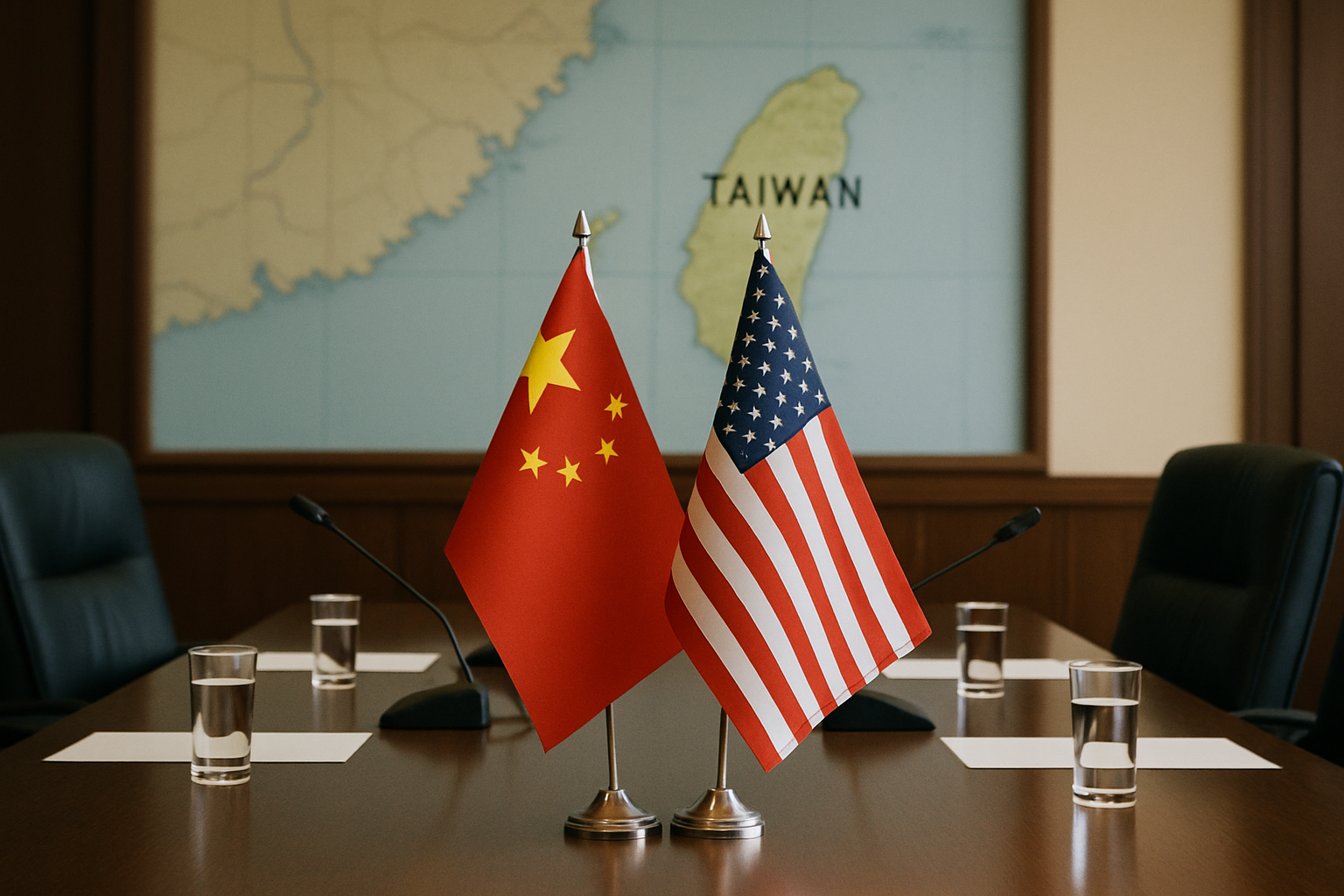
China has signaled its intention to deepen engagement with Taiwan's main opposition party while pursuing dialogue with the United States on regional security issues, as tensions continue to simmer across the Taiwan Strait amid evolving diplomatic dynamics between Washington and Beijing.
According to Portuguese media reports, the Chinese government announced Wednesday its desire to "continue strengthening exchanges and contacts" with Taiwan's primary opposition party, seeking to "unite efforts" to promote the "great rejuvenation of the Chinese nation." This diplomatic outreach comes as cross-strait relations remain a central flashpoint in broader regional security discussions.
Trump-Xi Strategic Dialogue on Taiwan
Chinese President Xi Jinping characterized Taiwan as "the most important issue" in Sino-American relations during a recent phone conversation with U.S. President Donald Trump, according to Hungarian and Tongan news sources. The Chinese leader reportedly urged Trump to exercise "prudence" when supplying weapons to the island, emphasizing Beijing's strategic concerns about American military support for Taiwan.
Xi told Trump that he "attaches great importance" to bilateral ties with Washington and expressed hope that both nations could work toward improved relations. The conversation represents continuing diplomatic engagement between the world's two largest economies as they navigate complex regional security challenges.
"The Chinese leader described the island question as the most important issue in Chinese-American relations."
— Telex Hungary, Government Sources
Taiwan's Response to Great Power Dialogue
Taiwan has welcomed the Trump-Xi conversation, viewing it as potentially stabilizing for regional security. Bulgarian media reported that Taiwanese officials expressed cautious optimism about the dialogue, believing it could contribute to regional stabilization despite China's continued military pressure on the island.
"We are not overly concerned about this phone conversation. In fact, we believe it will contribute to stabilizing the situation, especially given that China continues to escalate tensions in the Taiwan Strait and throughout the region," a Taiwanese spokesperson stated, according to Bulgarian news reports.
Danish sources confirmed that Taiwan maintains confidence in its relationship with the United States, describing bilateral ties as "rock solid" despite the evolving diplomatic landscape.
China's Opposition Party Strategy
Beijing's renewed focus on Taiwan's opposition parties represents a calculated diplomatic strategy aimed at circumventing the current Democratic Progressive Party (DPP) government, which has maintained a firm stance on Taiwan's sovereignty. The Chinese approach seeks to cultivate alternative channels of influence through opposition political forces that may be more receptive to cross-strait dialogue.
This engagement strategy reflects China's long-term political objectives for Taiwan, emphasizing unity under the broader framework of "Chinese national rejuvenation." The approach allows Beijing to maintain political pressure while presenting itself as open to dialogue with Taiwanese political actors.
Regional Security Implications
The Taiwan issue remains central to broader Asia-Pacific security dynamics, with implications extending far beyond cross-strait relations. The ongoing dialogue between Washington and Beijing occurs against the backdrop of enhanced U.S. military support for Taiwan and China's increasing assertiveness in the region.
Military analysts note that China continues to conduct regular military exercises near Taiwan, maintaining pressure on the island while engaging in diplomatic channels with both the United States and opposition forces within Taiwan itself. This dual-track approach reflects Beijing's comprehensive strategy toward eventual unification.
Arms Supply Considerations
The question of U.S. arms sales to Taiwan remains a persistent source of tension in China-U.S. relations. Xi Jinping's call for American "prudence" in weapons supplies underscores Beijing's sensitivity to any enhancement of Taiwan's defensive capabilities.
American military support for Taiwan has included advanced defensive systems, intelligence sharing, and training programs designed to enhance the island's ability to defend against potential military action. China views these supplies as direct interference in what it considers an internal Chinese matter.
Diplomatic Balancing Act
The current diplomatic environment reflects a complex balancing act among all parties involved. The United States seeks to maintain strategic ambiguity while supporting Taiwan's security, China pursues multiple channels of engagement to advance unification goals, and Taiwan navigates between security needs and diplomatic constraints.
This triangular dynamic is further complicated by broader regional security concerns, including North Korea's nuclear program, South China Sea disputes, and the evolving alliance structures in the Indo-Pacific region. Each party must carefully calibrate its approach to avoid escalation while protecting core national interests.
International Context
The Taiwan question has attracted increasing international attention as democratic nations express concern about potential threats to Taiwan's autonomy. European Union leaders and other democratic allies have emphasized the importance of peaceful resolution and respect for Taiwan's democratic institutions.
Regional powers, including Japan, South Korea, and ASEAN nations, closely monitor cross-strait developments given their potential impact on regional trade, security cooperation, and alliance structures. The stability of Taiwan Strait shipping lanes remains crucial for global supply chains and economic activity.
Looking Ahead
As diplomatic engagement continues between Washington and Beijing, the Taiwan issue will remain a critical test of both nations' ability to manage strategic competition while avoiding conflict. China's engagement with Taiwan opposition parties adds another dimension to the complex diplomatic equation.
The success of ongoing dialogue efforts will depend on all parties' willingness to find pragmatic solutions that address legitimate security concerns while respecting democratic principles and regional stability. Taiwan's 23 million citizens remain at the center of these high-stakes diplomatic calculations, with their future closely tied to broader great power dynamics in the Asia-Pacific region.