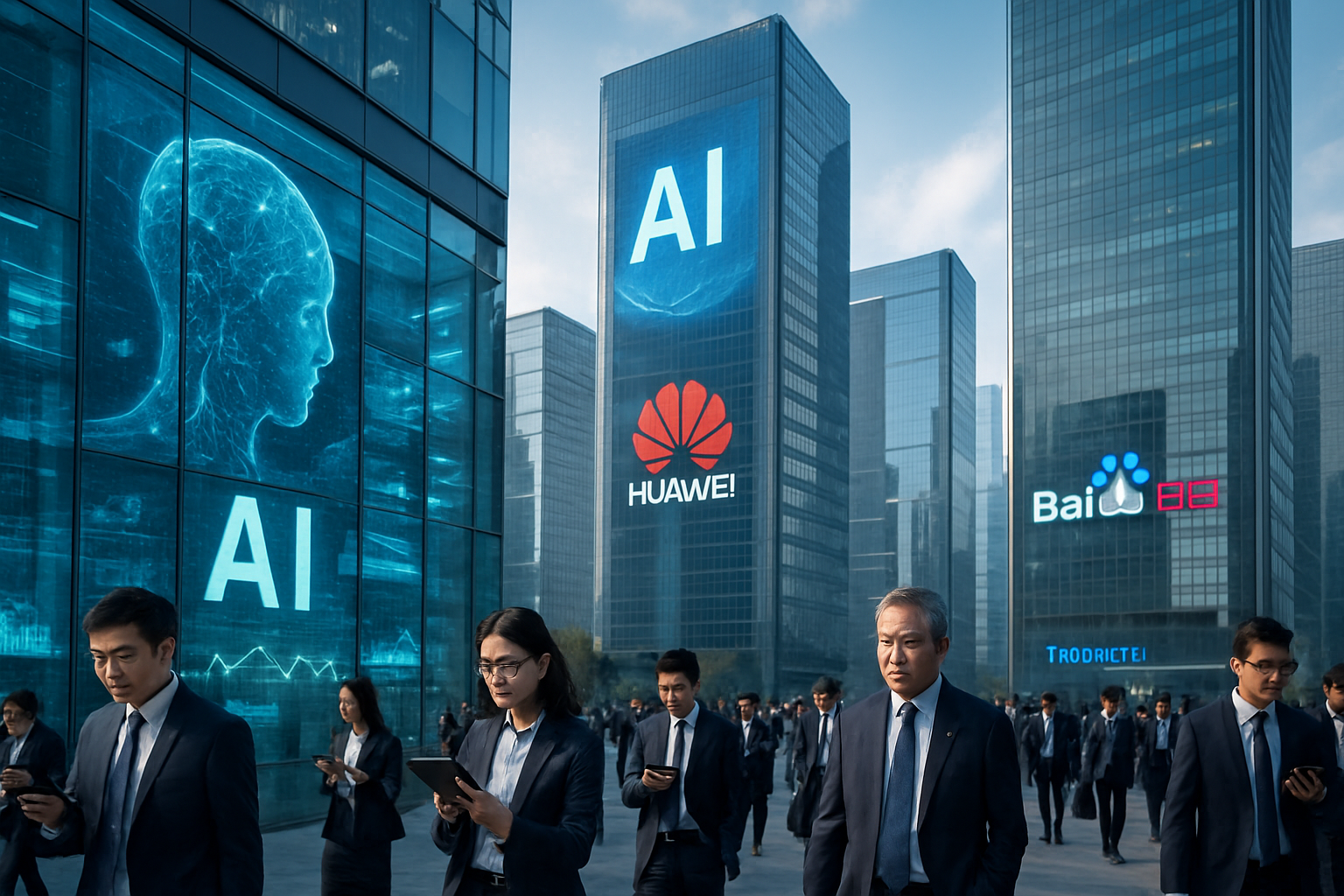
China's technology sector continues to reshape its workforce through strategic job cuts while simultaneously advancing artificial intelligence capabilities and maintaining global technological leadership, marking a critical phase in the country's transition to an AI-driven economy amid demographic pressures.
The apparent contradiction between workforce reductions and technological advancement reflects China's calculated approach to addressing the "4-2-1 problem" – where single children must support four aging parents and grandparents – through systematic AI implementation rather than traditional employment models.
Strategic Workforce Transformation
Unlike Western companies implementing mass layoffs due to AI replacement, Chinese tech firms are pursuing comprehensive worker transition programs that emphasize reskilling over displacement. This approach reflects a broader national strategy to maintain social stability while accelerating technological transformation.
Major Chinese companies including Alibaba, Tencent, and emerging robotics firms like Unitree have scaled their AI operations while implementing what industry analysts describe as "human-centered automation" – using AI to enhance productivity while creating new categories of employment rather than wholesale job elimination.
"China's approach demonstrates how demographic pressure can drive innovation while preserving social cohesion through thoughtful technology integration."
— Bank of America Global Research
Unitree Robotics exemplifies this strategy, scaling humanoid robot production from 5,500 units in 2025 to over 20,000 units in 2026, creating manufacturing employment while addressing labor shortages in an aging society. The company's Spring Festival demonstrations featuring kung fu and lion dance performances reached over 600 million viewers globally, showcasing China's technological capabilities.
Global AI Competition Context
Chinese technology advancement occurs within a broader global AI transformation that experts describe as the "March 2026 Critical Inflection Point." This period marks the transition of artificial intelligence from experimental applications to essential business infrastructure across all sectors.
China's 15th Five-Year Plan elevates "AI Plus" as a national priority, emphasizing "safe and orderly development" while maintaining competitive advantages in global technology markets. This strategic approach balances innovation acceleration with responsible governance frameworks.

The technological sovereignty strategy includes major investments from companies like Midea Group, which committed 60 billion yuan ($8.7 billion) over three years for AI and embodied intelligence development. This represents matching the company's total spending over the previous five years, demonstrating unprecedented commitment to AI transformation.
Infrastructure Challenges Drive Innovation
Despite global semiconductor shortages that have driven memory chip prices up sixfold, affecting Samsung, SK Hynix, and Micron operations, Chinese companies continue aggressive AI expansion. This constraint paradoxically spurs innovation in memory-efficient algorithms and sustainable deployment strategies.
Chinese companies have achieved breakthrough capabilities in constrained environments, with firms like DeepSeek demonstrating advanced AI training using restricted Nvidia chips despite US export controls. These achievements highlight sophisticated technological adaptation capabilities that address real-world resource limitations.
Demographic-Driven Technology Strategy
China's AI development represents the world's most comprehensive demographic-driven technological strategy. With the world's most rapidly aging population, the country faces an unprecedented challenge requiring innovative solutions to maintain economic productivity and social stability.
The strategy extends beyond domestic applications through international initiatives, including zero-tariff access for 53 African countries by May 2026, demonstrating how technological capabilities support expanded international engagement despite domestic demographic pressures.
Successful Integration Models
China's approach emphasizes human-AI collaboration rather than replacement, creating templates for other aging societies worldwide. The country has achieved a logistics automation efficiency record of 13.9% GDP ratio through systematic AI implementation, demonstrating measurable productivity gains.
Educational initiatives include AI-integrated schools that combine artificial intelligence with traditional learning methods, preserving cultural values while enhancing technological capabilities. These models influence international education approaches and demonstrate sustainable AI integration strategies.
International Implications
China's success or failure in balancing AI advancement with workforce stability carries implications extending far beyond national borders. As the world's second-largest economy and largest manufacturing base, China's approach influences global technology governance, corporate strategies, and national technology policies.
The multipolar AI landscape emerging includes Chinese technological sovereignty, European regulatory frameworks, and American corporate investments, creating distributed capabilities that prevent single-entity dominance while enabling culturally sensitive development approaches.
"The window for proactive international coordination is narrowing rapidly as AI development accelerates. China's demographic-driven approach provides a template for aging societies worldwide facing similar technological adaptation challenges."
— United Nations AI Scientific Panel
Looking Forward
March 2026 represents what industry experts characterize as a "civilizational choice point" determining whether AI serves human flourishing or becomes an exploitation tool. China's coordinated approach combining corporate innovation, national automation strategy, and regulatory frameworks demonstrates sophisticated technological development addressing fundamental societal challenges.
The country's ability to maintain productivity growth despite population decline could reshape global assumptions about the relationship between demographics and development, providing practical solutions for aging societies worldwide during the critical AI development juncture of the remainder of the decade.
Success in this comprehensive approach requires continued coordination between government policy, corporate strategies, educational institutions, and international cooperation frameworks, balancing innovation acceleration with safety governance and human welfare considerations.