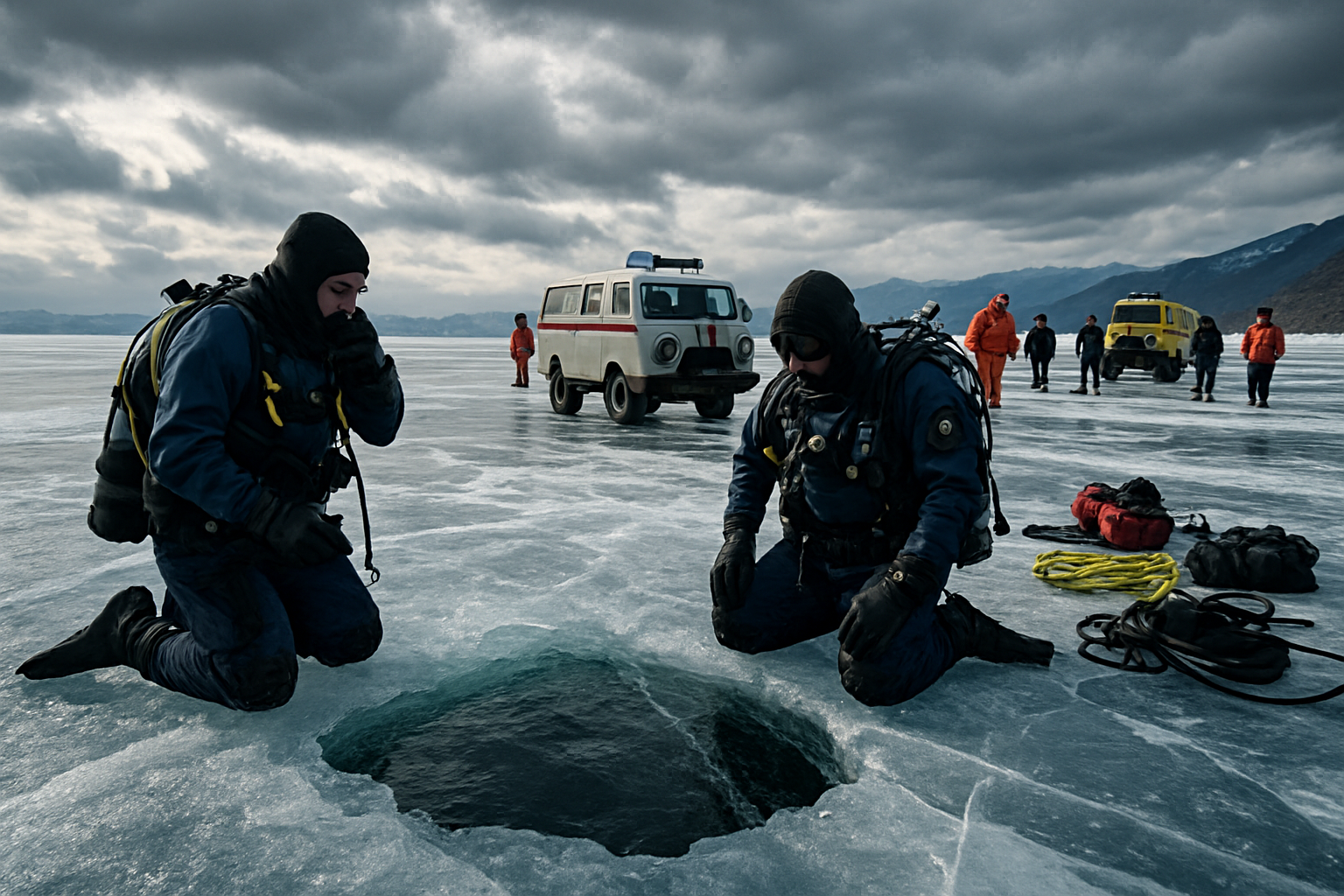
A devastating accident on Russia's frozen Lake Baikal has claimed the lives of eight people after a tour bus carrying Chinese tourists plunged through the ice on Friday, February 21, 2026, marking one of the deadliest tourism incidents in the region's recent history.
Seven Chinese tourists and their Russian driver died when the mini-bus fell through a three-meter-wide ice crevasse while crossing the world's deepest lake, according to Irkutsk regional Governor Igor Kobzev. One Chinese tourist managed to escape the sinking vehicle and was rescued from the frigid waters.
The tragedy unfolded on Friday as the tour group attempted to cross the frozen surface of Lake Baikal, a popular winter destination that attracts thousands of international visitors each year seeking to experience the spectacular ice formations and pristine Siberian wilderness.
Dangerous Rescue Operation in Extreme Conditions
Russian emergency services launched an immediate rescue operation, with divers working in treacherous conditions to recover the victims' bodies from the lake bottom. The accident site reached a depth of 18 meters (59 feet), requiring specialized underwater equipment and cameras to locate the submerged vehicle.
"I would like to remind you once again that going out onto Lake Baikal's ice is not just prohibit[ed but extremely dangerous]"
— Igor Kobzev, Irkutsk Regional Governor
Governor Kobzev expressed his "deepest condolences to the families and friends of the victims" while issuing stern warnings about the risks of ice travel on the lake. The recovery operation demonstrated the extreme challenges faced by emergency responders operating in sub-zero temperatures and difficult terrain.
Lake Baikal's Deadly History
Lake Baikal, located in southern Siberia, holds the distinction of being the world's deepest freshwater lake with a maximum depth of 1,642 meters (5,387 feet). While its frozen surface appears solid during harsh Siberian winters, the lake has witnessed numerous deadly accidents over the years as ice conditions can be unpredictable and dangerous.
The massive lake often freezes during winter months, creating what appears to be a solid crossing point for vehicles. However, ice thickness varies significantly across different areas, and fissures can develop without warning, creating death traps for unwary travelers.
Despite being a UNESCO World Heritage site and major tourist destination, Lake Baikal's extreme conditions pose constant risks to visitors unfamiliar with local conditions and safety protocols.
International Diplomatic Response
The tragedy has prompted swift diplomatic action between Moscow and Beijing. Russian Foreign Minister Sergey Lavrov personally offered condolences to his Chinese counterpart Wang Yi over the deaths of the Chinese tourists, according to Russian news agency TASS.
Lavrov stressed that relevant Russian agencies are conducting a "full-scale investigation" into the incident and promised to inform Beijing about the investigation's results immediately. The diplomatic response underscores the serious nature of the accident and its potential impact on Russia-China tourism relations.
Tourism Safety Concerns
The accident raises significant questions about safety protocols for international tour groups visiting remote and potentially dangerous destinations in Russia. Lake Baikal attracts tourists from around the world, particularly from China, South Korea, and other Asian countries, who come to experience the unique winter landscape and cultural attractions.
Local authorities have long warned about the dangers of traveling on the lake's ice, particularly for those unfamiliar with rapidly changing conditions. Ice thickness can vary dramatically even within short distances, and what appears solid to inexperienced visitors can conceal deadly hazards.
The tourism industry around Lake Baikal provides crucial economic benefits to the Irkutsk region, but this tragedy highlights the urgent need for enhanced safety measures and stricter enforcement of regulations governing winter activities on the frozen lake.
Investigation Underway
Russian authorities have launched a comprehensive investigation into the circumstances surrounding the accident. Officials are examining factors including ice conditions, weather patterns, route planning, and safety protocols followed by the tour operator.
The investigation will likely scrutinize whether proper safety assessments were conducted before the crossing attempt and whether adequate emergency equipment was carried on the vehicle. Questions may also arise about the licensing and training of tour operators who guide foreign visitors across the dangerous ice.
Weather conditions and recent temperature fluctuations that may have weakened the ice structure will form a crucial part of the investigative process, as authorities seek to prevent similar tragedies in the future.
Impact on Regional Tourism
This tragic incident comes at a time when international tourism to Russia faces various challenges due to geopolitical tensions and travel restrictions. The accident could further impact the region's tourism industry, particularly among Chinese visitors who represent a significant portion of Lake Baikal's international tourist market.
Tourism operators in the region may face increased scrutiny and potentially stricter regulations governing winter activities on the lake. The tragedy serves as a stark reminder of the real dangers posed by extreme weather conditions and challenging terrain in remote Russian destinations.
As rescue operations conclude and investigations continue, the international community mourns the loss of eight lives in this preventable tragedy. The incident underscores the critical importance of comprehensive safety measures and proper risk assessment for adventure tourism in some of the world's most beautiful but dangerous natural environments.