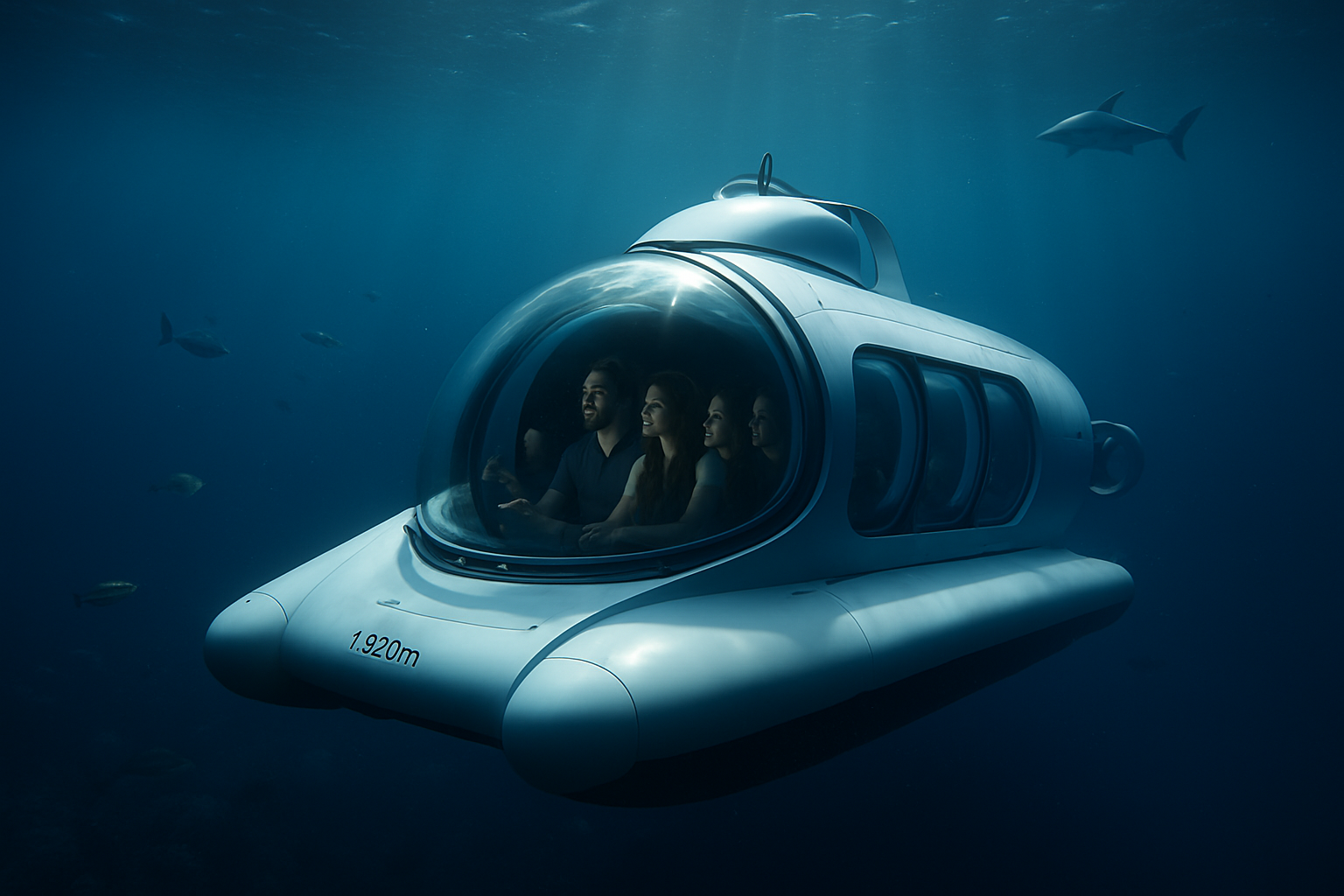
Chinese engineers have achieved a groundbreaking milestone in deep-sea tourism technology, designing the country's first tourist submersible capable of safely diving to depths of 1,000 meters (3,280 feet) below the ocean surface, positioning China to enter the rapidly growing luxury underwater tourism market.
The revolutionary submersible, developed by engineers at the China Ship Scientific Research Centre in Wuxi, a city west of Shanghai, represents a significant leap forward in China's marine technology capabilities. According to state-run media reports, the team plans to complete a working prototype before the end of 2026, with commercial operations targeting a 2030 launch date.
Technical Specifications and Capabilities
The Chinese-designed submersible will accommodate up to four passengers per trip, making it a commercially viable option for luxury tourism operators. The 1,000-meter diving capability places it in an elite category of deep-sea vessels, allowing tourists to explore ocean depths previously accessible only to scientific research missions and military operations.
Key components of the submersible include advanced pressure resistance systems, sophisticated life support technology, and large observation windows designed to provide passengers with panoramic views of deep-sea marine life and underwater geological formations. The engineering team has focused on creating a vessel that prioritizes both safety and passenger experience.
The depth capability of 1,000 meters opens access to unique underwater ecosystems, including deep-sea coral reefs, hydrothermal vents, and marine life that cannot be observed at shallower depths. This depth range also allows exploration of historical shipwrecks and underwater geological features of significant scientific and cultural interest.
Global Context and Market Position
China's entry into the tourist submersible market comes at a time of growing international interest in deep-sea tourism. The industry gained significant attention following high-profile expeditions to famous wreck sites, though recent incidents have highlighted the critical importance of safety protocols and advanced engineering in submersible design.
The Chinese development occurs within a broader context of the country's expanding maritime capabilities. Recent years have seen China invest heavily in submarine technology, including military applications such as nuclear-powered submarines under the strategic defense framework, as well as research vessels for deep-sea exploration.
Industry analysts note that the luxury tourism submersible market represents a natural extension of China's growing expertise in marine engineering. The country's shipbuilding industry has demonstrated capabilities in constructing complex naval vessels, providing a strong foundation for developing civilian deep-sea tourism technology.
Economic and Tourism Implications
The commercial viability of the Chinese submersible project could significantly impact the global underwater tourism industry. With operations planned for 2030, the timing aligns with projections for substantial growth in experiential luxury travel as global tourism recovers and evolves post-pandemic.
Tourism industry experts suggest that deep-sea exploration experiences could become a significant draw for high-end tourists seeking unique adventures. The 1,000-meter depth capability would allow access to underwater environments that few humans have experienced, creating exclusive tourism opportunities.
The project also represents potential economic benefits for China's marine technology sector. Success in the tourist submersible market could lead to export opportunities, as other countries with suitable marine environments seek to develop their own underwater tourism capabilities.
Safety and Regulatory Considerations
The development timeline extending to 2030 reflects the rigorous safety protocols and testing requirements essential for passenger-carrying submersibles. The engineering team must address complex challenges including pressure vessel integrity, emergency life support systems, and fail-safe mechanisms for deep-sea operations.
Regulatory frameworks for tourist submersibles involve multiple agencies overseeing marine safety, tourism operations, and environmental protection. The Chinese submersible will need to meet international safety standards to operate in international waters and potentially serve international tourists.
Environmental impact assessments will also play a crucial role in the submersible's development. Deep-sea tourism operations must balance access to unique underwater environments with protection of fragile marine ecosystems that may be sensitive to human presence.
Technological Innovation and Engineering Excellence
The China Ship Scientific Research Centre's submersible project demonstrates the country's advancing capabilities in complex marine engineering. The 1,000-meter depth requirement demands sophisticated solutions for pressure resistance, with vessel hulls needing to withstand immense water pressure equivalent to approximately 100 times atmospheric pressure at sea level.
Advanced materials science plays a critical role in submersible construction, requiring specialized alloys and composite materials that maintain structural integrity under extreme conditions while remaining lightweight enough for practical operation. The engineering team must also integrate complex life support systems capable of maintaining safe conditions for passengers during extended underwater excursions.
Navigation and communication systems for deep-sea operations present additional technical challenges. The submersible must maintain contact with surface support vessels while providing precise positioning capabilities for safe operation near underwater features and potential hazards.
International Competition and Innovation
China's submersible development occurs within a competitive international landscape of deep-sea tourism technology. Several countries and private companies have developed or are developing similar capabilities, creating a growing market for underwater exploration experiences.
The Chinese project's focus on passenger capacity and commercial viability suggests a strategic approach to capturing market share in the emerging deep-sea tourism sector. By targeting a 2030 operational date, the Chinese team aims to position their technology competitively within the global market timeline.
Success in tourist submersible development could provide China with technological advantages applicable to broader marine engineering applications, including research vessels, offshore energy infrastructure, and potentially military submarine technologies.
Future Prospects and Development Timeline
The ambitious timeline for the Chinese submersible project reflects both the technical complexity involved and the strategic importance placed on entering the deep-sea tourism market. The prototype completion target by the end of 2026 will mark a crucial milestone in assessing the project's technical feasibility and safety performance.
Commercial operations planned for 2030 allow sufficient time for comprehensive testing, regulatory approval processes, and crew training programs essential for safe passenger operations. The extended development period also accommodates potential challenges and refinements that typically arise during advanced marine engineering projects.
If successful, the Chinese submersible could serve as a model for similar projects worldwide, potentially establishing China as a leader in deep-sea tourism technology. The project's outcome will likely influence international approaches to underwater exploration and marine tourism development.
The China Ship Scientific Research Centre's tourist submersible represents a convergence of advanced engineering, commercial opportunity, and technological ambition that could reshape the landscape of luxury underwater tourism. As the project progresses toward its 2030 operational target, it stands as a testament to China's growing capabilities in complex marine technology development and the expanding possibilities for human exploration of the deep ocean.