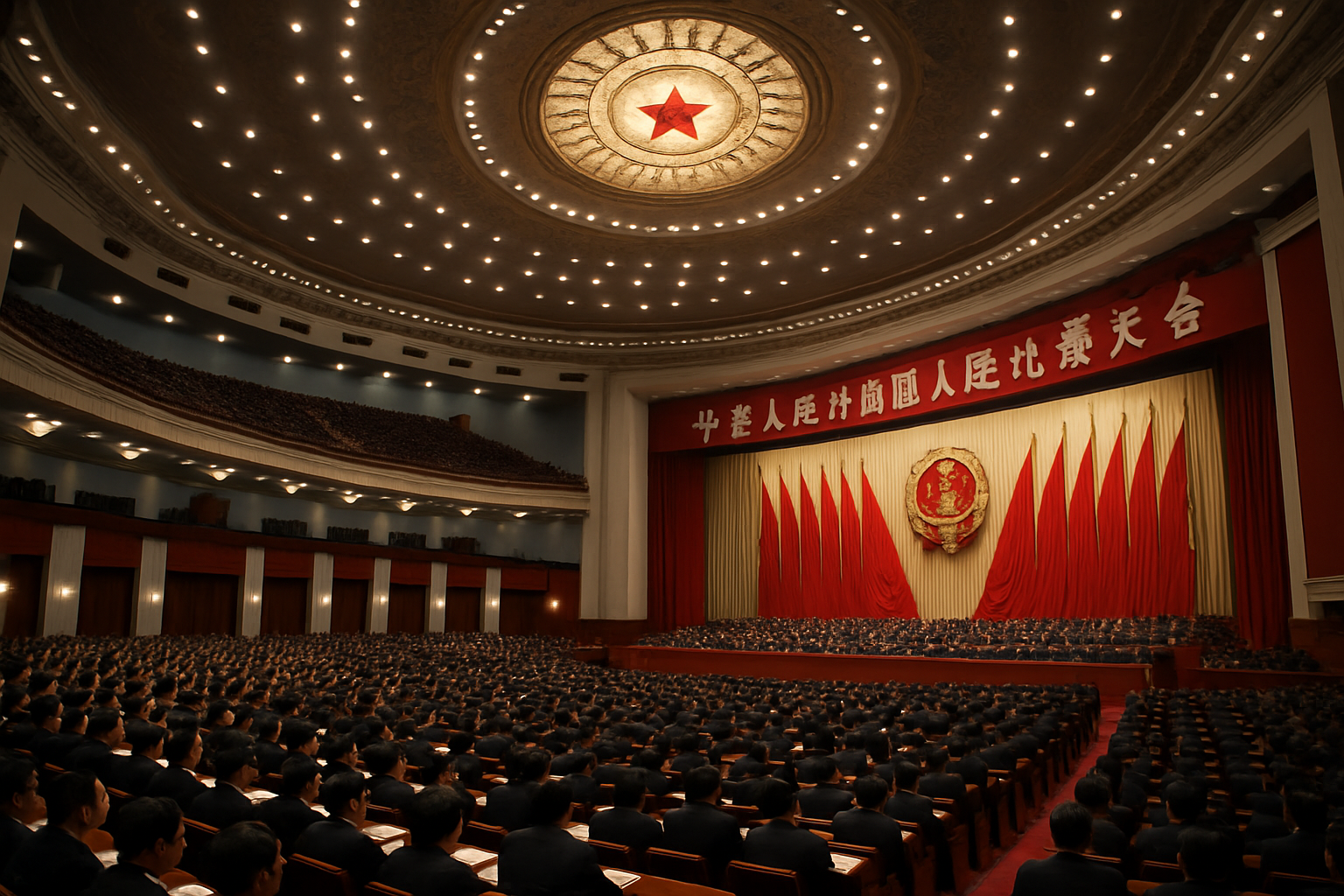
China's Communist Party opened its most important annual political meetings on Wednesday, as the "Two Sessions" - the simultaneous gatherings of the National People's Congress and Chinese People's Political Consultative Conference - convene against the backdrop of escalating Middle East tensions and calls for foreign policy recalibration.
The meetings, representing China's largest political gathering of the year, bring together thousands of delegates at the Great Hall of the People in Beijing to set policy direction for the world's second-largest economy. This year's sessions come amid unprecedented global turbulence, including the ongoing Iran nuclear crisis and sustained trade tensions with the United States under President Trump's second term.
Iran Crisis Enters Policy Discussions
While Iran is unlikely to dominate the formal agenda, analysts suggest the Middle East turmoil will significantly influence policy discussions behind closed doors. The crisis has prompted what observers describe as a broader rethink of China's Middle East strategy and approaches to safeguarding expanding overseas interests.
"The Iran situation has created new complexities for Beijing's foreign policy calculations," noted a senior analyst familiar with the proceedings. "While not the primary focus, it represents the type of challenge that requires strategic reassessment."
The timing proves particularly significant as China has invested heavily in Middle Eastern infrastructure projects and energy partnerships over the past decade. Recent diplomatic initiatives, including the Saudi-Iran rapprochement brokered by Beijing in 2023, positioned China as a key regional mediator - a role now complicated by escalating tensions.
Economic Challenges Take Center Stage
Beyond foreign policy considerations, the Two Sessions will address mounting economic pressures facing China's leadership. The country confronts slowing growth, demographic challenges, and ongoing trade disputes that have persisted despite various diplomatic efforts.
President Xi Jinping's administration faces the delicate balance of maintaining economic momentum while navigating increasingly complex international relationships. The sessions are expected to unveil new economic targets and policy measures designed to address both domestic and external pressures.
"These meetings represent China's most important policy-setting moment of the year, coming at a time when international dynamics require careful strategic navigation."
— Senior Policy Analyst, Beijing Institute
Foreign Policy Recalibration Expected
The current global environment has created what analysts describe as an opportunity for China to reassess its international positioning. Recent developments, including the breakdown of Iran nuclear talks and escalating regional conflicts, have highlighted the limitations of existing diplomatic frameworks.
China's approach to international crisis management may undergo significant revision during these sessions. The country's traditional preference for economic engagement over direct political intervention faces new challenges in an increasingly unstable global environment.
The sessions will likely address how China can better protect its overseas investments and citizens while maintaining its stated policy of non-interference in other nations' internal affairs. This balance becomes increasingly difficult as China's global footprint expands.
Regional Security Implications
The Two Sessions occur as China faces multiple regional security challenges. Taiwan tensions remain elevated, with military activities continuing around the island. North Korea's recent Workers' Party Congress and succession planning add another layer of complexity to regional dynamics.
Japan's strengthened position under Prime Minister Sanae Takaichi, following her historic electoral victory, creates new diplomatic challenges for Beijing. The ongoing realignment of regional alliances requires careful Chinese strategic responses.
Domestic Policy Priorities
Despite international pressures, domestic policy remains the primary focus of the Two Sessions. Key issues expected to receive attention include:
- Economic growth targets for 2026 amid global uncertainties
- Technological development and innovation policies
- Environmental protection and carbon neutrality goals
- Rural development and poverty alleviation programs
- Healthcare system improvements and pandemic preparedness
Belt and Road Initiative Adjustments
The sessions will likely address necessary adjustments to China's signature Belt and Road Initiative. Recent global developments have highlighted both opportunities and risks associated with overseas infrastructure investments.
The ongoing crisis in various partner countries has forced Beijing to reconsider risk assessment and project implementation strategies. The Two Sessions provide a platform for announcing policy refinements that better protect Chinese investments while maintaining development partnerships.
Trade and Economic Diplomacy
With continued U.S.-China trade tensions and the recent Supreme Court ruling limiting President Trump's tariff authority, China faces new opportunities and challenges in international economic relations. The sessions will address strategies for diversifying trade relationships and reducing dependence on any single market.
Recent initiatives, including expanded trade agreements with African nations and deepened partnerships with European countries, represent China's efforts to build alternative economic relationships amid ongoing tensions with the United States.
Looking Ahead: Policy Implementation
The Two Sessions will conclude with detailed policy announcements and target-setting that will guide Chinese government actions throughout 2026. International observers closely monitor these proceedings for insights into China's strategic priorities and policy directions.
The outcomes of these meetings will significantly influence not only China's domestic trajectory but also its approach to international relations during a period of unprecedented global challenges. The sessions represent a critical moment for Chinese leadership to demonstrate adaptability and strategic vision in navigating complex domestic and international pressures.
As the meetings continue through the coming days, the international community watches for signals about China's evolving role in global governance and crisis management. The decisions made during these sessions will reverberate far beyond China's borders, affecting regional stability and international cooperation frameworks for years to come.