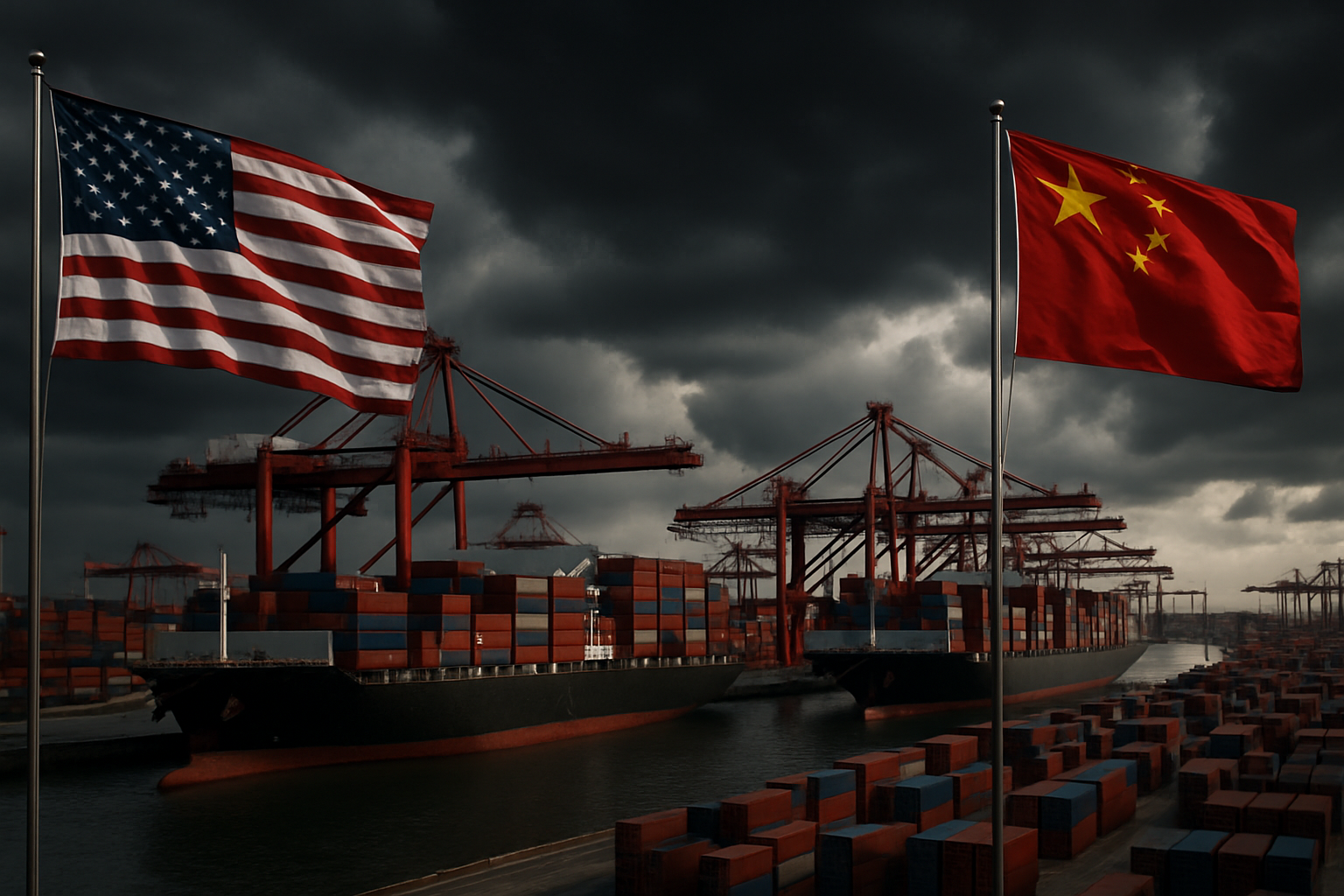
The United States has issued a stark warning that Peru risks eroding its sovereignty after a court ruling limited state oversight of the Chinese-controlled Chancay megaport, marking the latest escalation in deepening US-China strategic competition that now spans trade, technology, and intelligence operations across multiple continents.
The dispute centers on the $1.3 billion Port of Chancay, a deep-water facility located 80 kilometers north of Lima and majority-owned by China's state-run shipping giant Cosco Shipping. The controversy erupted when Peru's judiciary declared that the national transport regulator Ositran lacks authority to supervise private ports, effectively removing government oversight from the strategically vital infrastructure project.
CIA Intensifies Intelligence War
Simultaneously, the CIA has launched an unprecedented public recruitment campaign targeting Chinese military personnel, releasing a video depicting a disillusioned mid-level Chinese officer just weeks after the dramatic removal of China's top general. The timing appears calculated to exploit potential discord within China's military hierarchy following recent high-level purges.
The recruitment video, released on Thursday, represents the latest escalation in a broader US intelligence campaign to penetrate China's military and government structures. It follows similar CIA efforts launched in May 2025 that focused on civilian targets within China's bureaucratic apparatus.
Intelligence sources suggest the campaign comes amid ongoing investigations into General Zhang Youxia, the 75-year-old vice-chairman of China's Central Military Commission, for corruption allegations. The PLA newspaper has described recent military leadership changes as eliminating obstacles to military power, indicating President Xi Jinping's continued consolidation of control over the People's Liberation Army.
Peru Port Becomes Geopolitical Flashpoint
Beijing responded with "strong dissatisfaction" to US statements about Peruvian sovereignty over the Chancay port, accusing Washington of "flagrant fabrication and defamation" regarding the Chinese-developed project. The Chinese Foreign Ministry characterized US concerns as interference in legitimate commercial activities between sovereign nations.
The port, which represents China's largest infrastructure investment in Latin America, has become operational as a major transshipment hub, with nearly half its cargo volume involving transshipment operations. This positions Chancay as a critical node in China's Belt and Road Initiative, providing Beijing with significant influence over South America's Pacific trade routes.
"The law is clear and Ositran should not supervise private ports," stated the port manager, defending the judicial decision that removed regulatory oversight.
— Chancay Port Management
The US State Department's warning that Peru "risks eroding its sovereignty" reflects broader American concerns about Chinese state-owned enterprises operating critical infrastructure with minimal host-country oversight. The controversy has raised fundamental questions about the balance between foreign investment and national security across Latin America.
Broader Context of Strategic Competition
The Chancay port dispute occurs against a backdrop of intensifying US-China competition across multiple domains. Recent memory reveals a pattern of escalating tensions that began with Taiwan-China military confrontations, where Chinese aircraft activity increased 23% in 2025, and continued through various trade and technology battles.
China has been pursuing sector-specific trade arrangements rather than comprehensive agreements, demonstrating flexibility in maintaining strategic relationships while advancing technological self-reliance. The recent reduction of EU dairy import tariffs to 7.4%-11.7% from previous levels of 21.9%-42.7% exemplifies this approach, affecting over $500 million in trade while providing a template for managing economic cooperation amid geopolitical tensions.
Meanwhile, China's domestic challenges include Lenovo's 21% profit decline due to global memory shortages, described by CEO Yang Yuanqing as a structural issue affecting the entire technology sector. This has coincided with China's implementation of unified national power market reforms to support energy security and meet 2030 carbon-peak targets.
Technology and Trade Warfare Intensifies
The intelligence and port controversies unfold as China continues expanding its international presence through programs like the Zhiyuan academic initiative for AI research, designed to attract global talent to Beijing. Space infrastructure advances continue with Long March-12 rocket launches deploying satellites from Wenchang facility operations, now creating "Space Town" economic development zones.
German assessments note China's evolution from "lucrative market to competitive threat" in high-tech manufacturing, with Chinese firms now competing directly against established European manufacturers in sophisticated products. This represents a fundamental shift in China's global economic positioning and competitive capabilities.
The US response has included expanding the Critical Minerals Partnership involving 55 countries under Vice President J.D. Vance and EU leadership, directly challenging China's 60% production and 90% refining capacity dominance in materials essential for renewable energy and advanced manufacturing.
Regional Implications and Alliance Building
The Chancay port controversy demonstrates how infrastructure investments have become weapons in great power competition. China's Belt and Road Initiative projects like Chancay provide Beijing with strategic leverage over host countries while advancing Chinese commercial interests and geopolitical objectives.
Regional responses have been mixed, with some Latin American governments welcoming Chinese investment while others express sovereignty concerns similar to those raised by the United States. The debate reflects broader questions about economic development, national security, and regulatory oversight in an era of intensifying strategic competition.
European Union officials have expressed similar concerns about extraterritorial implications of US-China competition, particularly regarding sanctions enforcement and trade relationships. The EU's 20th sanctions package introduced maritime services bans on Russian crude exports, adding another dimension to global trade disruptions.
Economic Stakes and Strategic Implications
The timing of these developments coincides with broader shifts in global economic relationships. Trump administration policies have included bilateral trade deals with Argentina (eliminating 1,600+ tariffs), India (reducing duties from 25% to 18%), while maintaining pressure on China through various trade and technology restrictions.
Energy markets have reflected these tensions, with oil prices rising over $1 per barrel amid Middle East conflicts and Strait of Hormuz incidents. The intersection of trade disputes, technology competition, and infrastructure control creates multiple pressure points in the global economy.
China's pursuit of trade pragmatism combined with technological advancement and international expansion reflects a multi-faceted approach to global competition. The success of selective cooperation models, such as the recent EU dairy agreement, likely influences future Chinese international economic policies.
Looking Ahead: Escalation or Accommodation?
The convergence of intelligence operations, port controversies, and trade disputes suggests US-China tensions are entering a new phase of sustained competition across multiple domains. The Chancay port case establishes precedents for how infrastructure investments become geopolitical flashpoints, while CIA recruitment campaigns signal an intensification of intelligence warfare.
Both nations face domestic pressures that complicate bilateral relations. China confronts economic challenges including technology sector struggles and the need for continued economic growth, while the United States navigates complex alliance relationships and domestic political considerations around trade and foreign policy.
The outcome of current disputes will likely influence the broader trajectory of US-China relations, regional alliance structures in Latin America and Asia, and the future of global trade governance. Whether these tensions lead to further escalation or eventually prompt new frameworks for managing strategic competition remains an open question with profound implications for international stability and economic prosperity.
As infrastructure, intelligence, and trade become increasingly interconnected domains of competition, the Chancay port dispute may be remembered as a pivotal moment when abstract strategic rivalry translated into concrete sovereignty challenges with lasting implications for the global order.