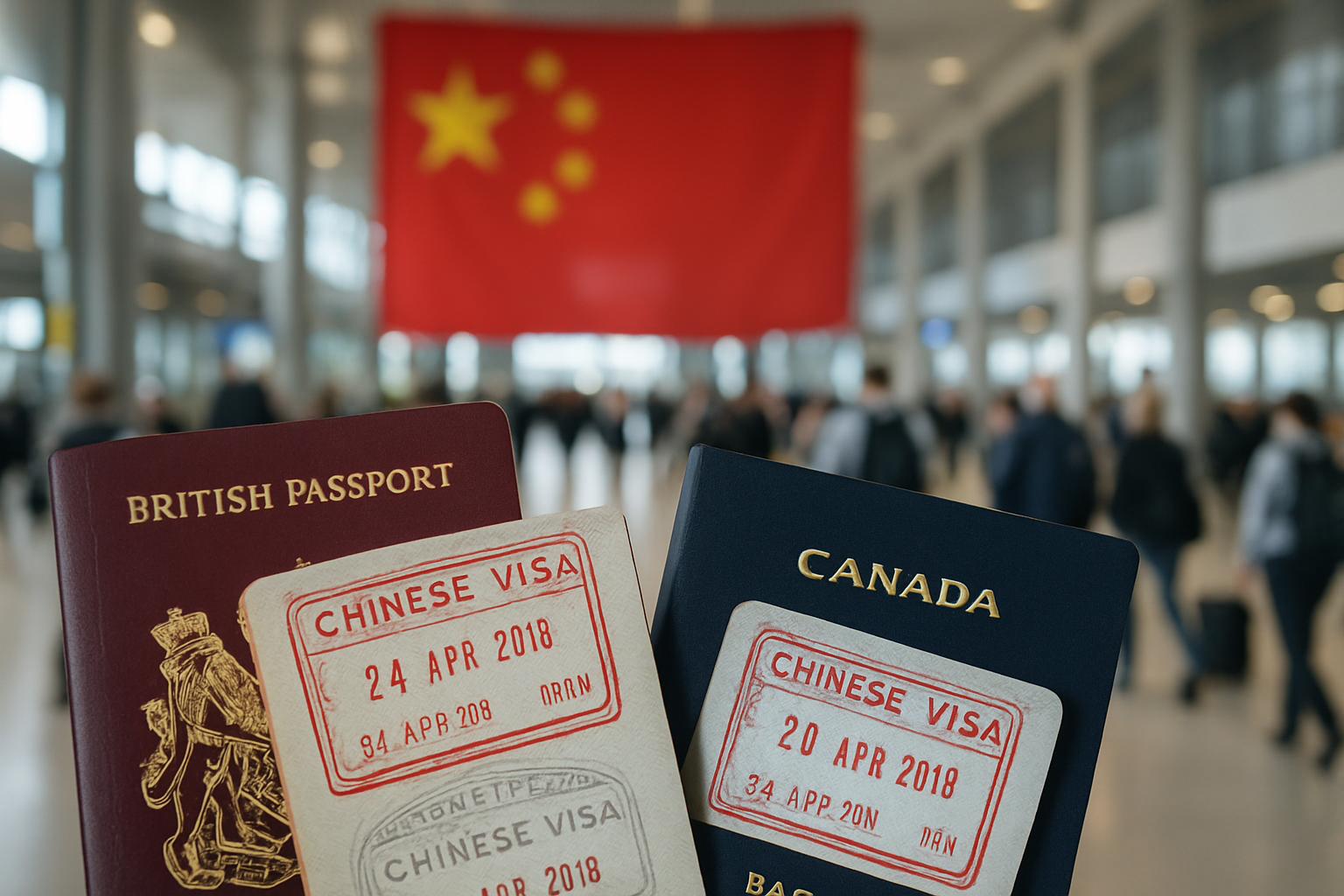
China has officially announced visa-free entry for British and Canadian nationals starting February 17, 2026, in a major diplomatic move that coincides with the Lunar New Year and leaves the United States as the only Five Eyes intelligence alliance member without this privilege.
The Chinese Foreign Ministry confirmed the policy on Sunday, February 15, stating that holders of ordinary passports from both countries can visit China without applying for visas for tourism, business, visiting relatives or friends, exchanges, or transit purposes for stays not exceeding 30 days. The announcement validates recent statements made by Canadian Prime Minister Mark Carney and British Prime Minister Keir Starmer following their visits to Beijing.
Diplomatic Context and Strategic Timing
The visa-free announcement represents a significant diplomatic breakthrough following high-level visits by both Western leaders to Beijing in January 2026. The timing is particularly strategic, taking effect on Tuesday, February 17, which marks the beginning of the Lunar New Year or Spring Festival - China's most important annual celebration characterized by massive domestic travel and family reunions.
According to sources from the South China Morning Post, this policy development leaves the United States notably isolated as the sole Five Eyes nation - the intelligence-sharing alliance comprising the US, UK, Canada, Australia, and New Zealand - without visa-free access to China. This exclusion underscores the complex geopolitical dynamics at play as China selectively extends diplomatic olive branches while maintaining tensions with Washington.
Economic Implications and Trade Relations
The visa-free policy comes amid broader efforts by both Britain and Canada to stabilize economic relationships with China through various cooperation agreements. Slovak media reports indicate this strategic move follows January visits by the premiers, during which London and Ottawa explored pathways to economic collaboration including agreements on electric vehicles and agricultural products.
Prime Minister Carney has been pursuing what his administration terms "pragmatic engagement" with China, seeking to balance economic opportunities with security concerns. This approach represents a calibrated shift from previous hardline positions, recognizing China's importance as a global economic partner while maintaining caution on sensitive security matters.
"This development demonstrates China's willingness to engage with international partners who approach relationships with mutual respect and practical cooperation."
— Chinese Foreign Ministry Spokesperson
Tourism and Cultural Exchange Benefits
The policy is expected to significantly boost tourism and cultural exchanges between China and both Western nations. The 30-day visa-free period provides ample time for business delegations, cultural tours, and family visits that were previously complicated by visa application processes.
Industry analysts predict this move could restore pre-pandemic travel levels more rapidly, particularly given the symbolic importance of announcing the policy during Chinese New Year celebrations. The timing suggests Beijing views improved people-to-people connections as fundamental to rebuilding broader bilateral relationships.
Regional and Global Reactions
Washington's exclusion from the visa-free arrangement has not gone unnoticed by regional observers. While Australia and New Zealand continue to navigate complex relationships with Beijing, the selective inclusion of Britain and Canada sends clear diplomatic signals about China's preferences for engagement partners.
The announcement coincides with broader shifts in global diplomatic alignments, as nations recalibrate their relationships with major powers amid evolving security and economic considerations. European allies have watched closely as both Britain and Canada test new approaches to China engagement while maintaining core alliance commitments.
Implementation Details and Practical Impact
The visa-free policy covers ordinary passport holders from both countries and explicitly includes provisions for business activities, tourism, visiting relatives or friends, cultural exchanges, and transit travel. The 30-day maximum stay period aligns with similar arrangements China has with other countries, suggesting this represents a standardized diplomatic tool rather than a unique concession.
Travel industry representatives in both countries have welcomed the development, anticipating streamlined business operations and increased cultural tourism. The policy removes administrative barriers that previously discouraged shorter-term visits and spontaneous travel decisions.
Broader Diplomatic Landscape
This visa policy announcement occurs within a complex global diplomatic environment where traditional alliance structures face new pressures and opportunities. China's selective engagement approach - embracing some Five Eyes partners while excluding others - reflects sophisticated diplomatic strategy that rewards cooperation while maintaining pressure points.
The development also highlights how individual alliance members are pursuing independent diplomatic and economic initiatives, even within established multilateral frameworks. Both Britain and Canada appear to be testing whether enhanced engagement with China can yield practical benefits without compromising fundamental security relationships.
Looking Ahead
The success of this visa-free arrangement will likely influence future diplomatic initiatives and potentially encourage other nations to reconsider their own engagement strategies with China. The policy represents a test case for whether practical cooperation can coexist with broader strategic competition in the international system.
As the policy takes effect this week during Lunar New Year celebrations, the international community will be watching closely to see whether this diplomatic opening leads to broader improvements in China's relationships with Western nations, or remains an isolated gesture within an otherwise competitive global environment.