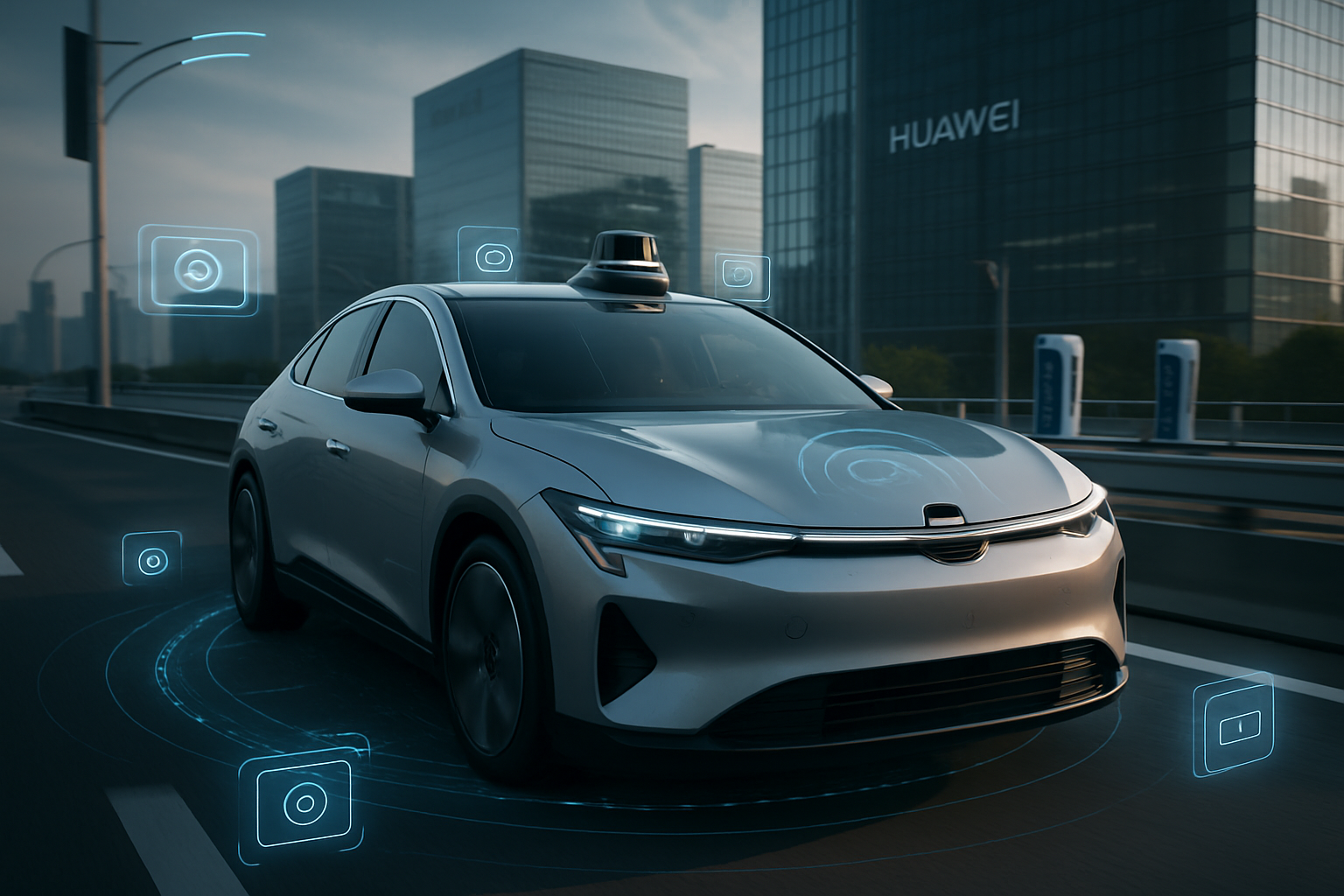
Chinese electric vehicle manufacturer Xpeng's CEO He Xiaopeng is calling for China to accelerate autonomous driving development by skipping intermediate stages and jumping directly to advanced self-driving capabilities, as the industry faces slowing sales growth and intensifying global competition.
Speaking on Monday, He Xiaopeng, founder and CEO of the Guangzhou-based company, argued that China should bypass traditional incremental development approaches and move straight to more sophisticated autonomous driving systems. The executive emphasized that Beijing needs to adjust regulations and policies faster to enable this technological leap, positioning China as a global leader in the rapidly evolving autonomous vehicle sector.
Strategic Vision for China's Autonomous Future
Xpeng's strategic recommendation comes at a critical juncture for China's electric vehicle industry. The country has established itself as a dominant force in EV manufacturing and battery technology, controlling 60% of global critical materials production and 90% of refining capacity for lithium, cobalt, and rare earth elements. This supply chain advantage provides China with a unique foundation to accelerate autonomous driving development.
The CEO's proposal reflects growing confidence in China's technological capabilities following recent breakthroughs in AI and computing power. Tesla's recent establishment of a China-focused AI training center, following Beijing's autonomous driving deregulation, demonstrates international recognition of China's potential in this sector. The training center, confirmed by Tesla's Grace Tao, provides sufficient computing power for assisted-driving development, indicating the infrastructure foundation already exists for advanced autonomous systems.
Industry Context and Market Pressures
The call for accelerated development comes amid challenging market conditions for China's EV sector. Despite the country's technological leadership, the industry faces persistent supply chain challenges, including memory chip shortages that have driven prices up sixfold, affecting vehicle control systems until 2027 when new fabrication facilities come online.
Chinese EV manufacturers including Xpeng, BYD, and NIO are simultaneously dealing with new regulatory requirements. China's announcement of a comprehensive ban on hidden door handles effective January 2027 represents a shift toward prioritizing safety over design aesthetics, requiring significant vehicle redesigns that could impact development timelines.
"China should skip an intermediate step and move directly to a more advanced version of autonomous capabilities."
— He Xiaopeng, Xpeng CEO and Founder
Global Autonomous Driving Landscape
China's autonomous driving ambitions unfold against a backdrop of intense international competition. The United States and European Union are pursuing their own approaches to self-driving technology, while companies like Tesla continue to expand their AI capabilities globally. Recent developments in neuromorphic machine vision technology have achieved 0.15-second reaction times compared to 0.5 seconds for traditional systems, significantly enhancing autonomous vehicle safety capabilities.
The strategic implications extend beyond technology development to geopolitical positioning. China's approach to autonomous driving could establish new global standards and export opportunities, similar to its current dominance in battery technology and electric vehicle manufacturing. The country's methodical approach to technological sovereignty suggests that success in autonomous driving could provide significant competitive advantages in the global automotive market.
Regulatory and Infrastructure Challenges
He Xiaopeng's emphasis on regulatory adaptation highlights a critical bottleneck in autonomous driving deployment. Current regulatory frameworks in most countries, including China, were designed for traditional vehicles and require significant updates to accommodate advanced self-driving capabilities. The CEO's call for faster policy adjustments suggests that technological capabilities may be outpacing regulatory preparedness.
Infrastructure requirements for advanced autonomous driving are substantial, including smart traffic management systems, 5G connectivity, and comprehensive sensor networks. China's existing digital infrastructure, including extensive 5G deployment and smart city initiatives, provides a foundation for autonomous vehicle integration that many other markets lack.
Economic and Safety Implications
The push for advanced autonomous driving technology addresses multiple challenges facing China's transportation sector. Driver shortages, an aging population, and urbanization pressures create compelling economic incentives for self-driving vehicles. Japan faces similar demographic challenges, with Toyota and NTT Docomo advancing autonomous driving technology to address nationwide driver shortages, demonstrating the global relevance of these solutions.
Safety considerations remain paramount in autonomous driving development. Recent advances in Chinese battery technology, including breakthrough water-based battery systems that are "as safe as tofu brine," demonstrate the country's commitment to safety innovations that could be applied to autonomous vehicle systems.
International Competitive Response
China's potential leap to advanced autonomous driving capabilities has implications for global automotive competition. European and American manufacturers may need to accelerate their own development timelines to remain competitive. The automotive industry's transformation toward electrification and autonomy represents one of the most significant industrial shifts in modern history, requiring coordination across energy systems, infrastructure development, materials supply, and regulatory frameworks.
The success of China's approach could influence global autonomous driving standards and deployment strategies. As the world's largest automotive market, China's regulatory decisions and technological choices often establish de facto global standards, making Xpeng's recommendation particularly significant for the international automotive industry.
Future Implications
The convergence of China's EV leadership, AI capabilities, and infrastructure development creates a unique opportunity for autonomous driving advancement. Success in this sector could position China not only as a manufacturing hub but as the global center for autonomous vehicle technology development and export.
However, the approach also carries risks. Skipping traditional development stages could lead to unforeseen safety challenges or technological gaps that might emerge during real-world deployment. The balance between innovation speed and safety validation remains a critical consideration for China's autonomous driving strategy.
As China continues to navigate the complex intersection of technological capability, regulatory adaptation, and market demands, Xpeng's recommendation represents a bold vision for the country's autonomous driving future. The success or failure of this approach will likely influence global autonomous vehicle development for decades to come, making it one of the most closely watched technological initiatives in the contemporary automotive industry.