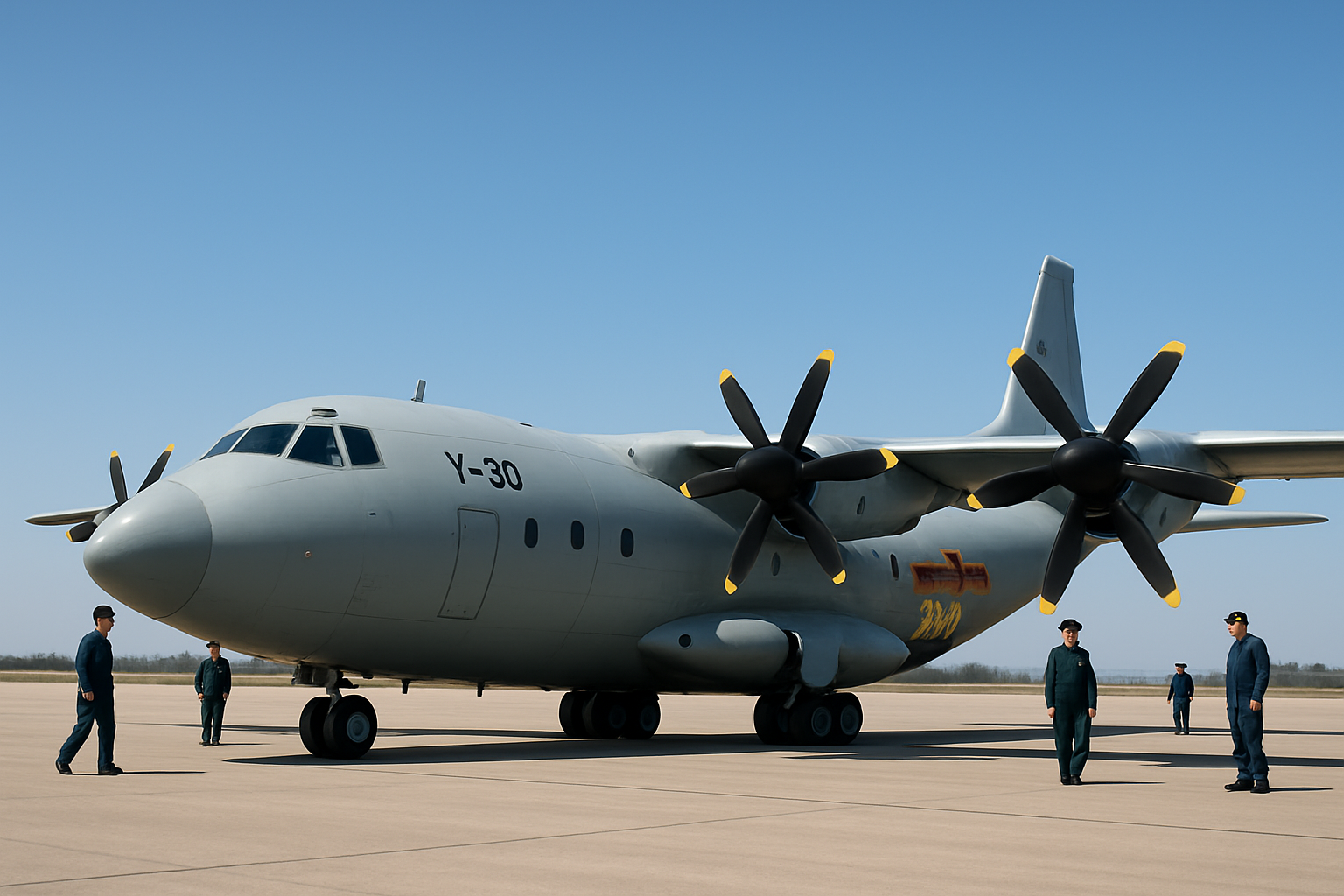
China's aviation industry has taken a significant leap forward with the unveiling of its Y-30 transport aircraft, a four-engine turboprop designed to directly challenge America's C-130J "Super Hercules" in the competitive military transport market. According to Chinese military publications, this new-generation medium-lift aircraft promises to surpass its American counterpart in most performance metrics.
The Y-30, developed by Shaanxi Aircraft Industry Corporation under the Aviation Industry Corporation of China (AVIC), successfully completed its maiden test flight in December 2025, marking a pivotal moment in China's quest for aerospace independence and global market presence.
Superior Performance Claims
Chinese defense analysts assert that the Y-30 will outperform the C-130J Super Hercules across multiple operational parameters. The aircraft features enhanced cargo capacity, improved fuel efficiency, and advanced avionics systems that represent decades of technological advancement over existing transport aircraft designs.
The development program has emphasized operational flexibility, with the Y-30 designed to excel in diverse mission profiles including troop transport, cargo delivery, medical evacuation, and humanitarian operations. This versatility positions it as a comprehensive solution for military and civilian applications worldwide.
Strategic Aerospace Competition
The Y-30's emergence occurs against a backdrop of intensifying global aerospace competition and military transport aircraft demand. Recent tragic incidents involving aging military transport fleets worldwide have highlighted the urgent need for modernized capabilities.
The Colombian Air Force C-130 Hercules crash in Puerto Leguízamo in March 2026, which killed 69 personnel, and Bolivia's military aircraft disaster at El Alto Airport that claimed 22 lives, underscore the challenges facing operators of aging transport aircraft. These incidents have accelerated discussions about fleet modernization and the adoption of more advanced, reliable platforms.
"The Chinese new medium-lift transporter represents a significant technological advancement in military aviation capabilities."
— Chinese Military Aviation Magazine
Technological Innovation and Features
The Y-30 incorporates cutting-edge technologies developed through China's comprehensive aerospace modernization program. Advanced materials, state-of-the-art engines, and sophisticated electronic systems provide enhanced reliability and operational effectiveness compared to traditional transport aircraft designs.
Key technological improvements include enhanced cargo handling systems, improved crew accommodation, advanced weather radar capabilities, and integrated defensive systems. These features address longstanding operational challenges faced by military transport crews worldwide.
Global Market Implications
China's entry into the competitive military transport aircraft market represents a fundamental shift in global aerospace dynamics. For decades, American and European manufacturers have dominated this sector, but the Y-30's introduction signals China's intention to compete directly for international contracts.
The aircraft's competitive pricing, combined with China's established defense cooperation relationships worldwide, positions it as an attractive alternative for countries seeking to modernize their transport capabilities without the political complexities often associated with Western military sales.
Regional Security Context
The Y-30's development occurs during a period of heightened global military transport aircraft attention following numerous high-profile accidents. The recent Russian An-26 crash in Crimea, which killed all 29 aboard due to technical malfunctions, further emphasizes the critical importance of reliable transport aircraft for military operations.
These incidents have prompted aviation authorities worldwide to reassess aging fleet maintenance protocols and accelerate modernization programs. The Y-30 offers a contemporary solution addressing these pressing safety and capability requirements.
Industrial and Economic Impact
The Y-30 program represents significant economic opportunities for China's aerospace sector, potentially generating substantial export revenues while supporting domestic high-technology manufacturing employment. Success in international markets could establish China as a comprehensive aerospace power, reducing global dependency on Western military aircraft suppliers.
The program aligns with China's broader strategic objectives of technological self-sufficiency and international industrial competitiveness. Defense industry analysts predict the Y-30 could capture significant global market share if it delivers on performance promises and competitive pricing.
International Aviation Safety Considerations
The Y-30's introduction comes as international aviation authorities grapple with unprecedented safety challenges. The 2026 pattern of military aviation accidents - including incidents in Colombia, Bolivia, Algeria, and Russia - has highlighted the critical importance of advanced safety systems and reliable aircraft design.
China's emphasis on incorporating modern safety technologies and redundant systems addresses these concerns, potentially offering operators enhanced protection compared to aging aircraft designs currently in widespread use.
Competitive Landscape Analysis
The global military transport aircraft market has long been dominated by established Western manufacturers, particularly Lockheed Martin's C-130 Hercules family. The Y-30 represents the first serious challenge to this dominance from a non-Western manufacturer with comprehensive state backing and advanced technological capabilities.
Industry experts anticipate intense competition as the Y-30 enters service and begins competing for international contracts. The aircraft's success could reshape global military aviation procurement patterns and force established manufacturers to accelerate their own innovation programs.
Future Development Trajectory
The Y-30 program represents just the beginning of China's comprehensive military transport aircraft development strategy. Plans for expanded variants, including specialized mission configurations and enhanced capability versions, demonstrate long-term commitment to this market sector.
As global military forces continue modernizing their transport capabilities in response to evolving operational requirements and safety concerns, the Y-30 positions China as a significant player in shaping the future of military aviation worldwide.
The successful completion of the Y-30's maiden flight marks a watershed moment in global aerospace competition, with implications extending far beyond military transport applications to encompass broader questions of technological leadership, industrial capacity, and international strategic influence in the 21st century.