China's remarkable progress in artificial intelligence development stems from the nation's strategic investment in power grid modernization, commitment to open-source innovation, and comprehensive manufacturing supply chain integration, according to Alibaba Group Holding Chairman Joe Tsai.
Speaking at the China Development Forum 2026 in Beijing on Sunday, Tsai highlighted how China's systematic approach to AI infrastructure has created competitive advantages during a period of escalating global technology tensions. "Currently, geopolitical complexities are deeply affecting supply chain security and the sharing of technological achievements," Tsai stated, positioning China's energy infrastructure as a critical foundation for AI supremacy.
Power Grid Infrastructure as AI Foundation
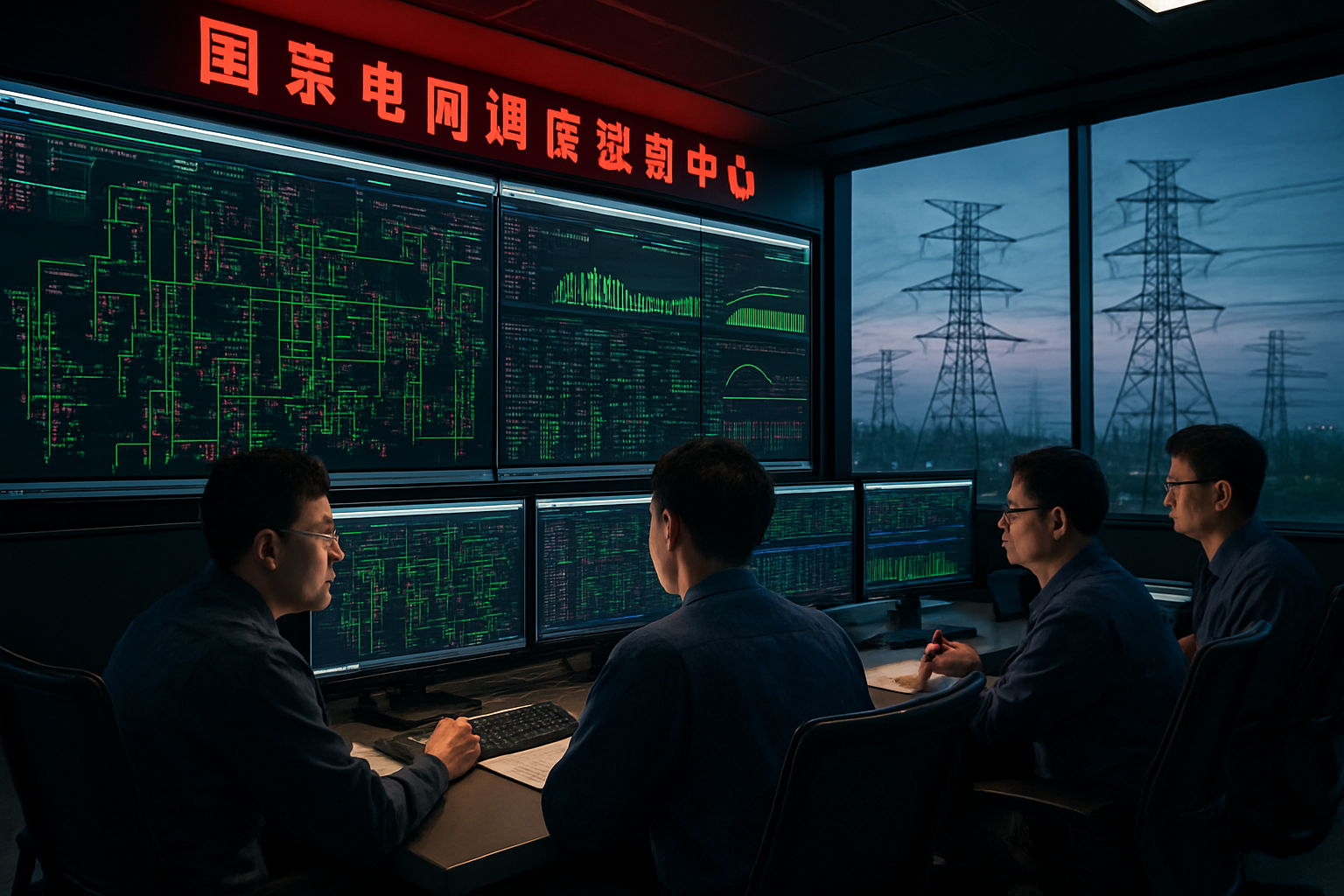
Tsai's emphasis on power grid infrastructure reflects a fundamental understanding that artificial intelligence development requires massive computational power and stable energy supplies. China's strategic strengthening of its electrical grid has provided the reliable, high-capacity energy foundation necessary to support the enormous data centers and processing facilities that power advanced AI systems.
This infrastructure advantage becomes increasingly critical as global competition intensifies. The World Bank projects that AI water demand alone could reach 4.2-6.6 billion cubic meters annually by 2027 for data center cooling—equivalent to 4-6 times Denmark's entire water withdrawal. China's proactive grid modernization positions the nation to handle these unprecedented energy requirements more effectively than competitors.
The timing of Tsai's comments coincides with global semiconductor shortages that have driven memory chip prices up sixfold, affecting major suppliers Samsung, SK Hynix, and Micron with shortages expected to persist until 2027. In this constrained environment, efficient energy infrastructure provides a crucial competitive edge.
Open-Source Strategy Versus Proprietary Models
Beyond infrastructure, Tsai identified China's commitment to open-source AI models as a strategic differentiator. This approach contrasts sharply with the proprietary model development favored by many Western companies, potentially accelerating innovation through collaborative development while reducing dependency on foreign technology platforms.
The open-source strategy aligns with China's broader technological sovereignty goals, as demonstrated by recent developments including Alibaba's Qwen AI model series and the systematic "AI Plus" national priority established in China's 15th Five-Year Plan. This coordinated approach emphasizes "safe and orderly development" while maintaining competitive advantages in global technology races.

Recent breakthroughs validate this strategy. Chinese companies have achieved remarkable success despite Western technology restrictions, with developments ranging from DeepSeek's advanced language models to sophisticated robotics capabilities demonstrated during the Spring Festival, where Chinese firms showcased humanoid robots performing complex martial arts routines to over 600 million global viewers.
Manufacturing Supply Chain Integration
Tsai's reference to China's "complete manufacturing supply chain" highlights another crucial advantage. Unlike competitors who rely on global supply networks vulnerable to geopolitical disruptions, China has developed comprehensive domestic capabilities spanning from semiconductor fabrication to advanced manufacturing processes.
This integration proves particularly valuable during current supply chain constraints. While global memory shortages create bottlenecks for AI development worldwide, China's domestic manufacturing capabilities and alternative partnerships provide resilience against external disruptions.
"In this era and geopolitical environment, China's strategic approach to AI infrastructure provides sustainable competitive advantages."
— Industry Analysis
Global Context and Competition
Tsai's assessment comes during what experts characterize as the "March 2026 AI inflection point"—a critical transition from experimental to essential AI infrastructure across all sectors. Major Western competitors continue massive investments despite constraints, with Alphabet committing $185 billion to AI infrastructure in 2026 and Amazon planning over $1 trillion in AI development.
The European Union has responded with its own digital sovereignty initiatives, including Germany's Deutsche Telekom Industrial AI Cloud in Munich and comprehensive regulatory frameworks. Spain has implemented the world's first criminal executive liability for tech platforms, while the UN has established an Independent Scientific Panel of 40 experts for global AI assessment.
However, China's systematic approach—combining infrastructure investment, open-source development, and manufacturing integration—may provide more sustainable advantages than purely financial investments. The strategy addresses fundamental requirements for long-term AI development rather than seeking immediate market dominance.
Successful Integration Models
China's approach demonstrates sophisticated understanding of human-AI collaboration principles that have proven successful globally. International examples include Canada's AI teaching assistants that maintain critical thinking standards, Malaysia's world-first AI-integrated Islamic school combining technology with traditional learning, and Singapore's WonderBot 2.0 heritage education success.
These models emphasize AI as amplification tools serving human goals rather than replacement mechanisms—a philosophy that appears consistent with China's measured "safe and orderly development" approach.
Strategic Implications for Global AI Development
The infrastructure-first strategy highlighted by Tsai suggests that sustainable AI leadership requires comprehensive foundational investment rather than narrow technological advances. As global competition intensifies and supply chain vulnerabilities persist, nations with robust energy infrastructure, manufacturing capabilities, and collaborative development approaches may achieve lasting advantages.
China's demographic pressures—including the "4-2-1 problem" where single children support four aging parents and grandparents—add urgency to AI development as a solution for maintaining productivity despite population aging. This demographic imperative drives systematic AI integration across industries and government services.
The success of this infrastructure-centered approach could influence international AI development strategies, potentially shifting focus from pure computational power toward comprehensive ecosystem development. As Tsai's comments suggest, sustainable AI advantages emerge from foundational investments in energy, manufacturing, and collaborative innovation rather than isolated technological breakthroughs.
March 2026 represents a critical juncture in global AI development, with decisions made now likely to determine technological leadership for decades ahead. China's emphasis on infrastructure and open-source collaboration provides a template that other nations may need to consider as AI transitions from experimental technology to essential global infrastructure.