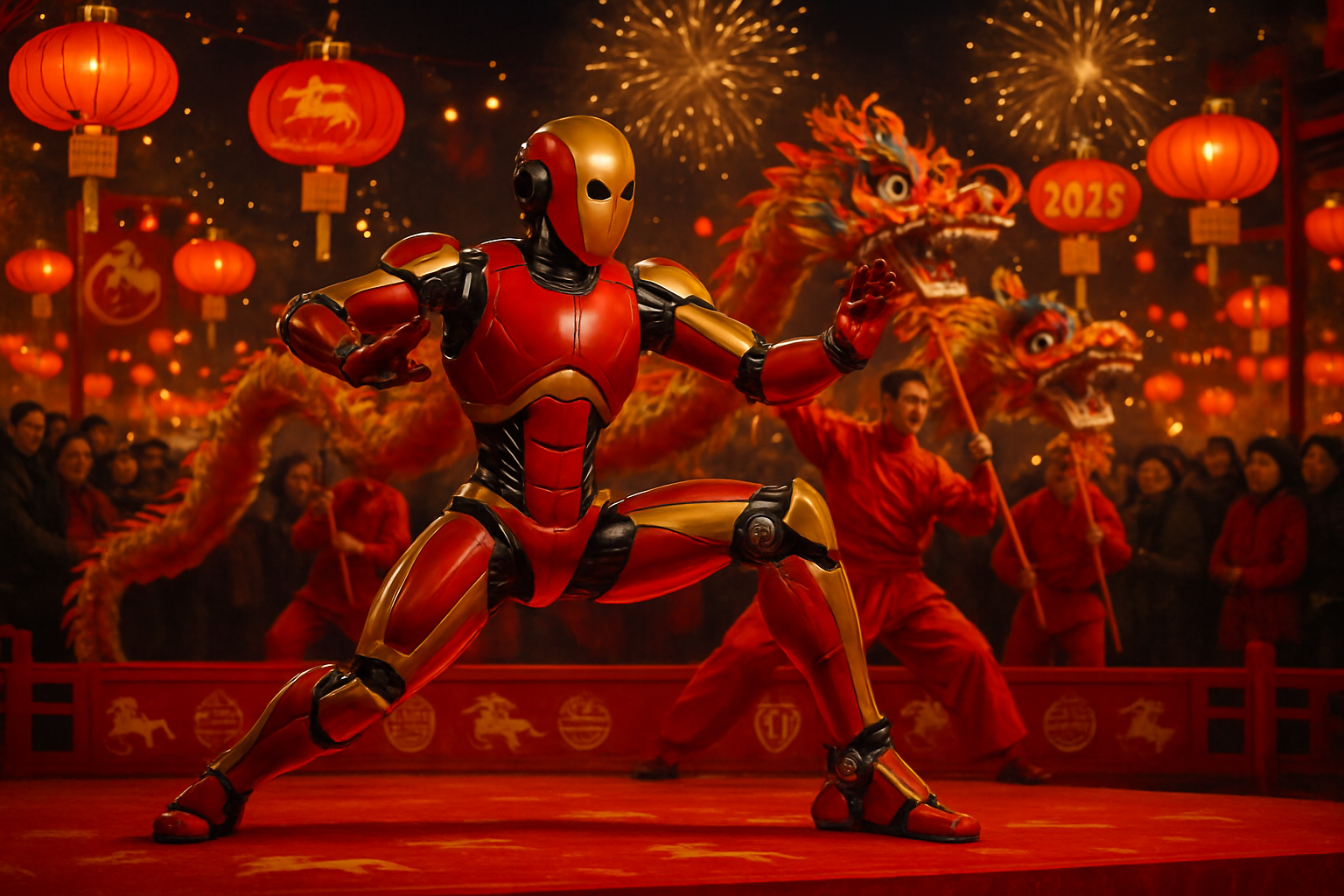
Chinese New Year 2026 has erupted into the most globally distributed Lunar New Year celebration in modern history, as communities across five continents welcome the Year of the Fire Horse with an extraordinary blend of ancient traditions and cutting-edge technology, including humanoid robots performing alongside traditional dragon dancers.
The arrival of the lunar new year on February 17, 2026, has witnessed unprecedented international participation, with celebrations spanning from Vatican City to South Korea, Finland to Qatar, marking what cultural analysts describe as the evolution from ethnic celebration to truly global festival of renewal and community unity.
Technology Meets Tradition in Historic Display
China's Spring Festival Gala showcased the most striking symbol of this year's celebrations: humanoid robots from companies including Unitree Robotics, Galbot, Noetix, and MagicLab performing intricate dance routines and martial arts alongside traditional artists. The spectacle, watched by over 600 million viewers worldwide, demonstrated what organizers called "harmony between technological innovation and cultural heritage."
The integration of advanced robotics into traditional festivities represents more than technological showmanship. As France 24's comprehensive coverage noted, these celebrations are "firing up the Lunar New Year spirit" by bridging millennia-old customs with 21st-century innovation, creating a template for how traditional festivals can thrive in contemporary multicultural contexts.
Fire Horse Symbolism Resonates Globally
The Year of the Fire Horse, occurring only once every 60 years, has captured international imagination with its symbolism of energy, transformation, and progress. This rare celestial alignment has proven particularly meaningful for communities seeking renewal after years of global challenges.
In Chile, media outlets emphasized the ritualistic aspects of the Fire Horse year, describing traditional ceremonies designed to "attract good luck and abundance during the cycle of the Fire Horse." Finland's YLE noted that while the Fire Horse is considered "innovative, brave, and energetic," Chinese beliefs also acknowledge its "unstable" nature, reflecting the dynamic tensions of rapid change.
Norwegian coverage highlighted advice for global personalities born in Horse years, including Oprah Winfrey and Magnus Carlsen, recommending they "wear something red" to align with the year's auspicious energy.
Unprecedented Global Participation
The scope of international engagement has surpassed all previous years. In Belize, Mayor Pablo Cawich and the Belmopan City Council extended official greetings to Chinese residents, acknowledging their "invaluable contributions to the cultural and social life of our city." The mayor's message of prosperity and success reflected the inclusive spirit characterizing this year's celebrations.
South Korea's cultural programming featured President Lee Jae Myung watching traditional Korean films during the Lunar New Year period, while maintaining the holiday's significance for Korean families. The integration of regional variations—whether called Spring Festival, Têt, or Seollal—demonstrates the celebration's adaptability across cultures.
Vatican News reported on Catholic communities across Asia marking the Lunar New Year through "family gatherings, prayer, and acts of charity," illustrating how the celebration transcends religious boundaries while maintaining its spiritual significance.
Diplomatic and Economic Significance
The timing of China's announcement of visa-free travel for British and Canadian nationals, effective February 17—coinciding exactly with Lunar New Year—represents sophisticated cultural diplomacy. This strategic goodwill gesture allows 30-day stays for tourism, business, and cultural exchanges, while notably leaving the United States as the only Five Eyes alliance member without such privileges.
The economic multiplier effects of these celebrations are substantial. From increased hotel occupancy rates to surging demand for traditional foods and festive decorations, the Year of the Fire Horse is generating significant retail activity. The celebrations create year-round economic benefits through the cultural infrastructure of performance groups, organizations, and community networks that serve as bridges between Chinese and non-Chinese communities.
Community Building Across Cultures
The success of this year's celebrations lies in their remarkable ability to build bridges between Chinese and non-Chinese communities globally. Local populations are embracing the festivities through dragon dances, traditional foods, and learning about cultural values that emphasize family unity, prosperity, and renewal.
Traditional festival elements remain central: red decorations symbolizing good fortune, elaborate family meals, thorough cleaning of homes to welcome fresh energy, and visiting family members. These customs, dating back to the Xia Dynasty, demonstrate remarkable cultural continuity across millennia while adapting to contemporary global contexts.
Digital Integration Preserves Authenticity
Digital platforms have enabled unprecedented global sharing and virtual participation, allowing diaspora communities to maintain authentic cultural connections across vast distances. Social media engagement has created virtual bridges between participants worldwide, demonstrating how traditional festivals can thrive in contemporary digital environments while preserving essential spiritual and community-building functions.
The sophisticated integration of technology—from live-streaming celebrations to AI-enhanced cultural education resources—enhances rather than replaces traditional elements. This balance has created a template for how ancient traditions can remain meaningful in an increasingly interconnected world.
Looking Forward: A Model for Cultural Globalization
Chinese New Year 2026 represents a watershed moment in cultural globalization, successfully balancing tradition with innovation, local authenticity with international accessibility. The Fire Horse year's emphasis on energy and transformation has resonated with communities worldwide seeking dynamic change and renewal.
The unprecedented international cooperation—spanning 18 countries with active participation—demonstrates humanity's capacity for cultural sharing and mutual understanding while respecting authentic traditional practices. This provides a foundation for sustained cross-cultural dialogue and cooperation in addressing global challenges and opportunities.
As the Fire Horse year unfolds, its message of purposeful transformation and energetic progress offers hope for international communities navigating an era of rapid change. The successful fusion of humanoid robots with ancient dragon dances symbolizes the possibility of technological advancement serving cultural preservation rather than replacing it.
The global embrace of Chinese New Year 2026 establishes new models for how traditional festivals can unite diverse communities through shared experiences of renewal, while maintaining the authentic cultural meanings that have sustained these practices across thousands of years of human history.