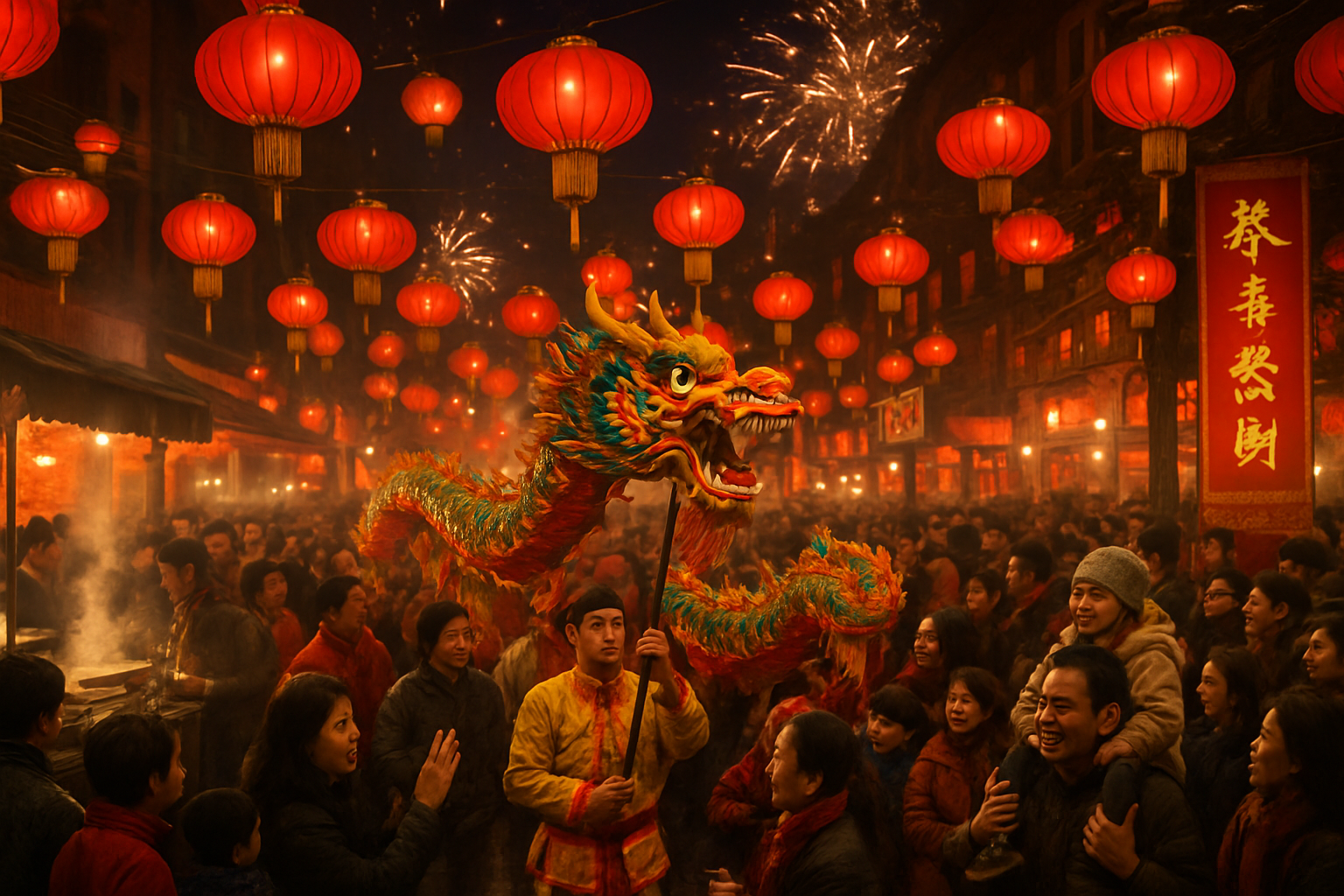
As the Year of the Fire Horse arrives on February 17, 2026, Chinese New Year celebrations are taking on an unprecedented global character, with communities from Auckland to Beijing embracing both traditional customs and modern innovations in what experts call the most internationally integrated Lunar New Year in history.
The celebrations span five continents, demonstrating how Chinese cultural traditions have evolved into truly global festivals that bring together diverse communities while maintaining their authentic cultural significance. This year's festivities are particularly notable for their fusion of cutting-edge technology with centuries-old traditions, creating new forms of cultural expression that honor the past while embracing the future.
Beijing's Tech-Powered Spring Festival Gala
In China, the annual Spring Festival Gala presented by CCTV has become a technological showcase as major tech companies compete for prominence on the country's most-watched television event. This year, ByteDance's cloud computing division, Volcano Engine, secured an exclusive AI cloud partnership with the gala, marking the first time artificial intelligence has played such a central role in the celebration.
The integration represents more than just technological advancement—it signals China's strategic priorities in the digital age. As one industry analyst noted, the gala serves as both a rare nationwide marketing opportunity comparable to the Super Bowl and "an unmistakable signal of political alignment with Beijing's industrial priorities."
The competition among Chinese tech giants for gala prominence reflects the event's unique position as a platform where commercial interests, cultural celebration, and national identity converge. Companies view participation not just as marketing but as a demonstration of their alignment with China's technological leadership ambitions.
Youth Reimagining Ancient Traditions
Across China, young people are finding innovative ways to celebrate traditional customs while making them relevant to contemporary life. The Spring Festival has become a time when families reunite not just physically but culturally, bridging generational gaps through shared participation in customs that stretch back millennia.
Chinese youth are reinventing traditional practices, creating new interpretations of ancient rituals that maintain their spiritual significance while appealing to modern sensibilities. This evolution demonstrates the festival's remarkable adaptability—its ability to remain deeply meaningful while continuously transforming to meet the needs of each generation.
The reinvention extends beyond ceremony to include new forms of artistic expression, digital storytelling, and community engagement that preserve the essence of Chinese New Year while expanding its appeal to younger participants who might otherwise feel disconnected from traditional practices.
Global Communities Embrace the Festival
In Auckland, New Zealand, Lee Kum Kee Sauce made its debut as the Platinum Sponsor of the 2026 Chinese New Year Festival & Market Day, an event that brought together families, community groups, and cultural performers on February 14. The festival, co-hosted by the Auckland Chinese Community Centre and Channel 33, celebrated the upcoming Year of the Horse with a remarkable fusion of traditional performances and contemporary community engagement.
"This festival demonstrates how Chinese New Year has become a truly inclusive celebration that welcomes people from all backgrounds while maintaining authentic cultural traditions."
— Auckland Chinese Community Centre Representative
The Auckland celebration exemplifies a global trend where Chinese New Year festivals serve multiple functions: preserving cultural heritage for Chinese diaspora communities, educating broader populations about Chinese traditions, and creating inclusive spaces where diverse communities can come together in celebration.
Cultural Diplomacy Through Celebration
The global expansion of Chinese New Year celebrations serves as a form of soft power diplomacy, strengthening international relationships through cultural exchange. Cities worldwide are recognizing the economic and cultural benefits of hosting these festivals, which attract tourists, support local businesses, and create opportunities for cross-cultural understanding.
In Malaysia, the celebrations take on added significance as they coincide with important cultural and business relationships between Chinese and local communities. The festivals provide platforms for economic cooperation, cultural education, and community building that extend far beyond the celebration period itself.
The Fire Horse: Symbol of Transformation
The Year of the Fire Horse holds particular significance in Chinese astrology, occurring only once every sixty years. The Fire Horse symbolizes energy, perseverance, work, movement, and progress—themes that resonate strongly with global communities emerging from recent challenges and looking toward transformation and renewal.
This symbolism has found expression in celebrations worldwide, where communities are using the Fire Horse theme to focus on personal and collective growth, economic development, and social progress. The rare celestial alignment has inspired celebrations that emphasize forward movement and positive change.
Cultural experts note that the Fire Horse's symbolism of energy and transformation makes it particularly appealing to international audiences, who may not share Chinese cultural heritage but can connect with universal themes of renewal, determination, and progress that the zodiac sign represents.
Technology Meets Tradition
Across all celebration locations, organizers are successfully integrating modern technology with traditional elements, creating enhanced experiences that preserve cultural authenticity while making festivals more accessible and engaging for contemporary audiences.
Digital platforms enable global sharing of local celebrations, creating a sense of worldwide community among participants. Social media integration allows people to participate virtually in festivals they cannot attend physically, while augmented reality features help explain cultural significance to newcomers.
The technological integration represents a sophisticated understanding that preservation of cultural traditions requires adaptation to contemporary communication methods and community expectations, without compromising the essential spiritual and cultural meaning of the celebrations.
Economic and Cultural Impact
The global celebration of Chinese New Year has significant economic implications, driving tourism, supporting cultural industries, and creating opportunities for international business relationships. Cities hosting major festivals report substantial increases in hotel occupancy, restaurant revenue, and retail sales during celebration periods.
Beyond immediate economic benefits, the festivals create lasting cultural infrastructure—performance groups, cultural organizations, and community networks that remain active throughout the year. These institutions serve as bridges between Chinese and non-Chinese communities, facilitating ongoing cultural exchange and mutual understanding.
The celebrations also support cultural preservation efforts by providing platforms for traditional arts, crafts, and performances that might otherwise struggle to find audiences in increasingly globalized urban environments.
Building Inclusive Communities
One of the most significant developments in 2026 celebrations is their increasingly inclusive character. While maintaining authentic Chinese cultural elements, festivals are welcoming participants from all backgrounds, creating shared experiences that build community cohesion across cultural boundaries.
This inclusivity extends to festival programming, which often includes educational components explaining the cultural significance of various traditions, workshops where participants can learn traditional crafts or cooking, and performance opportunities for multicultural groups to share their own traditions alongside Chinese celebrations.
The inclusive approach demonstrates how cultural festivals can serve as vehicles for building understanding and cooperation in diverse communities, rather than creating cultural isolation or exclusivity.
Looking Forward: The Future of Global Celebrations
The 2026 Chinese New Year celebrations represent a template for how traditional cultural festivals can successfully adapt to global, multicultural contexts while preserving their essential character and meaning. The success of these celebrations suggests continued growth in international participation and cultural integration.
Festival organizers are already planning for future years, incorporating lessons learned about technology integration, community engagement, and inclusive programming. The goal is to create sustainable celebration models that can grow and evolve while maintaining cultural authenticity and community ownership.
As global communities become increasingly interconnected, cultural celebrations like Chinese New Year serve vital functions in creating shared experiences, building mutual understanding, and celebrating the diversity that enriches modern urban life. The Year of the Fire Horse has demonstrated that cultural traditions can indeed transcend their origins to become truly global celebrations of human creativity, community, and hope.