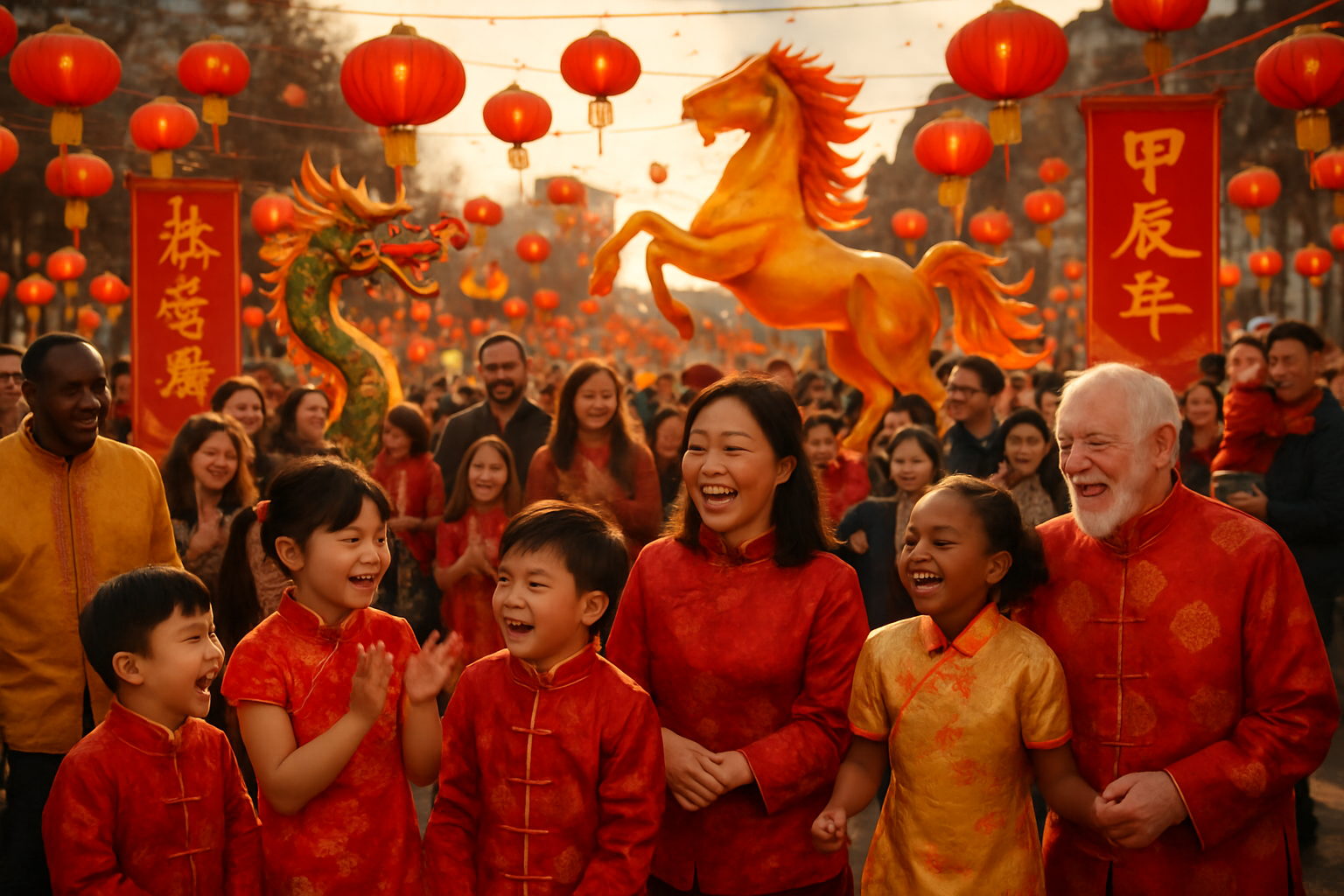
From Cyprus to Peru to Nigeria, communities worldwide are embracing Chinese New Year 2026 with remarkable enthusiasm, as the Year of the Fire Horse brings unprecedented international participation and cultural diplomacy to global celebrations beginning February 17, 2026.
The February festivities demonstrate how Chinese New Year has evolved into a truly international celebration, transcending cultural boundaries and strengthening diplomatic ties across continents. This year's celebrations showcase innovative approaches to cultural integration while maintaining traditional significance.
Robotic Innovation in Mediterranean Cyprus
In Paphos, Cyprus, dozens gathered at the Town Hall square on Wednesday afternoon despite light rain, creating an unexpectedly memorable celebration. Chinese residents from across the island traveled to participate in cultural events that featured a surprising technological twist—robots taking center stage in the traditional festivities.
Municipal councillor Alexandros Jiang welcomed the diverse community and praised the cooperation between Chinese residents, Cypriot citizens, and local authorities. The integration of modern technology with ancient traditions reflects the contemporary evolution of Chinese New Year celebrations globally.
"The strong cooperation and ties between Chinese residents, Cypriot citizens and local authorities continue to grow stronger each year."
— Alexandros Jiang, Municipal Councillor, Paphos
The Cyprus celebration exemplifies how immigrant communities adapt traditional festivals to local conditions while maintaining cultural authenticity. The incorporation of robotic displays represents the intersection of technological innovation with cultural preservation.
Peru Embraces the Fire Horse's Transformative Energy
In Peru, the arrival of the Year of the Fire Horse on February 17 has generated significant cultural and spiritual interest. El Comercio's comprehensive coverage highlights the profound symbolic meaning of the Fire Horse, emphasizing themes of transformation, energy, and personal renewal that resonate deeply with contemporary audiences.
Peruvian coverage focuses on seven traditional rituals and practices designed to honor the Fire Horse's powerful energy, demonstrating how Chinese zodiac traditions integrate with South American spiritual practices. The emphasis on transformation and renewal aligns with broader Latin American cultural values around new beginnings and personal growth.
Peru's approach to Chinese New Year reflects the growing influence of Asian cultural traditions in Latin America, facilitated by increased trade relationships and cultural exchange programs. The celebration has become a platform for exploring themes of destiny, personal development, and cultural fusion.
Diplomatic Celebrations in West Africa
Nigeria's capital city of Abuja hosted a temple fair that combined Chinese Spring Festival traditions with Nigerian cultural elements, celebrating not only the lunar new year but also 55 years of bilateral diplomatic relations between China and Nigeria.
The Abuja celebration demonstrates how Chinese New Year serves as a vehicle for strengthening international relationships and promoting cultural understanding. By coinciding the festivities with the diplomatic anniversary, organizers created a multilayered celebration that honors both cultural heritage and political cooperation.
The temple fair format, traditional to Chinese celebrations, was adapted to include Nigerian partners and local cultural elements, creating a unique fusion that reflects the successful integration of Chinese communities within African societies.
Global Context: A Cultural Renaissance
These celebrations occur within the context of what cultural analysts are calling the "February 2026 Cultural Renaissance," a period of unprecedented global cultural activity and international artistic collaboration. From Costa Rica's Chinatown festivals to Singapore's travel surge, Chinese New Year 2026 represents a peak moment in cross-cultural celebration.
Historical data shows that Chinese New Year celebrations have experienced remarkable growth in international participation over the past decade. Singapore expects over 22 million border crossings during the celebration period, while Hong Kong anticipates a 6% increase in mainland Chinese visitors. Malaysia's Penang is preparing for the unique convergence of Chinese New Year and Ramadan, with hotels reporting 60% occupancy rates.
The Fire Horse: Symbolism and Significance
The Year of the Fire Horse carries particular cultural weight, symbolizing energy, perseverance, work, movement, and progress. These themes resonate strongly in 2026's global context of recovery, transformation, and renewed international cooperation.
Cultural experts note that the Fire Horse's association with dynamic energy and forward movement aligns with global trends toward innovation, international partnership, and community resilience. The animal's symbolism of strength and determination provides an inspiring framework for communities navigating contemporary challenges.

Cultural Diplomacy and International Relations
The 2026 celebrations highlight Chinese New Year's evolution into a tool of cultural diplomacy, strengthening international relations through shared cultural experiences. The Nigeria celebration's emphasis on bilateral diplomatic relations exemplifies how cultural festivals serve multiple purposes beyond entertainment and tradition preservation.
This diplomatic dimension reflects China's broader cultural influence and the success of diaspora communities in maintaining connections to their heritage while building bridges with local populations. The celebrations serve as soft power mechanisms, fostering goodwill and understanding across cultural boundaries.
Innovation Within Tradition
The Cyprus robot displays and Peru's spiritual transformation focus demonstrate how traditional celebrations adapt to contemporary interests while preserving core cultural values. This balance between innovation and authenticity characterizes successful cultural preservation in globalized societies.
Technology integration, whether through robotic entertainment or social media engagement, enables broader participation and documentation while maintaining the essential human connections that make cultural celebrations meaningful. The challenge lies in enhancing rather than replacing traditional elements.
Economic and Tourism Impact
Chinese New Year celebrations generate significant economic activity through increased tourism, cultural programming, and international cooperation. Singapore's tourism receipts have exceeded forecasts, while destinations across Asia report substantial increases in visitor numbers during the celebration period.
The festivals create employment opportunities in entertainment, hospitality, cultural programming, and related services. They also stimulate interest in Chinese language learning, cultural studies, and international business relationships, creating long-term economic multiplier effects.
Community Building and Unity
Beyond economic and diplomatic benefits, Chinese New Year celebrations serve essential community-building functions. They provide opportunities for intergenerational dialogue, cultural education, and social cohesion within both Chinese diaspora communities and broader international societies.
The celebrations create inclusive spaces where diverse populations can participate in shared cultural experiences, fostering understanding and appreciation across ethnic and national boundaries. This inclusive approach strengthens social fabric and promotes multicultural harmony.
Looking Forward: Sustainable Cultural Celebration
As Chinese New Year continues expanding globally, organizers face the challenge of maintaining cultural authenticity while accommodating diverse local contexts and growing international participation. Success requires balancing tradition preservation with adaptive innovation, ensuring celebrations remain meaningful for both Chinese communities and international participants.
The 2026 celebrations set new standards for international cultural cooperation, demonstrating how traditional festivals can evolve to meet contemporary needs while preserving essential cultural significance. These events provide templates for sustainable cultural development that benefits all participants while honoring traditional heritage.
The Year of the Fire Horse's themes of energy, transformation, and progress offer appropriate symbolism for this evolutionary moment in global cultural celebration, promising continued growth in international participation and cross-cultural understanding in years ahead.