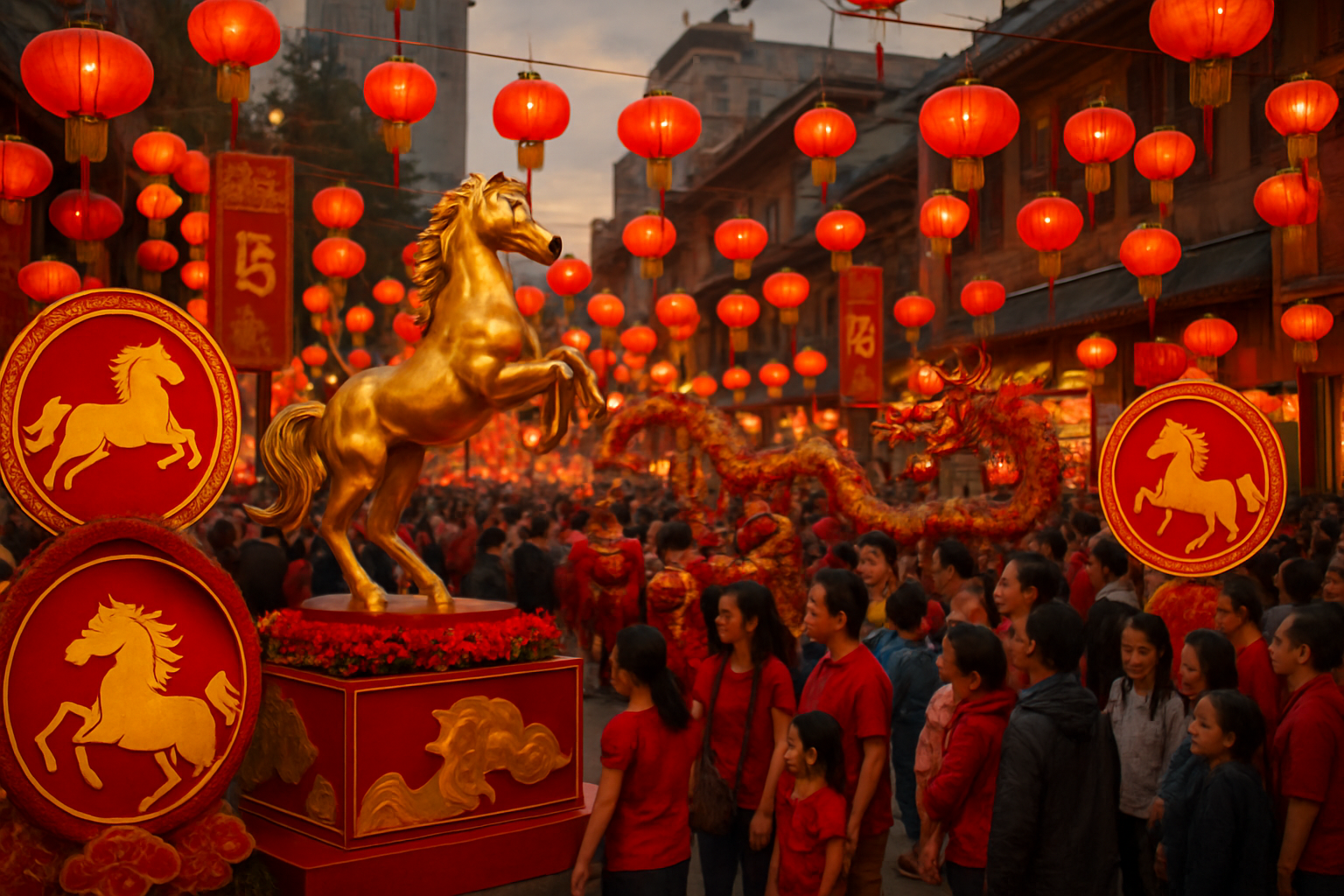
As the world ushers in the Year of the Fire Horse on February 17, 2026, Chinese New Year celebrations are reaching unprecedented levels of international participation across Australia, Southeast Asia, and beyond, with communities embracing both traditional elements and modern innovations in what experts are calling a global cultural renaissance.
The rare "Red Horse" year—occurring once every 60 years—has sparked exceptional enthusiasm worldwide, with celebrations spanning from Ho Chi Minh City's spectacular flower displays to Australia's multicultural festivals and Malaysia's record-breaking community gatherings.
Australia Embraces the Fire Horse Spirit
Australia is experiencing its most extensive Chinese New Year celebrations to date, with communities across the continent exploring the significance of the Fire Horse in Chinese zodiac traditions. The Year of the Horse symbolizes energy, perseverance, and progress—themes that particularly resonate in 2026 as nations continue their post-pandemic recovery and transformation.
Australian celebrations feature traditional elements such as lion dances and lantern displays, while incorporating modern educational components about zodiac compatibility and cultural significance. The rare occurrence of a Fire Horse year has drawn heightened interest from both Chinese-Australian communities and the broader population eager to understand this special astrological event.
Vietnam's Artistic Lunar New Year Preparations
Vietnam has emerged as a standout destination for Lunar New Year celebrations, with Ho Chi Minh City's iconic Nguyen Hue Flower Street transforming into a spectacular horse-themed wonderland. The annual display features striking equine installations surrounded by seas of colorful flowers, creating Instagram-worthy backdrops that have attracted international attention.
The Vietnamese government has also demonstrated its commitment to facilitating celebrations by implementing practical measures. Hanoi Railways Company Limited announced free single-ride tickets for metro users from February 14-22, utilizing both the Hanoi Metro app and direct ticket counter purchases to meet rising travel demand during the holiday period.
This infrastructure support reflects Vietnam's recognition of Lunar New Year as both a cultural cornerstone and economic opportunity, with tourism and local commerce receiving significant boosts during the extended celebration period.
Malaysia's Community-Centered Festivities
Malaysia has embraced the Year of the Horse with characteristic warmth and community spirit. In Kuching, the South Mayor Dato Wee Hong Seng announced the distribution of 500 chickens to KMC Flats residents to enhance their reunion dinners, emphasizing that "Chinese New Year is a time for reunion, with families gathering around the dining table to celebrate together."
The Progressive Democratic Party is organizing what promises to be the largest Chinese New Year open house in Sibu's history, scheduled for February 19 at Li Hua Island Commercial Centre. Organising chairman Joshua Ting expects over 20,000 attendees, making it the biggest edition since the event's inception four years ago.
These celebrations highlight Malaysia's multicultural harmony, where Chinese New Year has evolved into a national celebration that bridges ethnic communities and strengthens social cohesion.
Economic and Tourism Impact
The global embrace of Chinese New Year celebrations is generating substantial economic benefits across participating nations. Hong Kong is projecting 11.38 million border crossings during the Lunar New Year period, representing a 16% increase from 2025 levels and demonstrating the festival's growing appeal as a travel catalyst.
Tourism industry data reveals that Chinese New Year has become a significant driver for international travel, with destinations like Bangkok, Tokyo, and Taipei featuring prominently in travel bookings. The festival's timing allows for extended holiday periods in many countries, creating opportunities for both domestic celebrations and international travel.
"Each household deserves to celebrate this important reunion time with dignity and joy."
— Dato Wee Hong Seng, Kuching South Mayor
Cultural Diplomacy and International Relations
The widespread adoption of Chinese New Year celebrations serves as a powerful form of cultural diplomacy, strengthening international relationships through shared cultural experiences. From Cyprus to Peru to Nigeria, nations are incorporating Chinese New Year elements into their cultural calendars, creating bridges between communities and fostering cross-cultural understanding.
This phenomenon reflects the evolution of Chinese New Year from a purely ethnic celebration to a global festival that transcends cultural boundaries while maintaining its authentic traditional significance. The integration of local elements with Chinese traditions creates unique hybrid celebrations that honor both heritage and contemporary multicultural realities.
Technology Integration and Modern Celebrations
The 2026 celebrations showcase successful integration of technology with traditional elements. From digital payment systems facilitating temple donations to social media campaigns promoting cultural understanding, technology is enhancing rather than replacing traditional celebration methods.
Cities worldwide are using digital platforms to share celebration schedules, provide cultural education, and connect diaspora communities with homeland traditions. This technological embrace ensures that Chinese New Year celebrations remain relevant and accessible to younger generations while preserving their cultural authenticity.
Regional Variations and Cultural Adaptation
Each region has developed its unique approach to Chinese New Year celebrations while maintaining core traditional elements. Cambodia's celebrations combine Chinese traditions with local Khmer cultural elements, while South Korea integrates the festival into its existing cultural calendar alongside traditional holidays.
The South Korean central bank's decision to supply 4.8 trillion won in fresh currency ahead of the extended holiday period demonstrates the festival's economic significance and the government's recognition of its importance to both Korean-Chinese communities and the broader economy.
Future Implications
The unprecedented international participation in 2026's Year of the Fire Horse celebrations signals a broader trend toward cultural globalization and increased appreciation for diverse traditions. As communities worldwide embrace Chinese New Year, the festival serves as a model for how cultural celebrations can transcend borders while maintaining their essential character.
The success of these celebrations also demonstrates the economic potential of cultural tourism and community-centered events, providing templates for other cultural festivals seeking to expand their reach and impact.
As the Fire Horse year unfolds, the global embrace of Chinese New Year traditions represents more than mere celebration—it reflects humanity's capacity for cultural connection, shared joy, and mutual understanding across traditional boundaries. The energy and progress symbolized by the Fire Horse appear to be manifesting in the very way these celebrations are bringing communities together worldwide.