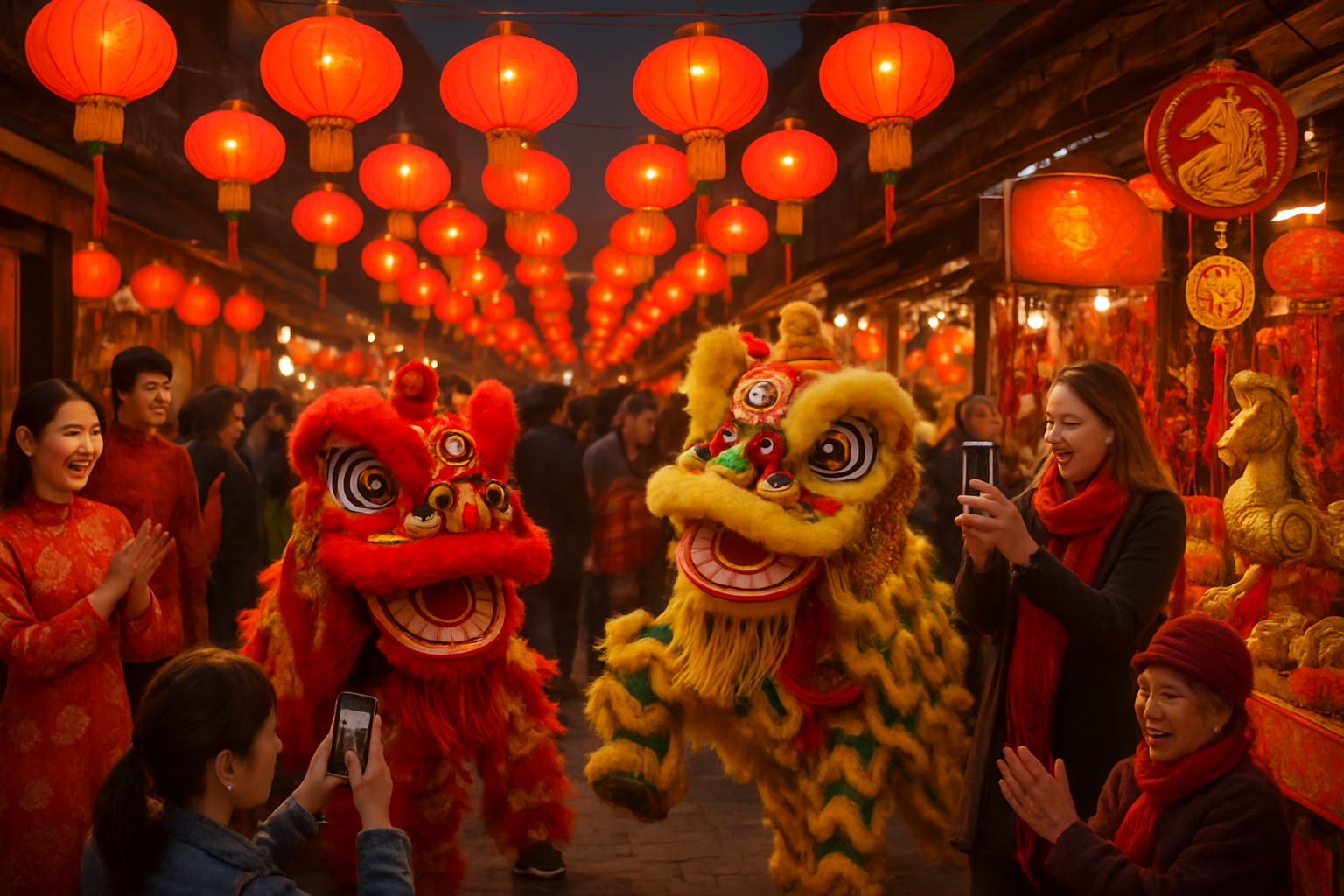
Chinese New Year celebrations have unleashed a massive tourism wave across Asia, with record-breaking travel numbers and unprecedented international participation marking the Year of the Horse while transforming global cultural tourism patterns.
The lunar calendar festivities, which began February 17, 2026, have created what industry experts are calling the most globally distributed Chinese New Year celebration in modern history, spanning five continents and affecting tourism infrastructure from Guangzhou to Singapore.
Tourism Surge Breaks Records Across Asia
China is experiencing historic travel volumes with an estimated 9.5 billion trips during the extended holiday period, representing a 30% increase in international tourism compared to previous years. The surge has overwhelmed transportation networks, with Vietnamese airports reporting massive congestion as millions travel to celebrate Tet alongside Chinese New Year.
South Korean tourists have emerged as unexpected beneficiaries of China's visa-free travel policies, with golf tourism to Guangzhou surging by more than 300% compared to 2023 levels. Travel agent Quan Yulan, who has worked in the industry for 12 years, reports unprecedented booking levels driven by China's warm climate and simplified entry requirements.
"Compared with 2023, when international travel began recovering after the coronavirus pandemic, Korean bookings surged by more than 300 per cent last year," said Quan, adding that the Guangzhou-based agency expected even stronger growth this year.
— Quan Yulan, Travel Agent
Hong Kong is projecting 11.38 million border crossings during the celebration period, marking a 16% increase from 2025, while Singapore and Malaysia report hotel occupancy rates exceeding 60% as tourists flock to experience authentic cultural celebrations.
Cultural Authenticity Drives International Interest
The celebrations have transcended traditional ethnic boundaries, with lion dance troupes in Malaysia's Sibu performing at nearly 20 locations on the first day alone. The Sibu Martial Arts Association reports overwhelming demand from the Chinese community, demonstrating the enduring appeal of traditional practices.
In Estonia, Chinese expatriate Kaspar Wang has been explaining lunar calendar traditions to local audiences, representing the global spread of cultural understanding. Singapore's nursing homes have organized special lion dances and festive feasts for elderly residents, with approximately 90% of seniors choosing to remain in care facilities during the celebrations to participate in community events.
The authentic cultural experiences are resonating with international tourists seeking meaningful connections rather than superficial attractions. Malaysia's multicultural approach has been particularly successful, with lion dance troupes featuring performers from multiple ethnic backgrounds, creating inclusive celebrations that maintain cultural authenticity while welcoming broader participation.
Strategic Timing Enhances Diplomatic Relations
China's announcement of visa-free travel for British and Canadian nationals, effective February 17 to coincide with Chinese New Year, demonstrates sophisticated cultural diplomacy. The 30-day visa policy for tourism, business, and cultural exchanges represents a strategic goodwill gesture that leaves the United States as the only Five Eyes alliance member without such privileges.
The timing reflects broader patterns documented in previous celebrations, where cultural festivals serve as vehicles for international cooperation and economic partnerships. Traditional celebrations are increasingly functioning as soft power instruments, strengthening bilateral relationships while promoting cultural understanding.
Technology Integration Preserves Traditional Elements
Digital platforms have enabled unprecedented global participation without diminishing authentic cultural practices. Social media engagement has reached record levels, with virtual diaspora participation allowing overseas Chinese communities to maintain connections with traditional celebrations across vast distances.
The integration represents a successful synthesis of technology and tradition, where digital tools enhance rather than replace essential spiritual and community-building functions. This approach has created template models for traditional festivals thriving in contemporary digital environments while preserving cultural authenticity.
Economic Impact Extends Beyond Tourism
The celebrations create substantial economic multiplier effects throughout host communities. Hotel occupancy increases, restaurant revenues surge with demand for traditional foods, and retail sales of festive decorations and gifts generate significant economic activity during the celebration period.
More importantly, the festivals create permanent cultural infrastructure including performance groups, cultural organizations, and community networks that remain active year-round, serving as bridges between Chinese and non-Chinese communities while supporting cultural tourism throughout the calendar year.
Personal Stories Illuminate Cultural Significance
Personal narratives reveal the deep emotional connections driving tourism patterns. One columnist's memories of great-grandmother preparing elaborate New Year meals, including the star dish "lion's head" - steamed minced pork meatballs requiring days of preparation - illustrate how food traditions create powerful cultural magnets for tourists seeking authentic experiences.
"I remember when I was four or five years old, my great-grandmother would get busy days ahead of Lunar New Year. She would clean the house, pickle vegetables in an enormous jar and start pre-cooking dishes for the New Year's Eve family meal."
— Cultural Observer
These intimate cultural details have become central to tourism marketing strategies, with destinations emphasizing authentic family traditions, traditional cooking methods, and intergenerational knowledge transfer as unique selling propositions for international visitors.
Global Participation Creates Cultural Bridges
The 2026 celebrations have established new models for traditional festivals building bridges between Chinese and non-Chinese communities globally. Local populations are increasingly embracing festivities through dragon dances, traditional foods, and cultural education programs that create meaningful cross-cultural understanding.
This evolution from ethnic celebration to truly global festival of renewal and community unity provides templates for other traditional celebrations seeking to maintain authenticity while achieving international accessibility and appeal.
Fire Horse Symbolism Resonates Internationally
The rare Fire Horse year, occurring once every 60 years, has particular resonance for post-pandemic recovery themes. The symbolism of energy, transformation, progress, and dynamic change appeals to international audiences seeking renewal and forward momentum after challenging global circumstances.
Cultural experts note that Fire Horse symbolism transcends traditional Chinese contexts, offering universal themes of perseverance, work, movement, and progress that resonate with diverse communities worldwide facing their own transformation challenges.
Future Implications for Cultural Tourism
The unprecedented success of 2026 Chinese New Year celebrations establishes precedents for 21st-century cultural festival development. The balance between tradition and innovation, local authenticity and international accessibility, demonstrates that cultural globalization can preserve rather than diminish traditional practices.
Success factors include community leadership, international cooperation supporting rather than overwhelming local traditions, economic viability through cultural tourism, and adaptive management addressing contemporary challenges while maintaining celebration integrity.
The celebrations represent a watershed moment when communities worldwide recognized culture as essential infrastructure for development, identity preservation, and international engagement. The template created by these celebrations will likely influence how traditional festivals adapt to contemporary global contexts while honoring authentic traditions and building international understanding through shared cultural experiences.