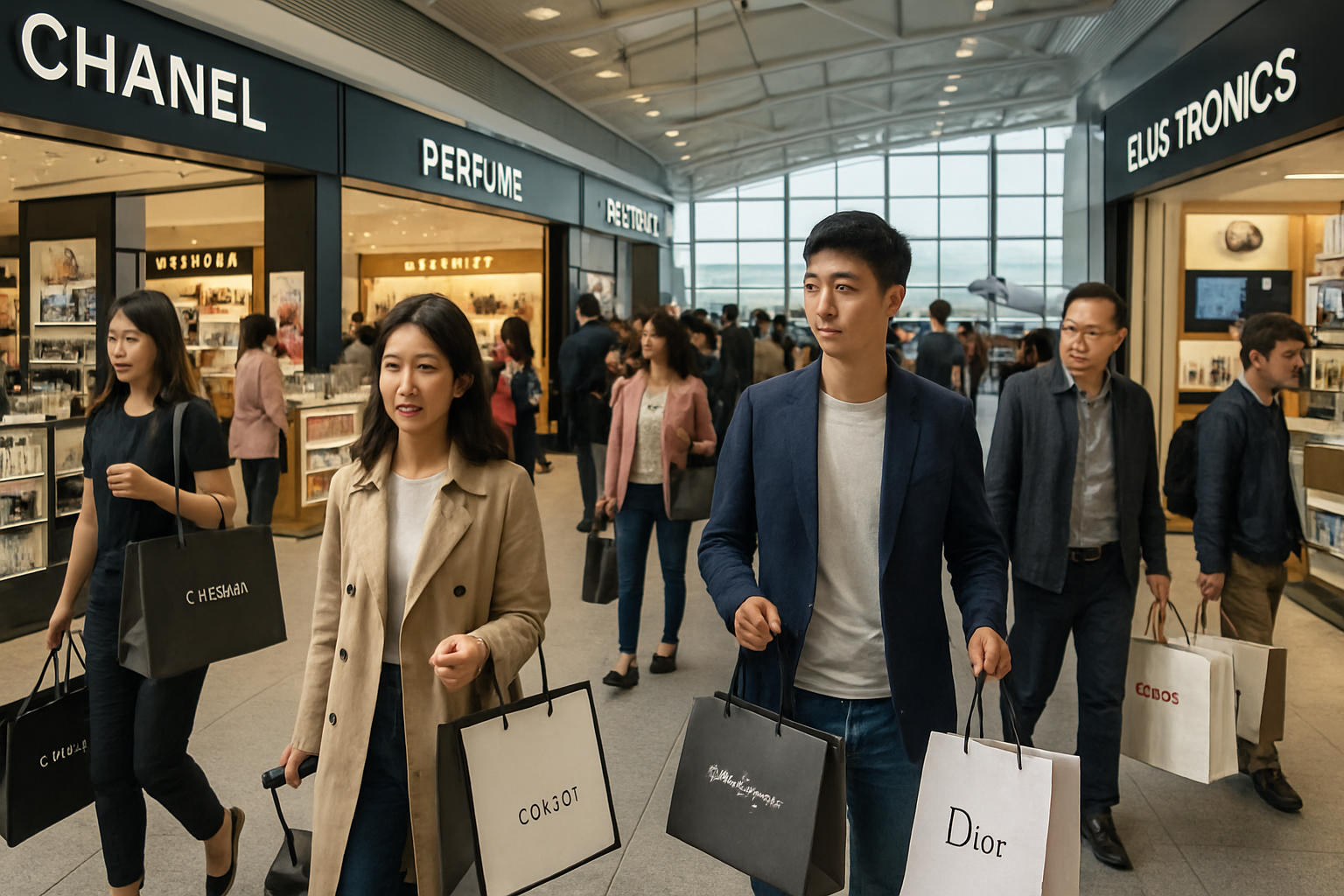
Chinese travelers are setting new benchmarks for airport retail spending across Asia-Pacific, emerging as the region's highest-spending passengers and driving a remarkable recovery in airport commerce since the COVID-19 pandemic.
A comprehensive study by the Airports Council International (ACI) Asia-Pacific and Middle East, released in February 2026, reveals that Chinese passengers have logged the "highest spend per passenger of any" demographic in the region, outpacing their Asian counterparts by a significant margin in their pursuit of luxury goods, food, and gifts.
Unprecedented Spending Patterns
The data shows Chinese travelers are spending twice the regional average on luxury items, marking a dramatic shift in airport retail dynamics. This spending surge has positioned Chinese passengers as the primary drivers of Asia's airport retail recovery, with their purchasing power significantly exceeding pre-pandemic levels.
The study, which analyzed spending patterns across multiple Asian airports, indicates that Chinese travelers' appetite for premium products has created new opportunities for duty-free retailers and luxury brands operating in airport environments. Their preferences span across high-end fashion, premium electronics, fine jewelry, and exclusive food and beverage offerings.
Beyond Traditional Shopping: The Rise of Chinese Luxury Brands
Complementing this spending trend is a broader transformation in global perceptions of Chinese products. According to Channel News Asia's analysis, "China is no longer seen as a factory pumping out cheap copycat goods," signaling a fundamental shift in the country's brand positioning on the international stage.
This evolution from manufacturer of low-cost imitations to creator of premium products reflects China's economic maturation and growing consumer sophistication. Chinese luxury brands are increasingly challenging established European counterparts, with some industry analysts suggesting that "when China is chic, European luxury brands should worry."
Post-Pandemic Recovery Leadership
The Chinese travelers' spending surge comes as the broader Asia-Pacific region continues to lead global tourism recovery. Recent data from across the region shows remarkable resilience and growth, with Singapore exceeding tourism revenue forecasts of $29-30.5 billion, while Hong Kong has been expecting a 6% increase in Chinese visitor arrivals.
The airport retail recovery led by Chinese passengers represents more than just economic activity—it demonstrates changing consumer preferences and growing disposable income among China's traveling class. Industry experts note that this demographic is increasingly seeking authentic, premium experiences and products during their travels.
Strategic Implications for Airport Retail
The findings have significant implications for airport retailers and luxury brands operating in Asian aviation hubs. The data suggests that catering to Chinese travelers' preferences could be crucial for maximizing retail revenue in the region's major airports.
Airport authorities across Asia are likely to reassess their retail strategies, potentially adjusting product offerings, store layouts, and service approaches to better serve this high-spending demographic. The trend also indicates the importance of understanding cultural preferences and shopping behaviors specific to Chinese travelers.
"Chinese travelers are not just recovering to pre-pandemic levels—they're setting entirely new standards for airport retail engagement and spending."
— Industry Analysis, Airports Council International
Regional Impact and Future Trends
The Chinese travelers' spending leadership occurs within the context of broader Asian tourism recovery patterns. Malaysia has been preparing for unique cultural convergences with Chinese New Year celebrations, while various regional destinations report increased hotel occupancy and tourism revenue linked to Chinese visitor arrivals.
This trend aligns with the documented global shift toward quality-focused tourism strategies, where destinations and service providers are prioritizing higher-spending visitors over volume-based approaches. Chinese travelers, with their demonstrated willingness to spend on premium products and experiences, fit perfectly into this evolving tourism paradigm.
Looking Forward
As Chinese travelers continue to demonstrate their spending power in airport environments, the broader implications extend beyond retail into destination marketing and tourism strategy. Countries and airports that can effectively cater to Chinese travelers' preferences and spending patterns are likely to see continued benefits from this demographic's travel patterns.
The data from the ACI study represents more than statistical analysis—it reveals a fundamental shift in Asian travel economics, with Chinese passengers emerging as a driving force in the region's tourism and retail recovery. This trend is expected to influence airport development, retail strategies, and tourism policies across Asia-Pacific in the coming years.
The combination of increased Chinese outbound travel, higher disposable incomes, and preferences for premium experiences creates a powerful economic force that is reshaping airport retail landscapes throughout Asia, establishing Chinese travelers as the region's most influential airport consumers.