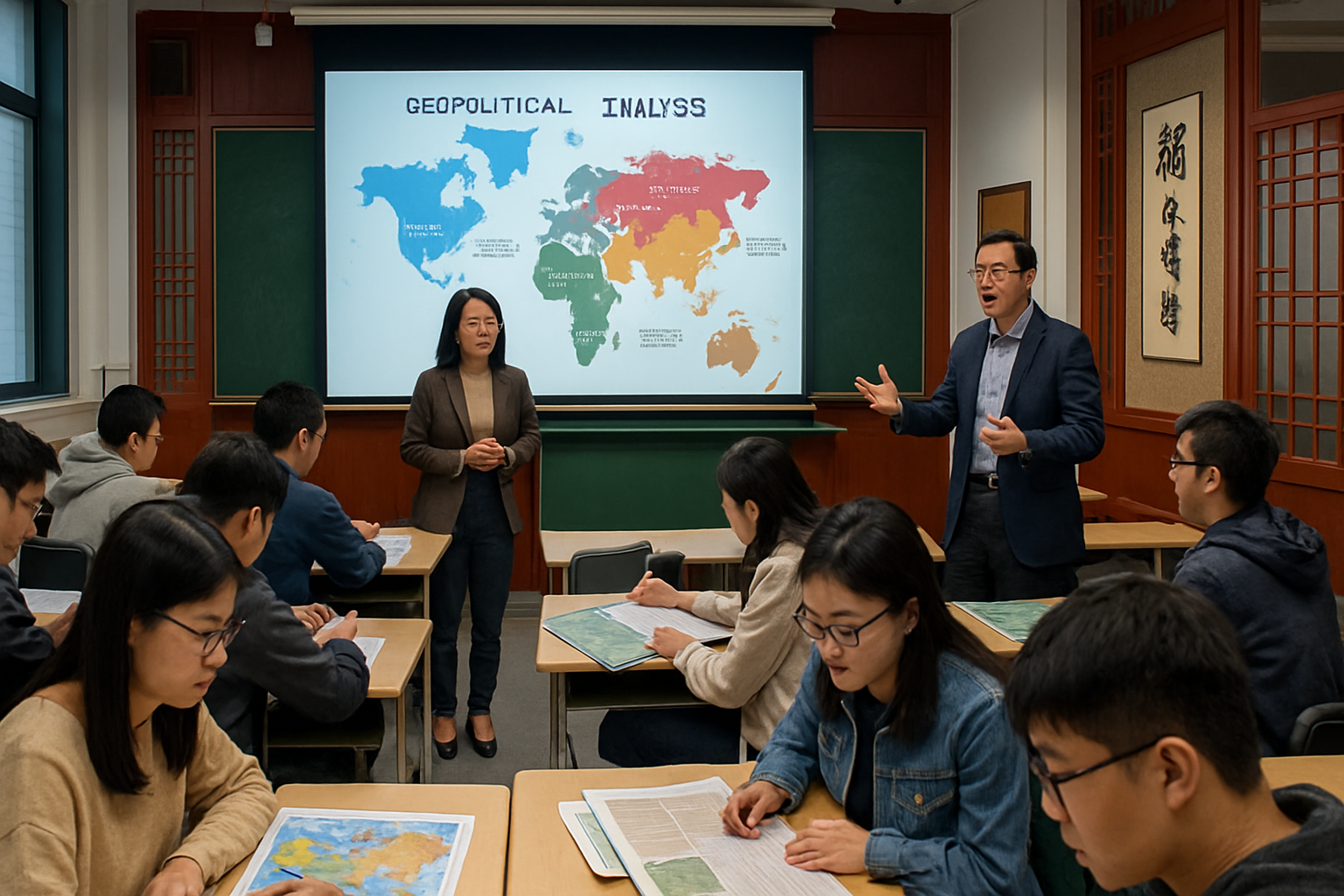
Chinese universities are systematically dismantling traditional language degree programs in favor of comprehensive regional and area studies courses, marking one of the most significant educational restructurings in modern Chinese higher education history.
The transformation represents a fundamental shift from linguistic instruction to strategic geopolitical analysis, as institutions nationwide pivot toward developing uniquely Chinese frameworks for understanding world affairs, independent of Western academic paradigms.
Ministry Data Reveals Unprecedented Scale
Ministry of Education data demonstrates the sweeping nature of this transformation, as universities across China simultaneously implement changes that prioritize interdisciplinary regional expertise over traditional language learning. The field of regional studies examines politics, economics, culture, military affairs, geography, linguistics, and other dimensions of countries and regions worldwide through integrated analytical approaches.
This systematic restructuring affects numerous institutions and thousands of students, representing a coordinated national effort rather than isolated institutional decisions. The timing and scope suggest central government coordination aligning educational policy with broader strategic objectives.
Beyond Language Learning: Comprehensive Analytical Framework
The new regional studies programs extend far beyond traditional language instruction to encompass comprehensive analytical training. Students now engage with geopolitical analysis, economic development patterns, cultural dynamics, military considerations, and geographic factors as interconnected elements of regional understanding.
Faculty members describe the approach as developing "Chinese analytical lenses" for global affairs, emphasizing indigenous intellectual frameworks rather than adopting Western academic models. This represents a conscious effort to create alternative analytical paradigms challenging established international academic traditions.
"We are developing distinctly Chinese approaches to understanding the world, moving beyond simply translating Western concepts into Chinese contexts."
— Regional Studies Faculty Member
Strategic Implications for International Relations
The educational transformation occurs within China's broader assertion of intellectual and analytical independence from Western-dominated international academic discourse. By developing comprehensive regional expertise programs, Chinese universities position themselves to produce graduates capable of conducting sophisticated international analysis from uniquely Chinese perspectives.
This shift aligns with China's expanding global engagement and the need for professionals capable of managing complex international relationships across diverse cultural, political, and economic contexts. Traditional language programs, while valuable, provided limited strategic analytical capabilities compared to comprehensive regional studies approaches.
Global Context: Educational Sovereignty Movement
The Chinese reforms occur amid a broader global trend toward educational sovereignty and cultural preservation within academic institutions. Similar movements across various countries emphasize developing indigenous analytical capabilities rather than adopting foreign educational models wholesale.
This phenomenon reflects growing international recognition that educational systems significantly influence national analytical capabilities and strategic thinking patterns. Countries increasingly view educational curriculum choices as matters of intellectual sovereignty rather than purely academic considerations.
Implementation Challenges and Opportunities
The transition from established language programs to comprehensive regional studies requires substantial faculty retraining, curriculum development, and resource reallocation. Universities must develop new assessment methods, teaching materials, and practical training opportunities suited to interdisciplinary regional analysis.
However, the transformation also creates opportunities for innovative educational approaches combining traditional Chinese scholarly traditions with contemporary analytical requirements. This synthesis potentially produces unique educational models applicable beyond China's borders.
International Academic Community Response
The systematic nature of China's educational restructuring has drawn attention from international academic observers, with some expressing concern about potential isolation from global academic discourse while others recognize the legitimacy of developing indigenous analytical frameworks.
Western universities increasingly acknowledge the limitations of assuming universal applicability for their analytical approaches, creating space for alternative educational models that reflect different cultural and strategic priorities.
Future Trajectory and Global Impact
The success of China's regional studies transformation could influence educational policy decisions across Asia and other regions seeking to develop independent analytical capabilities. The model demonstrates possibilities for large-scale educational restructuring aligned with national strategic objectives.
As China's global engagement expands, graduates from these reformed programs will play crucial roles in shaping international relationships and analytical approaches. Their unique educational background may contribute to more diverse and culturally informed global discourse.
The transformation represents more than educational reform; it constitutes an assertion of intellectual independence and analytical sovereignty. Whether this model proves successful and influential internationally will significantly impact the future of higher education and international studies globally.