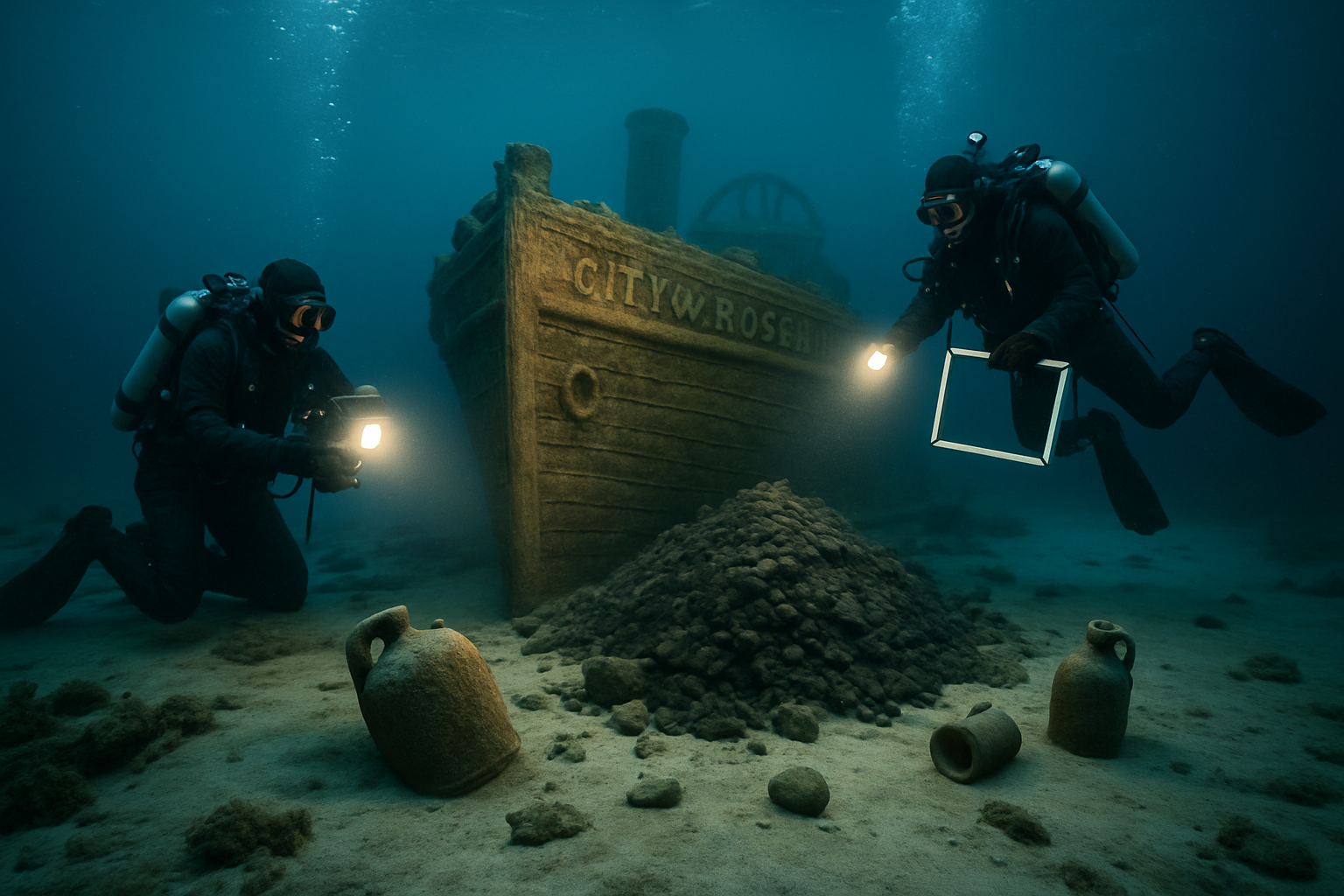
Australian divers conducting surveys for offshore wind farm development have made a remarkable archaeological discovery, uncovering the wreck of the City of Hobart steamliner that sank nearly 150 years ago off Victoria's east coast, solving a maritime mystery that has puzzled historians for generations.
The discovery was made by Southern Ocean Explorers divers during routine environmental assessments for a renewable energy company's proposed offshore wind farm site. The 150-year-old coal supply ship, which disappeared in 1877, was found remarkably preserved on the ocean floor, providing an extraordinary window into Australia's 19th-century maritime history.
Historic Maritime Discovery
The City of Hobart steamliner served as a crucial coal supply vessel during the height of Australia's steam-powered maritime era. The ship's disappearance in 1877 had remained one of the region's enduring maritime mysteries, with historical records providing only fragmentary accounts of its final voyage.
"This discovery represents a significant breakthrough in understanding Australia's maritime heritage," said marine archaeologist Dr. Sarah Mitchell from Melbourne University. "The City of Hobart was an essential part of the coal supply network that powered Victoria's industrial development in the late 19th century."
The wreck was located during comprehensive seabed surveys required for offshore wind farm environmental impact assessments. The renewable energy company's thorough site investigation protocols, designed to identify any archaeological or environmental sensitivities, proved instrumental in the discovery.
Remarkable Preservation
Initial assessments indicate the wreck exhibits exceptional preservation due to the specific oceanic conditions off Victoria's east coast. The cold Southern Ocean waters and sediment coverage have protected the wooden hull structure and remnants of the coal cargo that defined the vessel's commercial purpose.
Advanced underwater survey equipment revealed the ship's distinctive steam-era construction features, including the paddle wheel housing and boiler sections that powered the vessel through Australia's coastal waters. Maritime artifacts scattered around the wreck site provide tangible connections to the daily operations of 19th-century merchant shipping.
The discovery comes at a time of increased focus on maritime archaeological preservation, as offshore renewable energy development requires comprehensive heritage assessments. This case demonstrates how modern infrastructure projects can contribute to historical knowledge while advancing sustainable energy goals.
Context of Australia's Steam Age
The City of Hobart operated during a transformative period in Australian maritime history, when steam-powered vessels revolutionized coastal trade and passenger transport. Coal supply ships like the City of Hobart formed the backbone of the transportation network that connected Australia's growing industrial centers.
Historical records indicate the vessel regularly transported coal from Newcastle and other mining regions to Melbourne, supporting the city's rapid industrial expansion during the 1870s. The ship's loss in 1877 reflected the inherent dangers of 19th-century maritime commerce, when navigation technology and weather forecasting remained rudimentary.
Victorian maritime historian Professor James Thompson noted that the discovery provides unprecedented insights into steam-era vessel construction and commercial operations. "The City of Hobart represents the technological transition from sail to steam power that defined Australia's maritime development in the latter half of the 19th century."
Archaeological Significance
The wreck site is being treated as a significant archaeological resource requiring careful documentation and protection. Advanced underwater survey techniques, including 3D mapping and photogrammetry, are being employed to create detailed records of the vessel's structure and artifact distribution.
Marine archaeologists emphasize that the discovery contributes to broader understanding of Australia's maritime heritage during the critical period of colonial industrial development. The vessel's construction details, cargo arrangements, and preservation state provide valuable data for comparative studies of 19th-century Australian shipbuilding and maritime commerce.
The site's protection will be managed under Australian heritage legislation, ensuring that any future research activities maintain the wreck's archaeological integrity while allowing for scientific study. The discovery demonstrates the importance of comprehensive environmental assessments in offshore development projects.
Renewable Energy and Heritage Preservation
The discovery highlights the potential for offshore renewable energy development to contribute to historical knowledge through mandatory archaeological surveys. Environmental impact assessments for offshore wind farms require detailed seabed analysis, creating opportunities to identify previously unknown heritage sites.
Renewable energy companies are increasingly recognizing their role as custodians of maritime archaeological resources discovered during development activities. Industry best practices now emphasize collaboration with heritage authorities and archaeological specialists to ensure discoveries are properly documented and protected.
The City of Hobart discovery represents a successful model for balancing renewable energy development with heritage preservation, demonstrating that infrastructure projects can contribute positively to historical understanding while advancing environmental sustainability goals.
Future Research Opportunities
Plans are underway for comprehensive archaeological documentation of the City of Hobart wreck site, involving collaboration between marine archaeologists, maritime historians, and heritage preservation specialists. The research program will focus on understanding the vessel's construction, operational history, and the circumstances of its loss.
Advanced conservation techniques may be employed to preserve artifacts recovered from the site, potentially leading to museum exhibitions that showcase Australia's maritime heritage to public audiences. The discovery provides educational opportunities to illustrate the technological and economic forces that shaped 19th-century Australian development.
Dr. Mitchell emphasized that the City of Hobart represents just one example of Australia's extensive maritime archaeological heritage. "This discovery reminds us that our coastal waters contain countless stories of the maritime activities that built modern Australia. Each wreck site provides unique insights into our historical development."
The successful identification and protection of the City of Hobart wreck establishes important precedents for managing archaeological discoveries within offshore renewable energy development. As Australia expands its offshore wind capacity, similar discoveries may provide additional opportunities to enhance understanding of the nation's maritime past while building a sustainable energy future.