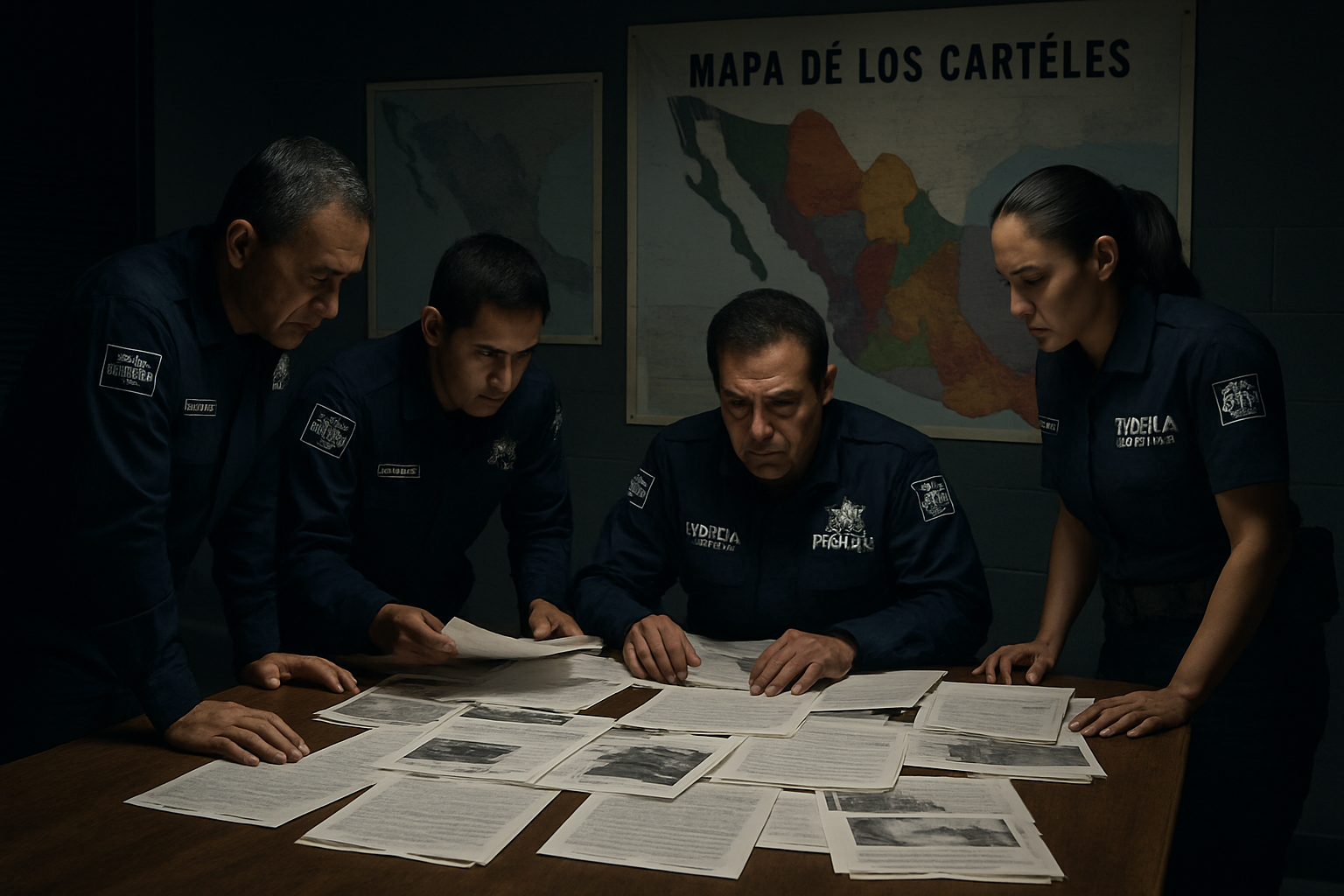
The death certificate of Nemesio Oseguera 'El Mencho' reveals critical contradictions about the moment Mexico's most powerful cartel leader died, while internal power struggles within the Jalisco New Generation Cartel (CJNG) have erupted into open territorial warfare across multiple states.
According to official documents obtained by El Financiero, the death certificate issued by Mexico City's Civil Registry indicates El Mencho died from a series of traumatic injuries: "thoracic, abdominal and penetrating wounds to lower extremities," as well as "wounds produced by projectiles fired with firearms." However, the circumstances surrounding exactly when and where the cartel leader succumbed to his injuries remain disputed.
Contradictory Official Accounts
The death certificate raises significant questions about whether El Mencho died during the February 22, 2026 military operation at the Tapalpa Country Club in Jalisco, or later during his helicopter transport to Mexico City. This discrepancy has fueled speculation among intelligence analysts about the true circumstances of his final moments.
The operation that eliminated the CJNG leader was the result of sophisticated U.S.-Mexico intelligence cooperation, tracking El Mencho through surveillance of his romantic partner who was visiting his luxury mountain hideout. During the fierce firefight, six bodyguards were killed and three Mexican military personnel were injured before El Mencho was captured alive but critically wounded.
Power Vacuum Triggers Internal Warfare
The leadership vacuum has created unprecedented instability within CJNG-controlled territories. In Uruapan, Michoacán, violent clashes have erupted as different factions compete for control of strategic drug trafficking routes. Local CJNG commander known as "El Congo" revealed the extent of the internal chaos in intercepted communications.
"After El Mencho's death, several groups turned against us. The plaza structure we built over years is falling apart,"
— "El Congo," CJNG Regional Commander
Mexico's Secretary of Public Security (SSPC) has identified at least four potential successors vying for overall CJNG leadership, each controlling different territorial segments and revenue streams. The fragmentation has resulted in increased violence as competing factions attempt to consolidate power and defend their territories from rival cartels seeking to capitalize on the instability.
Succession Battle Complications
The most obvious successor, El Mencho's son Rubén Oseguera "El Menchito," remains imprisoned in the United States, effectively removing him from the succession struggle. This has left regional commanders without a clear hierarchical structure, leading to the current fragmentation.
Intelligence sources indicate that the CJNG's sophisticated organizational structure, which once operated like a multinational corporation under El Mencho's centralized leadership, has now splintered into semi-autonomous cells. Each faction maintains its own financial operations, weapons procurement networks, and territorial control mechanisms.
Escalating Violence Across Mexico
The power struggle has manifested in increased violence across traditionally CJNG-controlled territories. In Michoacán, nearly a week of continuous fighting has displaced thousands of civilians as different factions battle for control of lucrative smuggling corridors.
The territorial disputes extend beyond internal CJNG conflicts. Rival organizations, including remnants of other cartels, have begun incursions into previously secure CJNG territory, recognizing the opportunity presented by the leadership crisis.
Impact on Mexico's Security Strategy
The fragmentation of Mexico's most sophisticated criminal organization presents both opportunities and challenges for federal security forces. While the elimination of El Mencho represented a major victory for President Claudia Sheinbaum's administration, the resulting instability has created new security complications.
Mexican authorities deployed over 10,000 troops in the immediate aftermath of El Mencho's death to contain the violent retaliation that followed. However, the current internal CJNG conflicts require a different strategic approach, as traditional anti-cartel operations may inadvertently favor one faction over another in the succession battle.
Regional Economic Implications
The CJNG's internal conflicts have disrupted criminal economic activities that, paradoxically, provided a form of stability in certain regions. Local businesses that previously operated under the cartel's "protection" now face uncertainty about which faction to negotiate with, leading to increased extortion and violence against civilian enterprises.
The tourism industry in affected areas, particularly in Jalisco and Michoacán, faces renewed concerns about security as the predictable criminal governance structure that El Mencho maintained has dissolved into chaotic territorial disputes.
International Ramifications
The CJNG's fragmentation has implications beyond Mexico's borders. The organization's international networks, which extended across Latin America and into Europe and Asia, now operate without centralized coordination. This has created opportunities for rival criminal organizations to capture CJNG's international trafficking routes and partnerships.
U.S. law enforcement agencies are closely monitoring the situation, as the power struggle could either reduce the CJNG's operational effectiveness or create more unpredictable and violent successor organizations. The Department of Justice has indicated that several of the potential CJNG successors are already targets of ongoing investigations.
Historical Precedent and Future Projections
Security analysts point to historical precedents where the elimination of major cartel leaders led to organizational fragmentation rather than reduced criminal activity. The death of Joaquín "El Chapo" Guzmán resulted in the Sinaloa Cartel's temporary weakening but ultimately led to its reorganization under new leadership.
The CJNG's case may prove different due to the organization's more sophisticated structure and broader territorial control. However, early indicators suggest that rather than a single successor emerging, Mexico may face multiple smaller but potentially more violent criminal organizations in former CJNG territory.
Government Response Strategy
Mexican federal authorities are implementing a dual strategy of targeting the emerging faction leaders while attempting to prevent civilian casualties during the internal conflicts. Intelligence operations continue to monitor communications between different CJNG factions to anticipate and prevent major violent confrontations.
The success of this approach will largely determine whether Mexico can capitalize on the CJNG's current weakness to establish greater state control in previously cartel-dominated territories, or whether the power vacuum will simply be filled by equally dangerous successor organizations.
As the situation continues to evolve, the ultimate resolution of the CJNG succession crisis will serve as a critical test of Mexico's capacity to manage the complex aftermath of major cartel leadership eliminations while protecting civilian populations caught in the crossfire of criminal power struggles.