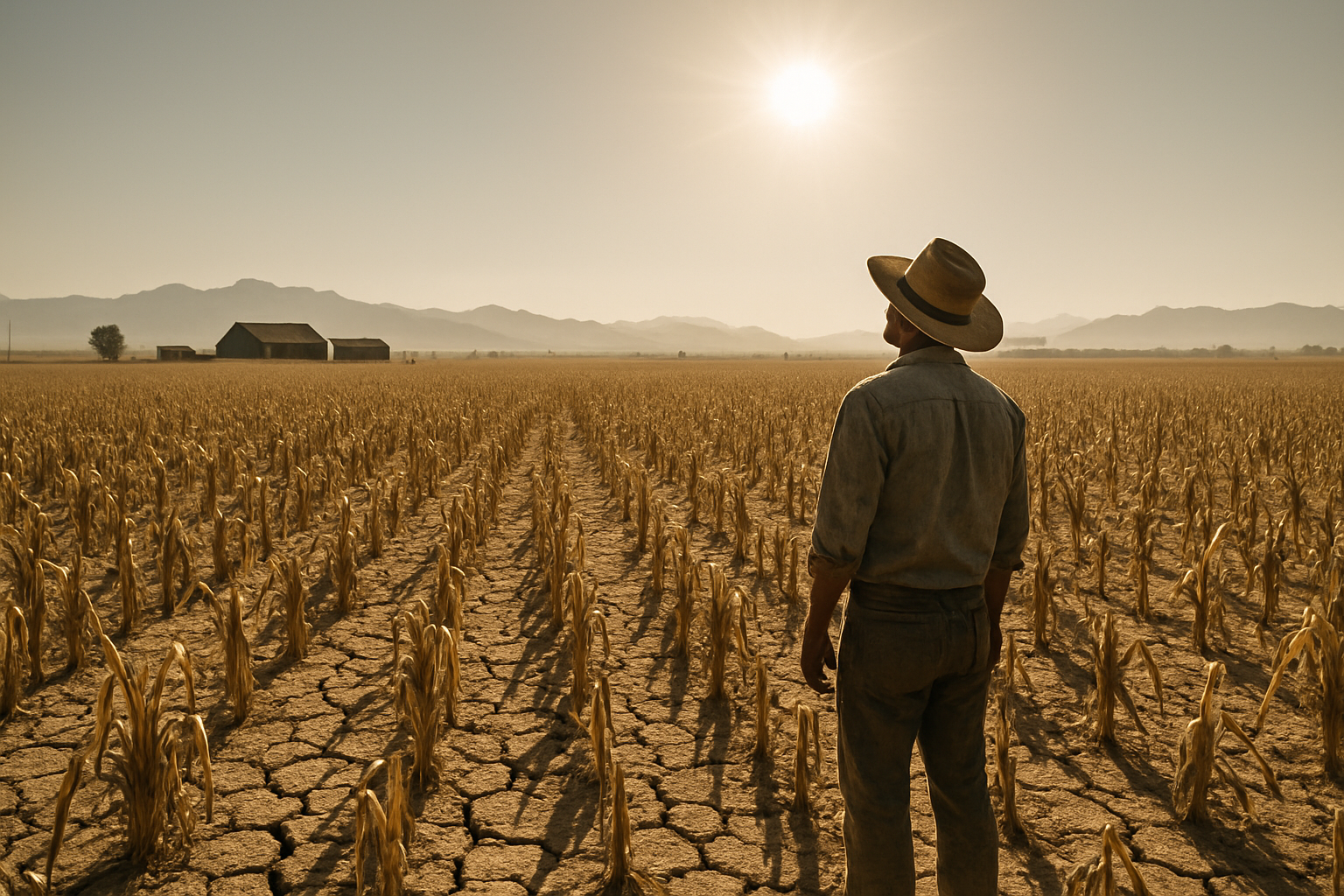
As global temperatures exceed 1.5°C above pre-industrial levels for an unprecedented 22nd consecutive month, farming communities worldwide are confronting an agricultural crisis unlike any in modern history, with traditional seasonal patterns collapsing and emergency responses reaching breaking points across multiple continents.
The devastating convergence of extreme weather events has created what scientists describe as a "perfect storm" for global agriculture. Estonia faces severe workforce challenges as Ukrainian refugees who have sustained local farming operations may return home when the war ends, while Europe experiences the second-warmest March on record with temperatures 2.3 degrees above normal reference values, fundamentally disrupting traditional growing cycles.
Unprecedented Global Warming Streak
January 2026 marked the hottest month ever recorded, extending what climatologists confirm as the longest sustained warming period in human history. The World Meteorological Organization reports a 50-60% probability of El Niño development during July-September 2026, potentially driving temperatures into unprecedented territory by combining baseline warming with natural cycle amplification.
"We are witnessing the climate volatility paradox," explains Dr. Matti Huutonen of the Finnish Meteorological Institute. "Sustained global warming enables both record heat and devastating regional extremes through disrupted atmospheric circulation and polar vortex patterns."
The climate crisis has fundamentally altered atmospheric systems, overriding natural cooling mechanisms including La Niña effects that typically moderate global temperatures. This sustained warming is forcing agricultural communities to adapt to conditions that historically guided food production for millennia.
Agricultural Systems Under Siege
Traditional farming cycles that sustained civilizations for centuries are becoming increasingly unreliable as seasonal patterns shift unpredictably. Farmers across multiple continents report operating without the seasonal predictability that historically guided food production, creating cascading effects throughout global supply chains.
Estonian farmer Kalle Hamburg warns that if Ukrainian refugees return home after the war ends, "it would be a serious blow to agriculture." The comment highlights how climate-induced displacement has created unexpected dependencies in agricultural systems, with refugees providing crucial labor for European farming operations during increasingly challenging growing conditions.
Agricultural experts identify mounting pressures from extreme weather destroying crops during critical growing seasons, disrupted supply chains affecting transportation and processing, and unprecedented timing mismatches where traditional planting schedules no longer align with actual weather patterns.
"Traditional farming cycles that sustained agriculture for millennia are becoming unreliable as seasonal patterns shift unpredictably, forcing farmers to operate without the seasonal predictability that historically guided food production."
— Agricultural Climate Adaptation Expert
Emergency Response Systems Breaking Down
Emergency services across multiple continents are operating at or beyond capacity limits as traditional mutual aid mechanisms prove inadequate for simultaneous disasters. The European Union's Civil Protection Mechanism has been repeatedly activated, with the Sweden-Denmark €246 million assistance package representing the largest coordinated European weather response on record—yet still insufficient for the scale and simultaneity of current challenges.
Transportation networks, power grids, and communication systems designed for historical climate patterns are repeatedly failing as extreme weather exceeds operational parameters. Recovery timelines have fundamentally shifted from weeks to months or years, representing a permanent change in disaster response approaches.
The Australian Fire Emergency Services Authority (AFAC) identifies a shift from isolated regional disasters to "compound disasters"—multiple emergency types occurring concurrently across vast geographic areas, fundamentally challenging traditional resource allocation and mutual aid mechanisms.
Economic and Social Devastation
Agricultural operations worldwide face billions in losses as extreme weather destroys crops and disrupts supply chains during critical seasons. Tourism industries experience extended cancellations due to infrastructure damage during peak revenue periods, while families potentially lose generational properties multiple times within a single decade.
Mental health services report increased demand for treatment of climate anxiety and repeated trauma, with vulnerable populations including the elderly and children with respiratory conditions disproportionately affected. The cumulative stress of unprecedented environmental volatility is creating lasting psychological impacts on rural communities.
"Building back better" with climate-resilient infrastructure has evolved from an optional enhancement to an essential survival strategy. Traditional seasonal patterns that guided infrastructure design, agricultural planning, and emergency preparedness for centuries are no longer reliable frameworks for planning.
Technology and Traditional Knowledge Integration
The most successful agricultural adaptations demonstrate sophisticated integration of cutting-edge technology with traditional farming wisdom and community-based management. Estonia combines agricultural wisdom with advanced climate monitoring, while Australia integrates Indigenous fire management with modern meteorological forecasting.
Finland's meteorological services have initiated regular pollen bulletins responding to increased long-distance allergen transport from altered global atmospheric circulation patterns. These hybrid approaches provide templates for broader adaptation strategies combining technological capabilities with community engagement and traditional ecological knowledge.
Precision agriculture, environmental DNA sampling, satellite monitoring, and AI-powered analysis enhance preparedness when combined with generations of indigenous farming practices and community-based resource management systems.
International Cooperation Under Strain
Environmental challenges transcend political boundaries as atmospheric systems and ocean currents carry climate effects across continents regardless of borders. The simultaneity of disasters is testing cooperation mechanisms developed assuming stable regions could assist others during isolated emergencies.
Traditional aid frameworks designed for sequential regional disasters prove inadequate when multiple continents face simultaneous emergencies. Success requires unprecedented international cooperation, enhanced multi-sector coordination, and financial commitments recognizing environmental protection as essential infrastructure for planetary sustainability.
Ocean currents carry environmental changes continentally while atmospheric systems transport effects globally, making unilateral adaptation efforts insufficient for comprehensive resilience. Coordinated policy frameworks, shared monitoring systems, and innovative financing arrangements are essential for recognizing ecosystem services as fundamental economic infrastructure.
Critical Adaptation Watershed
March 2026 represents a potential watershed moment for global climate preparedness, forcing fundamental reconsideration of humanity's response to permanent climate volatility. The choice between reactive crisis management and transformative infrastructure adaptation is becoming increasingly critical as the window for effective climate action narrows.
Current conditions provide a preview of routine circumstances in the 2030s without comprehensive climate adaptation investment. Infrastructure systems require fundamental reassessment for the "new normal" of extreme weather volatility, where traditional seasonal patterns can no longer guide planning frameworks.
Scientists warn that ecological systems are approaching critical thresholds that could trigger potentially irreversible changes affecting global food security, climate stability, and human settlements. The tools, knowledge, and cooperation frameworks exist for comprehensive environmental protection, but success depends on unprecedented speed and coordination.
Strategic Implications for Global Food Security
The convergence of extreme weather, infrastructure vulnerabilities, and emergency response limitations underscores the urgent need for coordinated international action. The agricultural sector demonstrates remarkable adaptive capacity, but success depends on sustained political commitment, adequate funding, and recognition of food security as a global public good requiring unprecedented international cooperation.
Window for building resilient, equitable food systems is narrowing rapidly as environmental pressures intensify and population growth increases demands on agricultural resources. The human dimension remains central—millions of farmers, food workers, and vulnerable communities depend on stable and fair global food systems.
Whether humanity can organize and implement solutions rapidly enough to maintain planetary habitability during Earth's most environmentally challenging period in recorded history may be determined by choices made in the coming months. The question is no longer whether transformative climate action is needed, but whether it can be implemented at the speed and scale required for global survival.