Climate change is fundamentally rewriting the ancient rhythms of wildlife migration across the globe, with new studies revealing catastrophic impacts on species survival as temperatures soar for the 21st consecutive month above critical thresholds.
Research from Estonia, Norway, and Sweden documents how rising temperatures and shifting weather patterns are disrupting migration routes that have guided wildlife for millennia, threatening the survival of iconic species from Arctic cranes to marine fish populations. The crisis unfolds as January 2026 marked the hottest month in recorded history, part of an unprecedented streak that has shattered climate records worldwide.
Arctic Species Face Migration Collapse
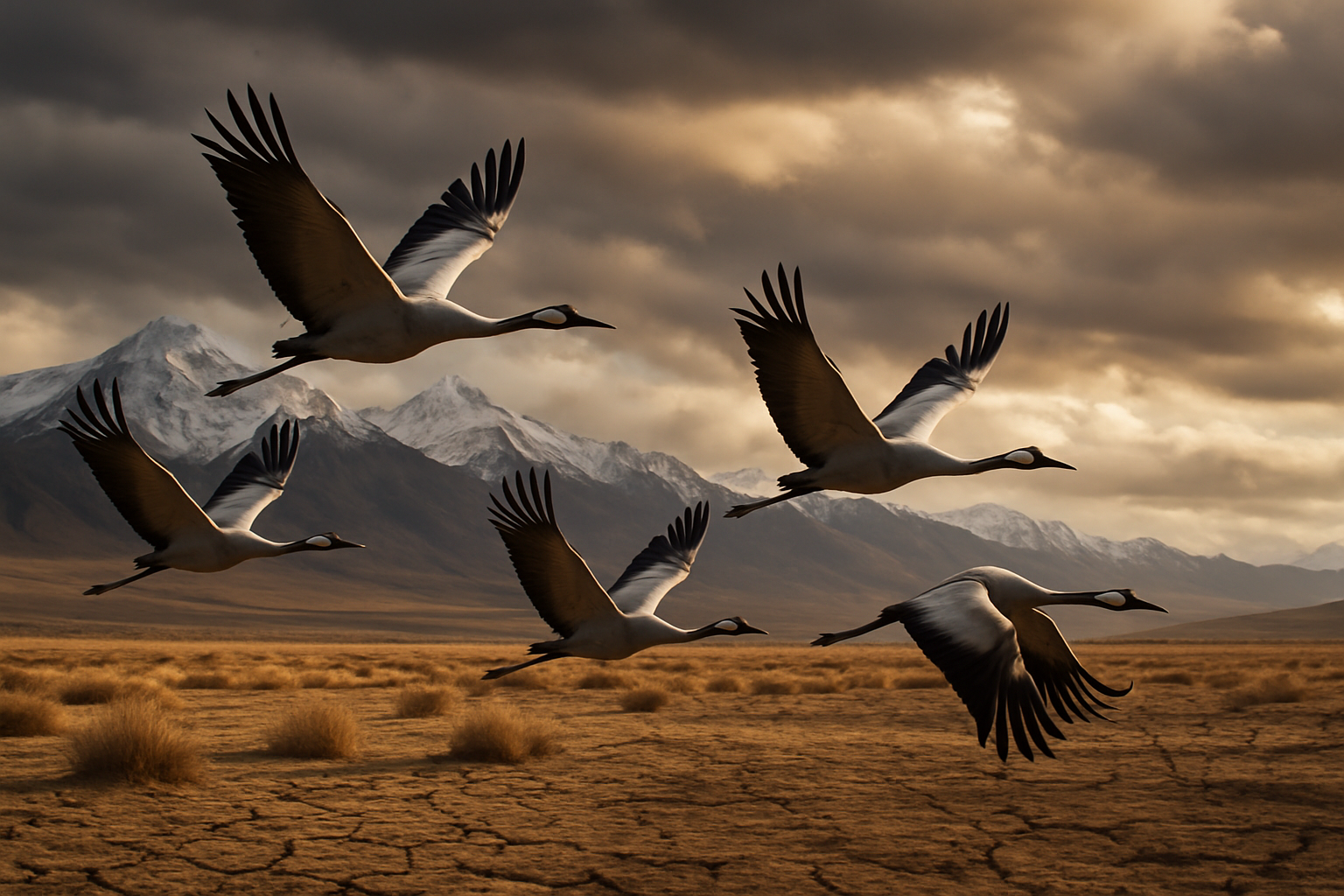
Estonian researchers are documenting the earliest crane arrivals in decades, with the iconic birds appearing weeks ahead of their traditional spring migration schedule. The changing climate is disrupting food availability and breeding cycles that have sustained crane populations for thousands of years.
"We're witnessing a complete breakdown of seasonal patterns that these birds have relied upon for survival," explains Dr. Kristjan Veeroja, Estonia's leading ornithologist. "The cranes are arriving to find their traditional feeding grounds either frozen solid or completely altered by extreme weather."
The situation is similarly dire in Norway, where traditional Arctic species face mounting pressure from warming temperatures. Climate scientists report that Nordic wildlife populations have plummeted by nearly 60% over the past decade as their Arctic habitats disappear at an alarming rate.
Marine Ecosystems Under Siege
Perhaps nowhere is the crisis more acute than in marine environments, where Norwegian researchers have documented unprecedented changes to fish migration patterns. Traditional spawning grounds in the North Atlantic are shifting hundreds of kilometers northward as ocean temperatures rise, leaving coastal communities that have depended on these fish stocks for generations facing economic devastation.
Sweden's latest Red List assessment reveals the severity of the marine crisis, with salmon, trout, and herring classified as near threatened for the first time in the nation's history. Dr. Glenn Douglas, a marine biologist with Sweden's Agricultural University, warns that "the situation is critical – if nothing is done, we could lose entire fish populations within a generation."
"We are witnessing ecosystem-wide collapse across multiple species simultaneously. This isn't just about individual animals – entire food webs are breaking down."
— Dr. Fredrik Widemo, Swedish University of Agricultural Sciences
The collapse extends beyond individual species. Sweden's moose population, while still numerous, has been added to the Red List due to concerning population trends linked to changing forest ecosystems and altered food sources caused by climate disruption.
Global Temperature Crisis Drives Ecosystem Breakdown
The wildlife migration crisis occurs against the backdrop of the most extreme climate conditions in recorded history. The World Meteorological Organization confirms that Earth is trapped in record heat, with unprecedented energy imbalance causing dangerous heat accumulation as greenhouse gases reduce the planet's ability to release energy into space.
This sustained warming has completely overridden natural climate variability, including La Niña cooling effects that typically moderate global temperatures. The result is compound environmental effects that traditional conservation approaches struggle to address.
Technology Meets Traditional Knowledge
Conservation efforts are evolving to meet these unprecedented challenges through sophisticated integration of cutting-edge technology with traditional ecological knowledge. Estonian wildlife managers now employ environmental DNA sampling and satellite monitoring combined with centuries of local bird observation to track rapidly changing migration patterns.
In Norway, researchers use advanced GPS tracking and AI-powered analysis alongside Sami indigenous knowledge to understand how Arctic species are adapting to warming temperatures. This synthesis represents a fundamental evolution in conservation methodology, moving beyond purely technological or traditional approaches toward comprehensive frameworks that combine scientific rigor with cultural wisdom.
Economic and Social Implications
The wildlife crisis carries massive economic implications that extend far beyond environmental concerns. Norway's fishing industry, worth billions annually, faces fundamental restructuring as fish stocks relocate to follow changing ocean temperatures. Swedish forestry operations must adapt to altered wildlife patterns that affect forest regeneration and ecosystem health.
Tourism industries across the region are also experiencing severe impacts. Estonia's nature tourism sector, which generates significant revenue through bird watching and wildlife photography, faces an uncertain future as traditional wildlife viewing opportunities disappear.
Countries implementing comprehensive environmental protection demonstrate greater economic resilience and attract sustainable investment across eco-tourism, environmental technology, and green services sectors. This evidence increasingly supports the view that environmental protection functions as economic development strategy rather than regulatory burden.
International Cooperation Under Strain
The transnational nature of wildlife migration makes this crisis particularly challenging to address. Ocean currents carry marine species across international boundaries, while atmospheric systems transport birds across continents, making unilateral conservation efforts insufficient.
Traditional international cooperation mechanisms, designed for stable regional conditions, are struggling to keep pace with the speed and scale of current environmental changes. The simultaneity of crises across multiple continents is testing emergency response systems designed for sequential rather than concurrent disasters.
Success requires unprecedented coordination through shared monitoring systems, collaborative enforcement mechanisms, and innovative financing that recognizes ecosystem services as essential economic infrastructure.
Conservation Renaissance Offers Hope
Despite the mounting challenges, a global conservation renaissance is emerging, characterized by remarkable coordination between nations and integration of scientific innovation with community engagement. Recent successes include successful species reintroductions in Ecuador's Galápagos Islands, DNA forensic wildlife crime prosecutions in Zimbabwe, and community-based forest protection programs in Africa.
These initiatives demonstrate that coordinated international action can achieve extraordinary results even during unprecedented environmental stress. The evolution from reactive crisis management to proactive ecosystem service management represents humanity's growing capacity to protect essential natural systems.
Critical Action Window Narrowing
March 2026 represents a critical juncture in global environmental protection. The choice between reactive crisis management and proactive ecosystem service management may determine whether conservation efforts can keep pace with accelerating environmental change during this decisive climate action decade.
Environmental scientists warn that the action window is narrowing rapidly as ecological systems approach critical thresholds that could trigger irreversible changes affecting global food security, climate stability, and human settlements.
"We have the tools, knowledge, and cooperation frameworks for comprehensive environmental protection. The question is whether we can implement them with sufficient speed and coordination."
— Dr. Anna Blomqvist, Stockholm Resilience Centre
The current environmental crisis tests humanity's adaptive capacity to protect the natural systems upon which all life depends. Success will require sustained international cooperation, enhanced multi-sector coordination, and unprecedented financial commitments recognizing environmental protection as essential infrastructure for planetary sustainability.
Integration of cutting-edge technology with traditional ecological wisdom offers pathways for maintaining planetary habitability, but requires immediate coordinated global action with maximum urgency. The choices made in coming months may prove decisive for conservation approaches affecting generations to come.