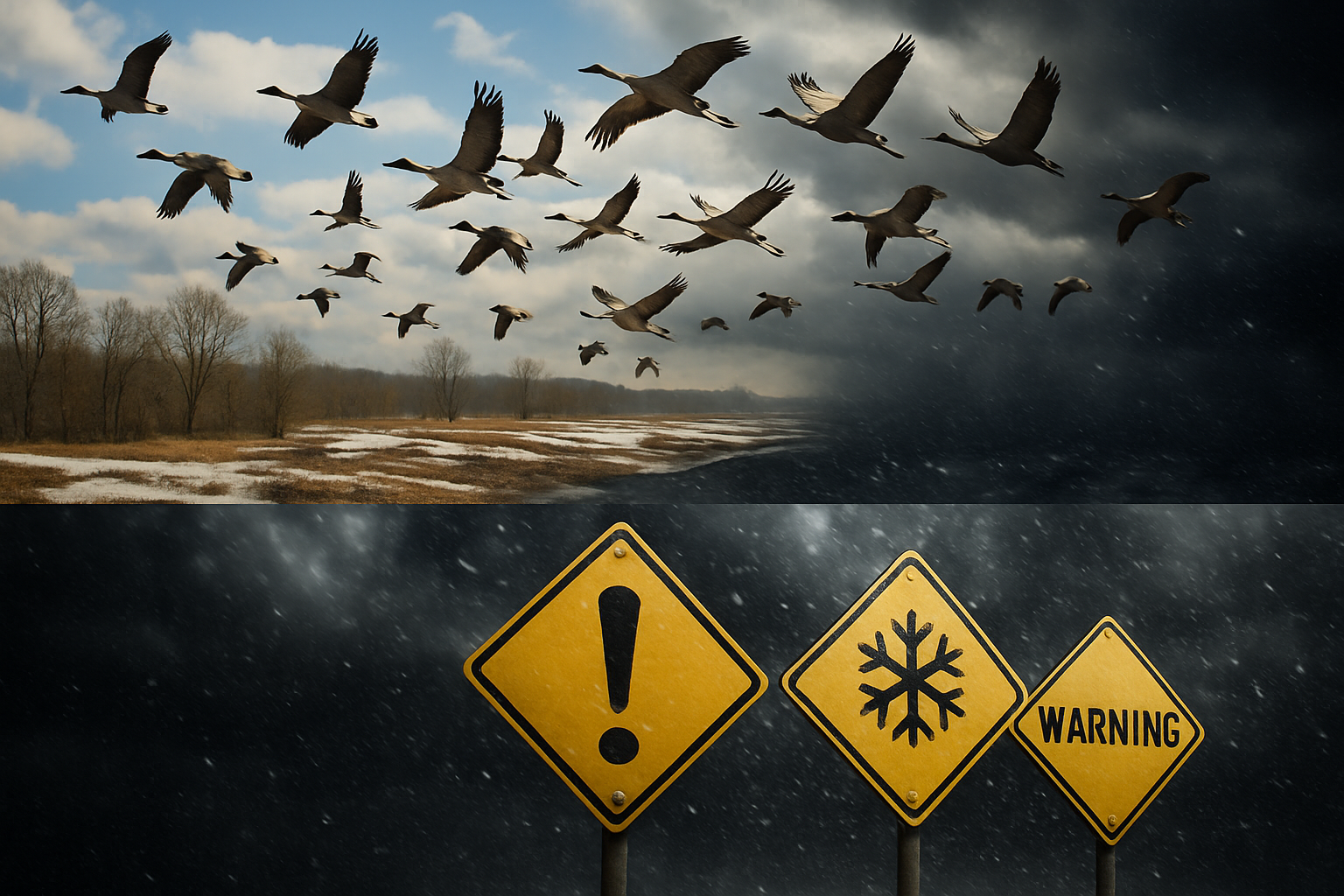
The world faces an unprecedented convergence of climate extremes as early spring conditions trigger the earliest wildlife migration patterns on record while severe weather warnings blanket multiple continents, marking the 21st consecutive month that global temperatures have exceeded 1.5°C above pre-industrial levels—the longest sustained warming period in recorded human history.
From Finland's record-breaking tick season extending into northern Oulu regions to Vancouver's first snow-free winter in 43 years, the climate volatility paradox is reshaping ecosystems and challenging emergency response systems across the globe. The dramatic seasonal disruptions come as Iceland issues 14 separate weather warnings while extreme weather simultaneously affects countries from Algeria to New Zealand.
Early Spring Migration Disrupts Ecological Balance
Finnish Meteorological Institute data reveals the most dramatic seasonal shift in 145 years of recorded weather history, with March 2026 temperatures reaching unprecedented levels that have triggered biological responses weeks ahead of traditional timing. Dr. Matti Huutonen, tracking these extraordinary changes, confirms that migratory birds are arriving in early March versus the typical late April-May window, while ticks have become active as far north as Oulu—regions where they typically don't appear until late spring or summer.
The premature wildlife activity represents a fundamental disruption of ecological relationships that evolved over millennia. Finnish authorities report that snakes and ants have emerged from winter dormancy significantly ahead of schedule, creating timing mismatches between dependent species that could trigger cascade effects throughout forest and wetland ecosystems.
"We're witnessing spring-like conditions Thursday and Friday after cloudy periods, reflecting altered seasonal patterns amid global climate disruption."
— Meteorologist Matti Huutonen, Finnish Meteorological Institute
Record-Breaking Temperature Streak Continues
January 2026 marked the 21st consecutive month that global temperatures exceeded the critical 1.5°C pre-industrial threshold, with human-induced climate change now fundamentally overriding natural variability including La Niña cooling effects. The World Meteorological Organization reports a 50-60% probability of El Niño development during July-September 2026, which could potentially drive unprecedented temperature combinations by adding natural cycle amplification to the baseline warming.
This sustained warming has created what climate scientists call the "climate volatility paradox"—where global heat records enable both extreme warming and devastating regional winter storms through disrupted polar vortex patterns and altered Atlantic circulation systems.
Multi-Continental Weather Emergency
Iceland's meteorological services have issued an unprecedented 14 separate weather warnings covering the entire country, with strong south-westerly winds exceeding 26 m/s and heavy snow showers creating hazardous travel conditions. The comprehensive alert system reflects the scale of atmospheric disruption affecting the North Atlantic region.
Simultaneously, Canada faces severe contrasts with Vancouver experiencing its warmest winter on record—the first snow-free winter in 43 years—while other regions battle extreme cold conditions. Environmental researchers suggest this may represent a new normal for southwestern British Columbia rather than an anomaly, demonstrating how climate change manifests differently across relatively small geographic areas.

Emergency Systems Overwhelmed
Traditional emergency response mechanisms designed for sequential regional disasters are proving inadequate for the current reality of simultaneous multi-continental extreme weather events. Emergency services across multiple countries report operating at or beyond capacity limits, while transportation networks, power grids, and communication systems repeatedly exceed their operational parameters.
The European Union's Civil Protection Mechanism has been repeatedly activated throughout 2026, with the Sweden-Denmark €246 million assistance package representing the largest coordinated European weather response on record. However, experts warn that even these enhanced cooperation frameworks are insufficient for the scale and simultaneity of current challenges.
Infrastructure and Economic Impacts
The convergence of extreme weather conditions exposes critical vulnerabilities in infrastructure systems designed for historical rather than current climate patterns. Finland's Tuira swimming beach in Oulu faces repeated pier damage from unexpected river ice formations, while Rauma experienced a citywide water main break causing complete pressure collapse.
Economic devastation spans multiple sectors, with agricultural operations facing mounting losses during critical growing seasons, tourism industries experiencing extended cancellations and infrastructure damage, and families potentially losing generational homes multiple times within a single decade. Mental health services report increased demand for support related to climate anxiety and repeated extreme weather trauma.
Agricultural Disruption
Traditional seasonal patterns that have guided human agricultural activities for millennia are shifting in ways that challenge both natural ecosystems and human adaptation. In Estonia, maple sap flows began weeks early, forcing accelerated syrup operations, while farming communities across the Baltic region struggle to adapt seasonal patterns that no longer align with traditional planting and harvesting schedules.
Scientific Warnings and Future Projections
Climate scientists emphasize that current conditions provide a preview of what may become routine in the 2030s without immediate comprehensive climate action. The January 2026 milestone—marking 20 consecutive months exceeding the 1.5°C threshold—demonstrates that human-induced climate change has fundamentally altered atmospheric systems beyond natural recovery mechanisms.
Research institutions are documenting these ecological changes through satellite imagery, environmental DNA sampling, and field observations, with international Nordic and Arctic collaboration intensifying as Finland's experience provides crucial global insights for northern latitude countries facing rapid climate transitions.
Adaptation Strategies and International Cooperation
Finnish authorities are implementing "transformative adaptation" approaches that move beyond reactive emergency response to proactive systems designed for permanent climate volatility. This includes revised emergency protocols, enhanced warning systems, and infrastructure improvements designed for extreme weather variability rather than historical patterns.
Community resilience programs integrate traditional knowledge with modern climate science, creating hybrid approaches that combine centuries of experience with advanced forecasting capabilities. The University of Turku has expanded its pollen bulletins to track increased allergen transport from altered atmospheric circulation patterns, while health authorities maintain year-round enhanced monitoring systems for tick-borne disease risks.
"The entire forecast map is now yellow. These are conditions we haven't seen before, requiring us to rethink our entire approach to weather preparedness."
— Icelandic Met Office Spokesperson
Critical Juncture for Global Climate Response
March 2026 represents a watershed moment for global climate preparedness, with the choice between reactive crisis management and transformative infrastructure adaptation becoming increasingly critical as the window for effective climate action continues to narrow.
The current crisis may establish a "new normal" characterized by extreme weather frequency and intensity that permanently challenges traditional emergency response frameworks. The convergence of extreme weather conditions, infrastructure vulnerabilities, and emergency response limitations underscores the urgent need for coordinated international action.
Building Climate Resilience
"Building back better" has evolved from an optional enhancement to an essential survival strategy for communities facing repeated extreme weather events. Infrastructure systems require fundamental reassessment for this new reality where traditional seasonal patterns are no longer reliable planning frameworks.
Success in building climate resilience depends on unprecedented international cooperation, enhanced multi-sector coordination, and financial commitments that recognize environmental protection as essential infrastructure for human prosperity and planetary sustainability.
Looking Forward
The simultaneous occurrence of early spring migration patterns and severe weather warnings across multiple continents demonstrates how climate change affects different regions and ecosystems in complex, interconnected ways. While Finland experiences its earliest tick season and warmest March conditions in 145 years, Iceland faces comprehensive weather warnings that test the limits of emergency preparedness systems.
As additional weather systems develop across the Atlantic and Pacific regions, authorities maintain high alert levels globally. The current crisis may persist for weeks, potentially representing a turning point toward recognizing extreme weather volatility as a permanent feature of the global climate system rather than exceptional events.
The question is no longer whether transformative climate action is needed, but whether humanity can organize and implement solutions rapidly enough to maintain planetary habitability during Earth's most environmentally challenging period in recorded history. The tools, knowledge, and cooperation frameworks exist for comprehensive environmental protection, but success requires unprecedented speed and coordination through sustained international cooperation and political commitment to environmental protection as essential infrastructure for human prosperity and planetary sustainability.