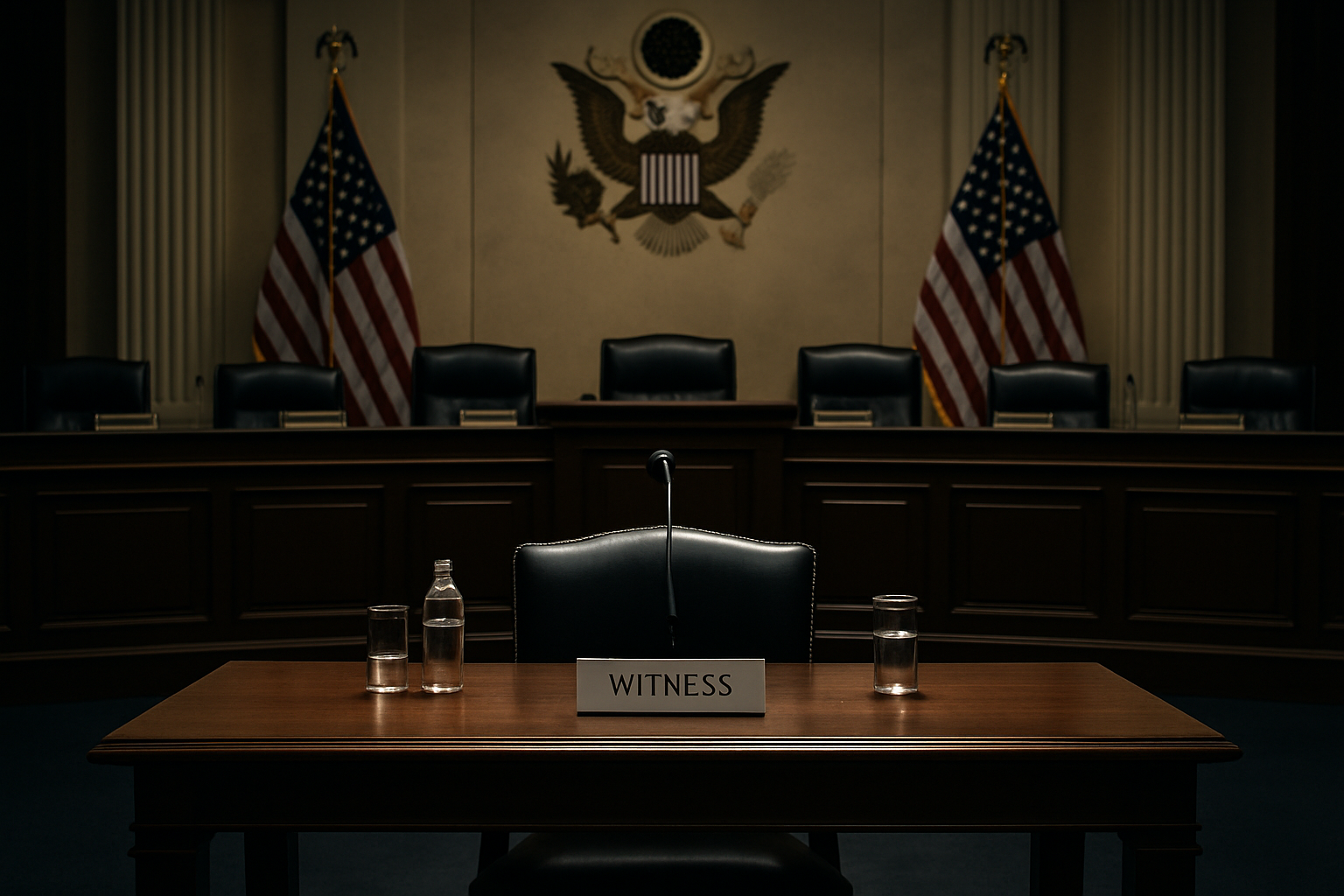
Former President Bill Clinton made history on Friday, February 28, 2026, becoming the first former U.S. president compelled to testify before Congress about his relationship with convicted sex offender Jeffrey Epstein, maintaining under oath that he "did nothing wrong" and "saw nothing" inappropriate during their documented interactions.
The closed-door deposition, conducted at Clinton's Chappaqua home, lasted approximately six hours and marked a watershed moment in what European law enforcement officials have described as "the largest international elite criminal network exposure in recent memory." The testimony follows months of subpoena resistance and represents a major political victory for Republican House Oversight Committee Chair James Comer.
Historic Congressional Testimony
Clinton's appearance followed his wife Hillary's combative testimony on February 27, where she categorically denied ever meeting Epstein while demanding that former President Trump testify under oath about his own documented connections to the disgraced financier. The Clinton couple's agreement to testify came after months of refusing congressional subpoenas and just days before a scheduled contempt of Congress vote that could have led to criminal charges.
"And America was built upon the idea that no person is above the law, even Presidents — especially Presidents," Clinton stated in a video message released after his testimony, according to sources from New Zealand media outlets covering the proceedings.
The questioning focused intensively on Clinton's 27 documented flights aboard Epstein's private aircraft, known as the "Lolita Express," between 2001 and 2003, as well as Epstein's 17 recorded visits to the White House during Clinton's presidency from 1993 to 1995. Danish media reports indicated that committee members praised Clinton for "answering all questions" during the extensive deposition.
International Context and Investigations
Clinton's testimony occurs amid unprecedented global fallout from the Jeffrey Epstein files, with active criminal investigations spanning six countries. Norwegian Crown Princess Mette-Marit faces potential criminal proceedings after being mentioned over 1,000 times in documents, while major corporate resignations have rocked Wall Street with Goldman Sachs' top lawyer Kathy Ruemmler and DP World CEO Sultan Ahmed bin Sulayem forced to step down.
The Baltic states have coordinated investigations into systematic trafficking networks, with Latvia declaring its probe of the "Natalie" modeling agency a national priority. Poland's Justice Minister confirmed evidence of "recruitment of women, possibly minors" for exploitation, while Lithuania and Estonia examine cross-border operations that allegedly funneled Eastern European women to Epstein's network.
"This represents the ultimate test of whether meaningful accountability can be achieved versus continued elite impunity despite unprecedented exposure."
— European Law Enforcement Official
DOJ Controversies and Document Suppression
The Clinton testimony takes place against a backdrop of mounting criticism of the Department of Justice's handling of the Epstein investigation. An NPR investigation revealed that the DOJ allegedly withheld 53 pages of FBI interviews containing allegations of sexual assault involving both Trump and Epstein by a female victim who was a minor at the time.
Representative Robert Garcia has characterized this as potentially "the largest government cover-up in modern history," while Deputy Attorney General Todd Blanche confirmed that no new federal prosecutions are planned despite what he termed "disturbing" material in over 3 million pages of evidence.
The DOJ has also faced severe criticism for a catastrophic victim protection failure that exposed the identities of approximately 100 survivors, including 31 minors, through what officials termed "technical and human error." Federal judges are now hearing emergency petitions from victims over this massive confidentiality breach.
Corporate and Political Fallout Continues
The Epstein revelations have triggered a wave of resignations across corporate and political spheres. Goldman Sachs faced its highest-profile departure when chief counsel Kathy Ruemmler resigned after emails surfaced showing her referring to Epstein as "big brother" and minimizing his crimes. DP World, the Dubai-based ports operator, lost its CEO Sultan Ahmed bin Sulayem, who was mentioned over 9,400 times in documents as Epstein's "most trusted friend."
The corporate consequences extend beyond individual resignations, with institutional investors including the UK development finance agency and Canada's second-largest pension fund suspending new investments in companies with documented Epstein connections.
Enhanced International Cooperation
The scope of investigations has necessitated unprecedented international coordination. France has established specialized prosecutor units to analyze documents for potential criminal infractions by French citizens, while the UK's Metropolitan Police conducted searches of properties belonging to Peter Mandelson, investigating allegations that he leaked government information to Epstein during the 2008 financial crisis.
The Council of Europe took the historic step of stripping former Norwegian Prime Minister Thorbjørn Jagland of his diplomatic immunity – the first time in the institution's history – enabling police raids in connection with corruption investigations related to his extensive communications with Epstein.
Disinformation and Verification Challenges
Complicating the investigation are sophisticated disinformation campaigns. French authorities have detected Russian-linked operations creating false connections between world leaders and Epstein, while artificial intelligence tools can now generate convincing fake images of such meetings "in seconds," according to cybersecurity experts.
These campaigns appear designed to protect actual perpetrators while undermining legitimate investigations, creating significant verification challenges for law enforcement agencies across multiple jurisdictions.
Democratic Accountability Test
Legal experts and international observers view the Clinton testimony and broader Epstein investigations as a fundamental test of democratic institutions' ability to hold powerful figures accountable across borders. The case has exposed the challenges of prosecuting transnational elite criminal networks that span multiple jurisdictions and involve individuals with diplomatic immunity and institutional protection.
Norway's Sex og Samfunn became the first major institution to terminate partnerships with the Crown Princess, setting a potential precedent for organizational accountability standards regardless of an individual's status or position.
The investigations have also prompted cultural institutions worldwide to conduct comprehensive reviews of their relationships with individuals named in the documents, while governments implement new vetting procedures for diplomatic appointments and senior positions.
Implications for Future Accountability
The Clinton testimony represents more than a singular political moment – it establishes crucial precedents for 21st-century international justice cooperation. The case demonstrates both the potential and limitations of democratic institutions when confronting sophisticated criminal networks that operate across national boundaries.
The resolution of these investigations will likely determine future accountability mechanisms for preventing similar networks from operating with impunity. As more document releases are expected and investigations continue across multiple continents, the ultimate question remains whether this unprecedented exposure will lead to meaningful systemic reforms or merely symbolic gestures.
The historic nature of Clinton's testimony underscores the gravity of the moment – never before has a former American president been compelled to answer questions under oath about connections to a convicted sex offender. This precedent, coupled with the global scope of ongoing investigations, marks a potential turning point in how democratic societies address elite criminal networks in the modern era.