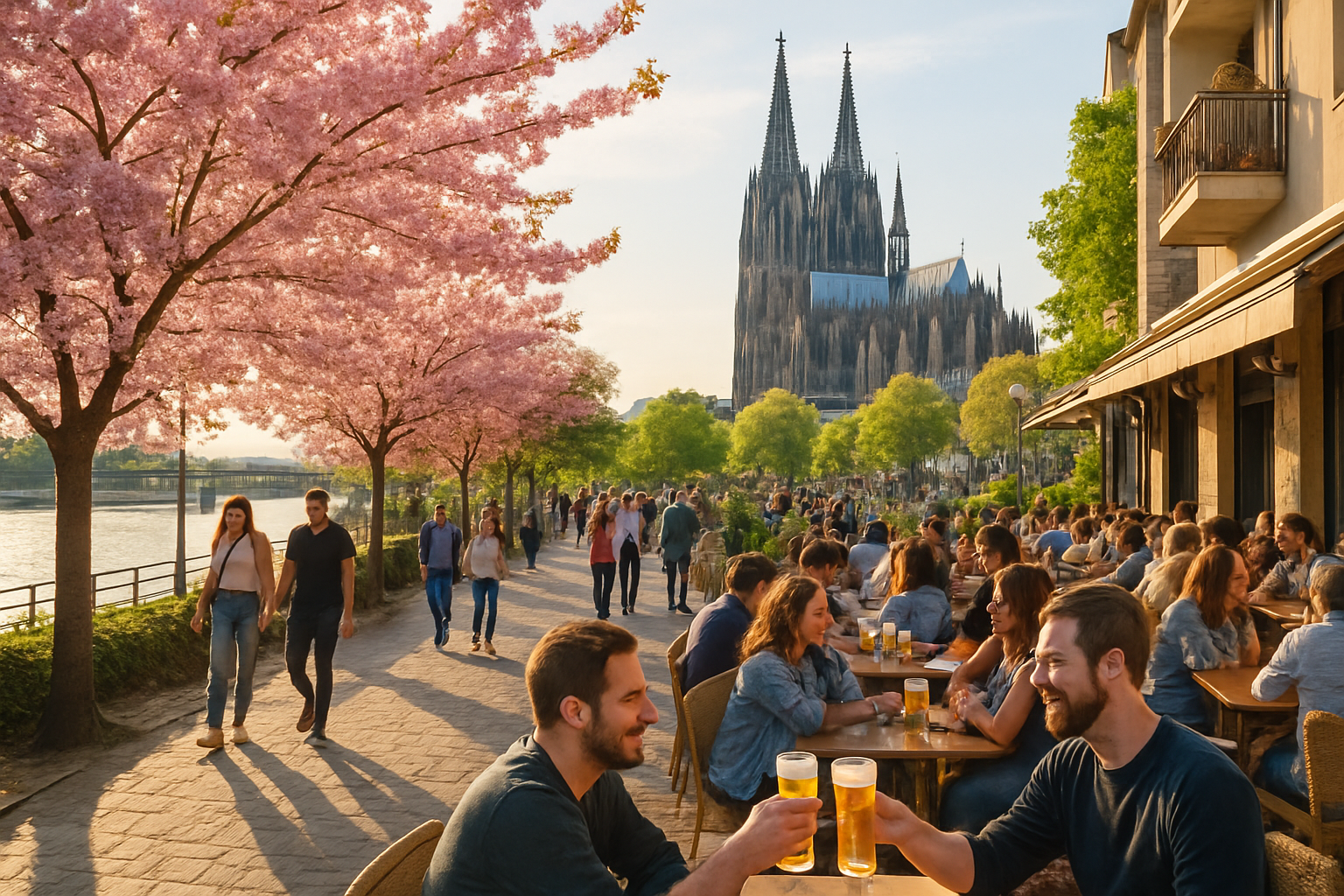
As winter gives way to spring in Germany, Cologne transforms into a vibrant cultural playground where locals and visitors alike embrace the warming weather with outdoor festivities, cherry blossom viewing, and the iconic tradition of sipping Kölsch beer by the Rhine River.
Germany's fourth-largest city has quietly emerged as one of Europe's most compelling spring destinations, offering a perfect blend of historical grandeur, cultural richness, and seasonal celebrations that showcase the authentic German lifestyle. The Local Germany reports that as temperatures rise, Cologne residents create a "tremendously dynamic, almost unstoppable" atmosphere of outdoor activities that welcomes visitors into genuine local experiences.
Cherry Blossom Magic Along the Rhine
Cologne's parks become spectacular showcases of natural beauty during spring, with cherry trees creating pink-and-white canopies throughout the city. The Rheinpark, stretching along the river's eastern bank, offers some of the most photogenic views in Germany, combining blooming trees with panoramic vistas of the historic Old Town and the towering Gothic cathedral.
Local photographer Maria Schneider, who has documented Cologne's seasonal transformations for over a decade, explains the phenomenon: "Every year in late April and early May, both residents and tourists discover these hidden groves that seem to appear overnight. The contrast between medieval architecture and delicate blossoms creates something uniquely Cologne."
The Stadtgarten and Flora botanical gardens provide more intimate cherry blossom experiences, where visitors can wander tree-lined paths while locals set up informal picnics and impromptu music sessions beneath the flowering branches.
Kölsch Culture and Riverside Revelry
No spring experience in Cologne is complete without understanding the city's deep relationship with Kölsch, the light, crisp beer that can only be brewed within 50 kilometers of the city. As outdoor temperatures become comfortable, traditional brewhouses extend their operations to riverside terraces and park-adjacent beer gardens.
The brewing tradition, protected by the Kölsch Convention of 1986, represents more than just beverage culture—it embodies Cologne's community spirit. During spring months, locals gather at establishments like Peters Brauhaus and Früh am Dom, where conversations flow as freely as the beer served in the traditional 0.2-liter glasses called "Stange."
Tourism expert Klaus Weber from the Cologne Tourism Board notes that spring beer garden culture offers visitors authentic insights into German social customs: "When you join a communal table at a riverside Kölsch house, you're not just drinking beer—you're participating in centuries of Rhineland hospitality tradition."
Festival Season Awakening
Spring marks the beginning of Cologne's renowned festival calendar, transforming the city into a cultural hub that rivals any European destination. The season typically opens with the Long Night of Museums in May, when over 40 cultural institutions remain open until 2 AM, connected by special shuttle buses and offering combined tickets for art enthusiasts.
Music festivals begin emerging in April and May, taking advantage of the mild weather and extended daylight hours. The city's numerous venues—from the historic Philharmonie concert hall to intimate jazz clubs in the Belgian Quarter—host performances that showcase both international artists and local talent.
Street festivals become increasingly frequent as spring progresses, with neighborhoods organizing weekend markets, art exhibitions, and culinary events that allow visitors to experience Cologne's distinct district personalities, from the trendy Ehrenfeld area to the historic Severinsviertel.
Urban Exploration and Architectural Discoveries
Cologne's spring weather creates ideal conditions for exploring the city's rich architectural heritage on foot. The medieval Old Town reveals its secrets more generously in the gentle spring light, while the contrast between ancient Roman ruins and modern developments becomes particularly striking.
The Cologne Cathedral, while impressive year-round, takes on special significance during spring months when the surrounding squares fill with outdoor cafes and street performers. Climbing the cathedral's 533 steps becomes more appealing in cooler spring temperatures, offering rewarding panoramic views across the Rhine valley.
Archaeological enthusiast Dr. Heinrich Mueller recommends spring as the optimal season for discovering Cologne's Roman heritage: "The archaeological sites and museum courtyards become accessible and comfortable. You can spend hours at the Roman-Germanic Museum or exploring the ancient city walls without the summer crowds or winter weather challenges."
Culinary Renaissance and Seasonal Specialties
Spring awakens Cologne's culinary scene with seasonal ingredients and outdoor dining opportunities that transform the city's gastronomic landscape. Traditional restaurants begin featuring asparagus-focused menus, while modern establishments experiment with wild garlic, fresh herbs, and other spring produce sourced from the surrounding Rhineland region.
The weekly farmers' markets, particularly the Saturday market at Wilhelmsplatz, become vibrant community gathering points where visitors can sample regional specialties, interact with local producers, and understand the deep connections between Cologne's cuisine and its agricultural surroundings.
Chef Andreas Zimmermann from the acclaimed restaurant Ox & Klee explains the seasonal transformation: "Spring ingredients allow us to showcase the authentic flavors of the Rhineland. When you combine fresh asparagus, early herbs, and traditional preparation methods with a glass of properly served Kölsch, you're experiencing something genuinely local that can't be replicated anywhere else."
River Activities and Waterfront Recreation
The Rhine River becomes Cologne's social center during spring months, with boat tours, riverside cycling, and waterfront promenades offering diverse recreational opportunities. Regular Rhine cruise services resume their full schedules, providing unique perspectives of the city's skyline while connecting Cologne to surrounding Rhine valley attractions.
The Rheinboulevard on the eastern bank becomes particularly popular for evening strolls and sunset viewing, while the western Rheinauhafen district offers modern marina facilities and contemporary dining options with water views.
Cycling enthusiasts discover that spring provides ideal conditions for exploring the extensive Rhine cycling network, which connects Cologne to surrounding communities and offers car-free routes through some of Germany's most scenic river landscapes.
Planning Your Cologne Spring Experience
Tourism professionals recommend visiting Cologne between mid-April and late May to experience the full range of spring activities while avoiding peak summer crowds. The city's excellent public transportation system, including trams, buses, and regional rail connections, makes it easy to explore different neighborhoods and nearby attractions.
Accommodation options range from historic hotels in the Old Town to modern boutique properties in emerging neighborhoods like Ehrenfeld and Belgisches Viertel, with many establishments offering special spring packages that include museum passes, brewery tours, or guided walks through the city's parks and gardens.
As global tourism patterns shift toward authentic, community-focused experiences, Cologne's spring offerings represent exactly what sophisticated travelers increasingly seek: genuine cultural immersion, seasonal authenticity, and the opportunity to participate in local traditions rather than simply observe them.
The city's spring renaissance demonstrates how traditional European destinations can maintain their authentic character while adapting to contemporary tourism expectations, creating experiences that satisfy both casual visitors and serious cultural enthusiasts seeking deeper connections with German history, culture, and contemporary life.