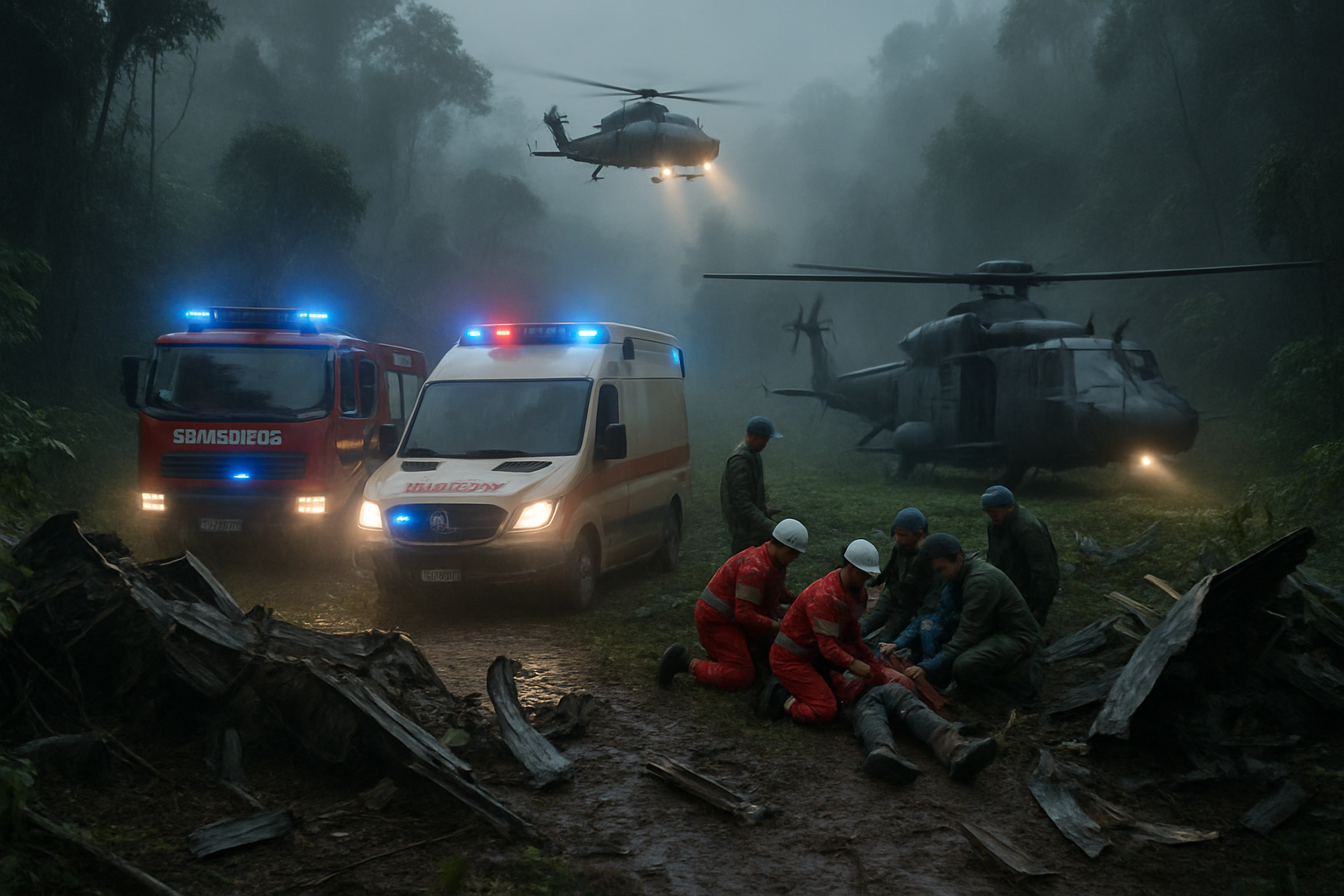
A devastating crash involving a Colombian Air Force C-130 Hercules transport aircraft in Puerto Leguízamo, Putumayo province, has claimed the lives of 69 people and injured 57 others, marking one of the deadliest military aviation disasters in recent Colombian history.
The aircraft, manufactured in 1983, crashed approximately one kilometer from the runway from which it had just taken off at Puerto Leguízamo airport on March 24, 2026. The tragedy has prompted the declaration of national mourning and raised serious questions about aviation safety in challenging operational environments.
Details of the Tragic Incident
According to initial reports from Colombian authorities, the C-130 Hercules was carrying 126 personnel when it crashed during takeoff operations. The passenger manifest included 114 Colombian Army soldiers, 11 Air Force crew members, and 2 police officers who were on a routine military transport mission in the Amazon region.
Witnesses and survivors described chaotic scenes as personnel attempted to evacuate the aircraft during the emergency. One survivor contacted their family member describing the desperate moments: "Me pisoteaban" (They were trampling me), providing insights into the panic that ensued as the aircraft experienced difficulties.
The crash occurred in a remote area near the Ecuador border, complicating immediate rescue and recovery efforts. Puerto Leguízamo airport serves as a crucial logistics hub for counter-narcotics and territorial control operations in a region where road transport is impractical due to challenging terrain and security conditions.
Human Cost and Personal Tragedies
Among the heartbreaking individual stories emerging from this disaster, the case of young soldier Efrén David Cerón Gómez stands out. His mother, who lives in a rural area without television access, learned of the crash when her son called to reassure her: "Mamá, se cayó el avión, pero tranquila, estoy bien" (Mom, the plane crashed, but don't worry, I'm okay).
The Hospital Militar in Bogotá has issued medical reports on the injured who were evacuated from Putumayo, with many requiring specialized care for severe trauma sustained in the crash. The remote location of the incident has complicated medical evacuation efforts, despite the immediate deployment of emergency response teams.
"Each name represents a story, a family, dreams, and affections now in silence. They are not numbers. They are Colombians leaving an impossible void to fill."
— Government Official Statement
Government Response and National Mourning
The tragedy has prompted an unprecedented response from Colombian leadership at all levels. Valle del Cauca Governor Dilian Francisca Toro declared two days of departmental mourning to accompany the victims' families, with flags ordered to fly at half-staff throughout the region.
President Gustavo Petro was immediately informed of the incident and has ordered comprehensive support protocols for victims and their families. Defense Minister Pedro Sánchez activated emergency response measures and confirmed that the government would provide full assistance during this difficult period.
The Italian news agency ANSA reported that Colombia has declared three days of national mourning for the disaster victims, with President Petro ordering flags to be flown at half-mast and military honors for the fallen servicemen and women.
Investigation and Safety Concerns
Colombian Air Force Commander Carlos Fernando Silva Rueda has established a comprehensive Accident Investigation Board to examine all aspects of the incident, including mechanical systems, weather conditions, pilot procedures, and airport infrastructure. The investigation is expected to take several months and will focus particularly on the operational challenges presented by Amazon region flying conditions.
The crash highlights persistent challenges facing military aviation in Latin America, where aging aircraft fleets operate in demanding geographic and climatic conditions. The Amazon region presents unique operational risks, including high humidity, tropical weather conditions, limited runway capacity, and remote emergency response infrastructure.
This incident represents the third major Colombian aviation accident in 2026, following a pattern of regional military aviation challenges that have also affected other Latin American countries. In February 2026, a Bolivian Air Force C-130 Hercules crashed at El Alto Airport, killing 22 people, highlighting broader regional concerns about aging military aircraft fleets.
Operational Context and Regional Challenges
Puerto Leguízamo airport serves as a vital military logistics link in an area where ground transportation is dangerous or impossible due to the presence of illegal armed groups and narcotics trafficking operations. The airport is essential for counter-narcotics operations, territorial control missions, and the delivery of essential services to remote communities.
The C-130 Hercules, while generally considered a reliable military transport aircraft, faces particular challenges when operating in the complex Amazon environment. The aircraft has served as a workhorse for military transport operations for decades, but the demanding operational conditions in remote tropical regions present unique risks that require constant attention to maintenance schedules and safety protocols.
International Support and Solidarity
The tragedy has prompted expressions of solidarity from across the international community. Multiple countries have offered condolences and support to Colombia during this difficult time, recognizing the scale of the loss and its impact on the Colombian military and the broader community.
Aviation safety experts internationally have noted the incident as highlighting the ongoing challenges faced by military aviation operations in developing regions, where the combination of aging equipment and challenging geographic conditions creates persistent vulnerabilities.
Looking Forward: Safety Improvements and Lessons Learned
The investigation findings from this tragedy are expected to influence Colombian military aviation protocols significantly and may accelerate discussions about fleet modernization and enhanced safety measures for challenging operational environments. The accident serves as a stark reminder of the need for continuous improvement in pilot training, aircraft maintenance, and safety procedures for operations in demanding conditions.
Military aviation experts emphasize that while the C-130 Hercules has maintained a strong overall safety record throughout its decades of service, complex operations in remote areas like the Amazon present unique challenges that require specialized training and enhanced safety protocols.
As Colombia mourns the loss of 69 brave service members, their sacrifice underscores the dangers faced by military personnel who serve in remote and challenging environments to protect their nation's security and sovereignty. The investigation into this tragic incident will hopefully provide insights that can prevent similar disasters in the future and improve the safety of military aviation operations throughout the region.
The Puerto Leguízamo crash serves as a somber reminder of the human cost of military service and the ongoing need for vigilance in aviation safety, particularly in the challenging environments where these essential operations must continue to protect national security and serve remote communities.