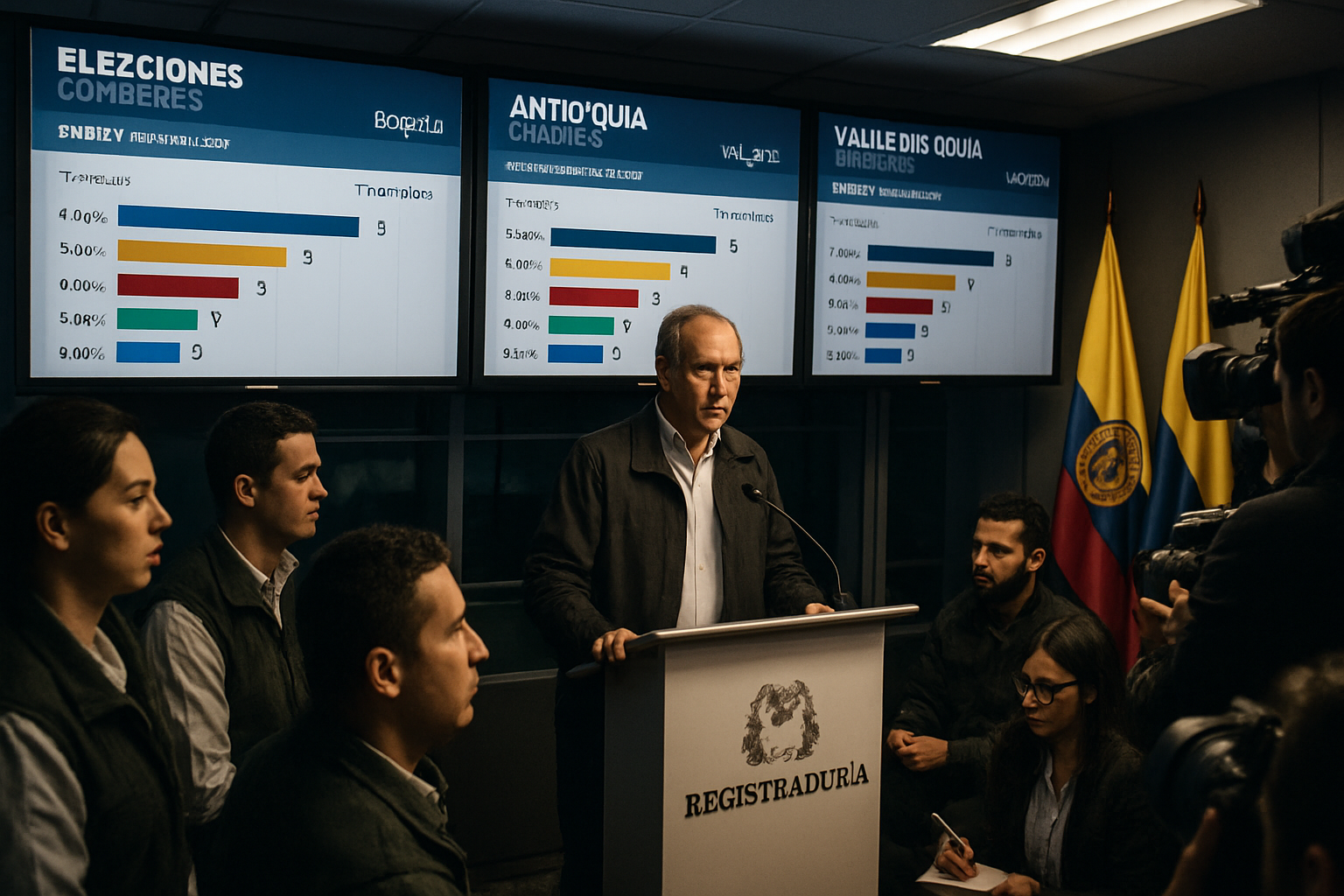
Colombian democracy experienced a seismic political shift as voters resoundingly rejected moderate politics in favor of radical alternatives during Sunday's congressional elections, with President Gustavo Petro's Historic Pact party achieving a stunning victory while far-right forces gained significant ground.
With nearly 70% of votes counted across Colombia's 41 million eligible voters, the leftist Historic Pact emerged as the dominant force, capturing 22.8% of Senate votes—a remarkable surge from 17% in the 2022 elections. The victory positions leftist Senator Iván Cepeda as the frontrunner for the May presidential elections, inheriting a transformed political landscape from the outgoing Petro administration.
"This is a historic moment for Colombia," declared Cepeda during his victory speech in Bogotá. "The people have spoken clearly—they want real change, not empty promises from the political establishment that has failed them for decades."
The Rise of Political Extremes
The elections revealed a dramatic polarization of Colombian politics, with centrist and moderate parties suffering devastating losses. The far-right Democratic Center party, led by former President Álvaro Uribe, also gained significant ground, increasing from 11.5% to 15.6% of the vote. This represented the party's best performance since the contentious 2022 elections.
In a particularly striking development, Senator Paloma Valencia of the Democratic Center won the right-wing primary with an overwhelming 3.1 million votes—55.2% of the total—positioning herself as the conservative standard-bearer for May's presidential contest. Her victory speech emphasized a return to "law and order" and promised to reverse what she characterized as Petro's "failed socialist experiment."
The moderate center faced complete collapse, with traditional parties losing substantial vote shares across all regions. Former Bogotá mayor Claudia López managed to secure the centrist coalition nomination with just over 500,000 votes, but her path to the presidency appears increasingly difficult given the electorate's clear preference for ideological alternatives.
Regional Battlegrounds and Electoral Irregularities
The electoral map revealed stark regional divisions that will define Colombia's political future. In Antioquia, traditionally a conservative stronghold, the Democratic Center maintained its dominance but faced an unexpected challenge from the Historic Pact, which emerged as the second-largest political force in the department.
Antioquia's political transformation proved particularly significant given its 17 congressional seats and historical influence on national politics. Local analyst Daniel Quintero of the Frente por la Vida movement noted after voting that "mafias and machines tried to push us off the path," highlighting ongoing concerns about criminal influence in Colombian politics.
The elections were marred by significant irregularities and security concerns. Colombian authorities seized over 605 million pesos in Antioquia alone for possible electoral crimes, with two arrests at Medellín voting stations. In Tumaco, Nariño, police intercepted substantial funds allegedly destined for the "Coordinadora Nacional Ejército Bolivariano" criminal organization.
"We had fear, but we came out to exercise our right,"
— Local voter in Jamundí, Valle del Cauca
Security Challenges and Democratic Resilience
Despite widespread security concerns, Colombian voters demonstrated remarkable resilience in exercising their democratic rights. In the Cauca region, where over 880,000 people were eligible to vote, citizens participated despite threats from dissident groups that have rejected the 2016 peace agreement.
The elections proceeded without the polling station relocations that many had feared, though security forces remained on high alert throughout the country. Governor reports from different regions varied significantly, with Barranquilla and Atlántico experiencing calm conditions under Governor Eduardo Verano's monitoring, while Antioquia and Nariño faced significant security incidents.
The National Police made multiple arrests throughout election day, including five people in Barranquilla for outstanding judicial orders and two individuals caught with 5 million pesos, food supplies, and electoral propaganda near voting stations in rural Pasto.
The Path to May's Presidential Elections
The congressional results have fundamentally reshaped Colombia's political trajectory heading into the May presidential elections. With moderates losing significant ground, the country appears headed for a highly polarized contest between Cepeda's leftist coalition and Valencia's conservative alliance.
The Historic Pact's strong performance provides Cepeda with crucial momentum and organizational strength for the presidential campaign. However, the simultaneous rise of the far-right Democratic Center ensures that Colombia's next government will face a radicalized opposition regardless of which candidate ultimately prevails.
International observers have closely monitored these developments, particularly given Colombia's strategic importance in regional security and its role in ongoing peace negotiations with various armed groups. The electoral outcome will significantly influence Colombia's approach to the "Total Peace" initiative and its relationships with regional and international partners.
Implications for Democracy and Governance
The rejection of moderate politics reflects broader frustrations with traditional governance structures and economic inequality that have plagued Colombia for decades. The victory of political extremes suggests that voters are willing to embrace radical alternatives rather than accept incremental change from established parties.
This political realignment occurs against the backdrop of ongoing security challenges, with criminal organizations demonstrating sophisticated capabilities to influence electoral processes through financial means and intimidation. The substantial cash seizures during election day highlight the persistent threat that organized crime poses to Colombian democracy.
As Colombia prepares for what promises to be a contentious presidential campaign, the congressional results indicate that the country's political center has collapsed, leaving voters to choose between competing visions of radical change. The May elections will determine whether Colombia embraces continued leftist governance under Cepeda or shifts toward conservative populism under Valencia.
The ultimate outcome will have profound implications not only for Colombia's internal stability but also for regional security, migration patterns, and international cooperation efforts in Latin America. With the political center effectively eliminated, Colombia's democratic future now rests in the hands of an electorate that has clearly chosen polarization over moderation.