A series of deadly bomb attacks by FARC dissident groups along Colombia's Pan-American Highway has claimed at least 19 lives and wounded 48 others, marking one of the most devastating terrorist incidents in the country in recent months as criminal organizations demonstrate unprecedented "state-like capabilities" in their campaign of violence.
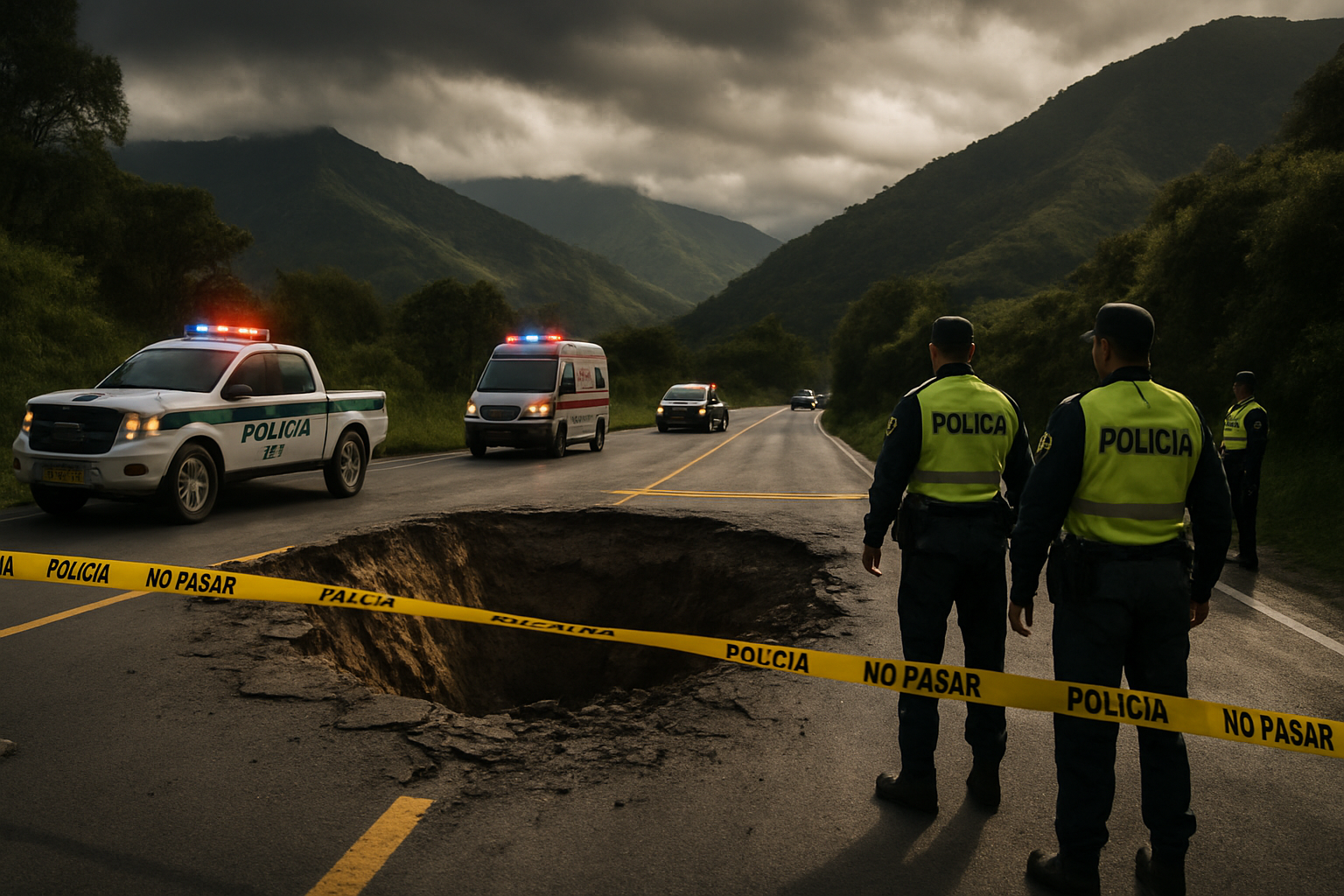
The latest attack occurred on April 26, 2026, when dissidents detonated an explosive cylinder targeting a passenger bus in the El Túnel sector of Cajibío, Cauca province. The assault on the critical Cali-Popayán transportation corridor has left a 20-meter diameter crater and completely paralyzed traffic on a highway that sees 20,000 vehicles daily.
Coordinated Campaign of Terror
The bombing represents the second major attack on the Pan-American Highway within a month, part of what regional governors are calling an unprecedented "terrorist escalation." In just 48 hours, criminal organizations have carried out 26 coordinated attacks across Cauca and Valle del Cauca departments, demonstrating a level of operational sophistication that exceeds traditional criminal activity.
Intelligence reports have identified alias "Marlon" as the key orchestrator of this wave of violence. The Colombian government has increased the bounty for his capture to 5 billion pesos (approximately $1.2 million USD), the largest reward in the country's recent history, reflecting the severity of the threat posed by the "Jaime Martínez" FARC dissident structure.
"The explosion elevated me and I thought it was the end,"
— Mario Guerrero, Attack Survivor
Victims and Human Cost
Among the confirmed victims was Patricia Mosquera, a prominent community leader from El Patía and member of the Community Council of El Puro. Mosquera was traveling with two relatives, Nereida and Nidia Mosquera, both of whom also perished in the attack. The targeting of social leaders has become a systematic tactic employed by criminal organizations to create governance vacuums and intimidate communities.
Survivor accounts paint a harrowing picture of the attack's impact. Video footage captured by a truck's dashboard camera shows the exact moment of detonation, as the explosive device created a massive fireball that engulfed the passenger vehicle and surrounding area. The blast's force was so intense that it left a crater large enough to completely block the highway.
Strategic Infrastructure Targeting
The attacks extend far beyond highway bombings. FARC dissidents have conducted sophisticated drone strikes against aviation infrastructure, including a coordinated assault on the Santana radar station in El Tambo, Cauca, involving more than ten explosions. This represents a dangerous evolution in asymmetric warfare tactics, with criminal organizations adapting commercial drone technology for military-style operations against state facilities.
Additional incidents include armed assaults on police installations in Jamundí and systematic targeting of educational and healthcare facilities. The breadth and coordination of these attacks indicate criminal organizations have evolved beyond traditional drug trafficking to become sophisticated networks capable of challenging state authority across multiple fronts simultaneously.
Government Response and Security Measures
Valle del Cauca Governor Dilian Francisca Toro declared a "terrorist escalation" and convened emergency security councils with Defense Minister Pedro Sánchez. The government has deployed enhanced security protocols across affected regions, though the criminal organizations' surveillance capabilities and operational security have proven challenging for traditional law enforcement approaches.
The violence occurs during a critical period as Colombia prepares for presidential elections in May 2026, with the attacks representing a direct assault on democratic institutions and peaceful transition processes. Over 100 municipal ombudsmen have been declared targets by armed groups according to the Public Ministry in Cali, indicating a systematic campaign to undermine local governance structures.
Broader Pattern of Violence
This escalation continues a documented pattern of violence that began intensifying in February 2026, including an assassination attempt against President Gustavo Petro that forced his helicopter to remain airborne for four hours over the Caribbean Sea. The sophistication of recent attacks—combining ground-based explosives, aerial drone strikes, and coordinated multi-regional operations—demonstrates criminal organizations have acquired capabilities typically associated with state actors.
The targeting of the Pan-American Highway is particularly strategic, as this corridor serves as a critical artery for legitimate commerce while also being exploited by criminal networks for drug trafficking routes. By disrupting civilian transportation, criminal organizations simultaneously harm the formal economy while strengthening their control over illicit trade networks.
International Cooperation and Response
The Colombian government has enhanced international cooperation through the Shield of the Americas coalition, a 17-nation initiative that enables intelligence sharing with Spanish police, Interpol, and regional partners. Joint operations have successfully captured several criminal leaders, though the organizations' adaptability and recruitment capabilities have allowed them to maintain sophisticated operational capacity.
International observers are closely monitoring Colombia's institutional response as a critical test of democratic governance under pressure from transnational organized crime. The criminal networks' possession of state-level capabilities—including advanced surveillance, encrypted communications, and military-grade weaponry—represents an unprecedented challenge to traditional sovereignty concepts.
Community Impact and Economic Consequences
The psychological impact extends far beyond immediate victims, affecting entire communities dependent on secure transportation for essential services. Thousands of residents have altered their travel patterns to avoid the Pan-American Highway during peak hours, while businesses have implemented enhanced security protocols that increase operational costs.
Tourism confidence has been severely affected, with the closure of Tayrona National Park earlier this year due to armed group threats serving as a stark reminder of violence's economic implications. Educational and healthcare facilities have become systematic targets, undermining basic services essential for community development.
Challenges to Peace Process
The attacks represent a fundamental challenge to President Petro's "Total Peace" strategy, as FARC dissident factions have rejected dialogue in favor of territorial expansion and increased violence against state institutions. The government maintains a dual approach of continuing peace negotiations while implementing enhanced security measures, though reactive approaches have shown limitations against criminal organizations with such sophisticated capabilities.
The timing of the violence, occurring weeks before crucial presidential elections, raises concerns about deliberate attempts to destabilize democratic processes. Criminal organizations appear to be testing the state's capacity to maintain public safety while preserving constitutional protections and civil liberties essential to democratic governance.
Looking Forward
The April 26 attacks mark a critical juncture for Colombian security strategy and democratic consolidation. The success of institutional responses will determine whether democratic governance can effectively address sophisticated 21st-century criminal challenges while preserving the fundamental rights and freedoms that define democratic societies.
As rescue operations continue and investigators piece together the full scope of the criminal networks' capabilities, the Colombian people face an uncertain period where the balance between security and liberty will be tested. The international community watches closely, knowing that Colombia's experience may serve as a template for how democratic nations respond to transnational organized crime in an increasingly interconnected world.